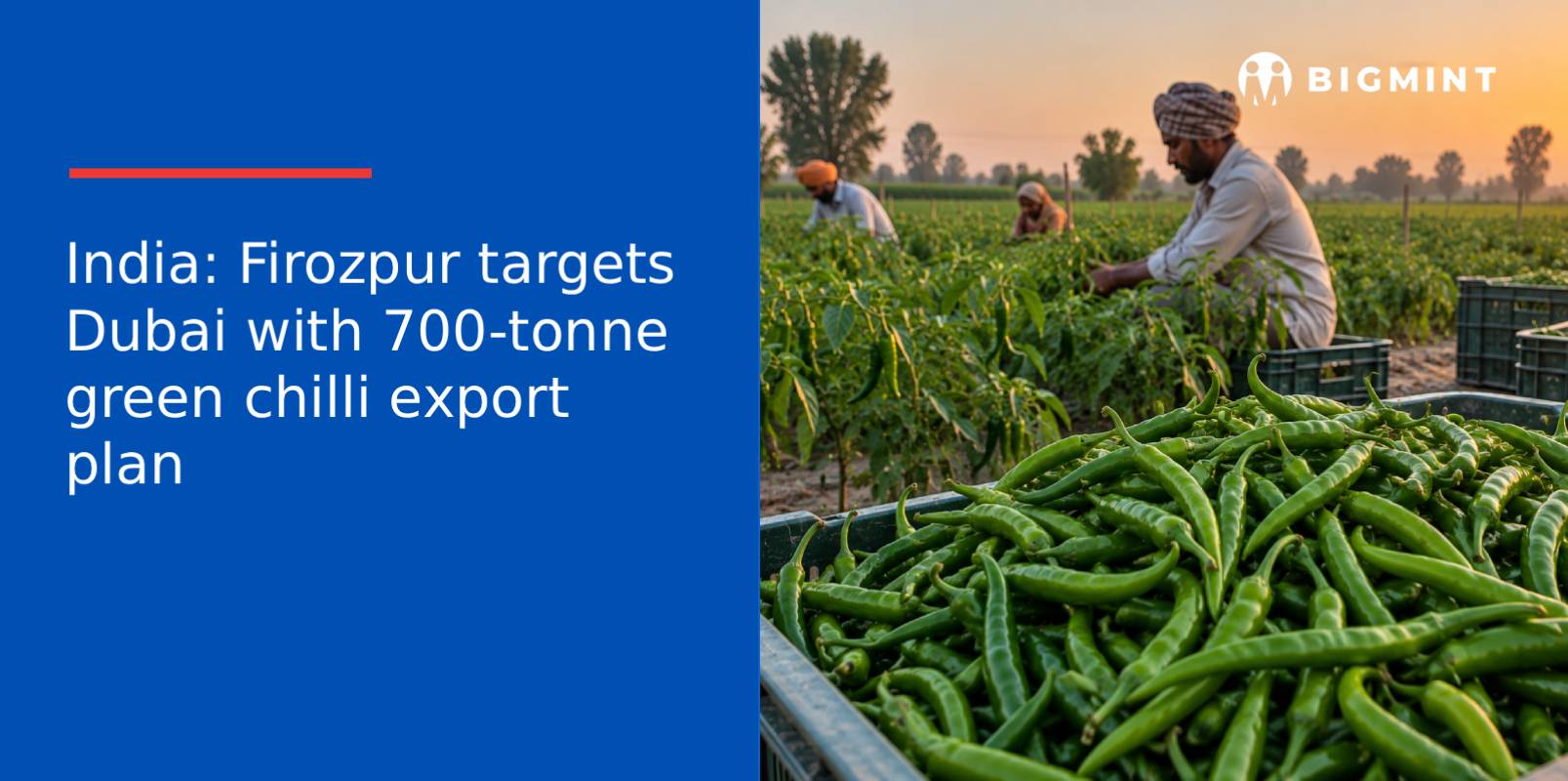
- Farmers expand cultivation to 60 acres following an initial 15-tonne shipment to Dubai.
- Punjab’s annual green chilli production of nearly 295,000 tonnes offers scope for export growth.
Farmers in Firozpur, Punjab, are targeting green chilli exports of around 700 tonnes (t) to Dubai after an initial 15 t shipment, expanding cultivation to approximately 60 acres this season. With nursery preparation underway and the first pickings expected in April 2027, the initiative aims to diversify market access for growers amid firm domestic prices and potential demand from Gulf markets.
Cultivation expands amid export opportunities.
Punjab produces nearly 295,000 t of green chillies annually, with Firozpur among its leading producing districts. While growers traditionally supply domestic markets across several Indian states, the Dubai initiative offers an additional outlet and could encourage further crop diversification.
The expansion follows an increase in cultivated area to around 60 acres, approximately three times the previous level, according to the supplied information. However, achieving the 700 t export target will depend on production volumes, buyer demand, and consistent compliance with export requirements, including grading, uniformity and pesticide-residue limits.
Besides Dubai, markets such as Qatar and Saudi Arabia offer potential opportunities for Indian green chilli exporters. Sustained growth, however, will require repeat orders and reliable delivery schedules rather than reliance on individual consignments.
Firm mandi prices support grower sentiment.
Green chilli prices in Punjab remained firm in mid-to-late October 2026, according to the supplied market assessment. Modal prices in markets including Patran, Ropar, and Firozpur were reportedly at the upper end of regional price levels, indicating steady wholesale demand.
The export initiative could broaden the buyer base and provide growers with an alternative sales channel. However, its influence on domestic prices will depend on actual shipment volumes, local arrivals, and consumption trends. Market-specific modal prices were not provided, limiting a quantitative assessment of price support.
Weather and logistics remain key risks.
Nursery preparation generally begins in October, followed by transplantation in November. Harvesting is expected to start in April 2027, with subsequent pickings at intervals of around two weeks, subject to crop conditions.
Cold waves or prolonged winter fog between October and February could affect crop development and yields. Meanwhile, the perishable nature of green chillies makes efficient handling, suitable packaging, and temperature-controlled transportation essential to maintaining export quality.
Outlook
Firozpur’s 700 t target could strengthen market access for Punjab’s growers, but execution remains critical. Consistent export-grade production, buyer acceptance, and reliable logistics will determine whether the initial shipment develops into sustained trade. The impact on domestic prices will depend on the volume and frequency of exports relative to local supply
Leave a Reply