- Heat-driven demand surge will lift coal burn
- Strong inventory but logistics gaps cause local shortages
Projected surge in coal demand
Coal requirement for the domestic coal-based power plants is projected to rise sharply in the April-June quarter. Estimates indicate an 11.5% increase compared to the same period last year, translating to about 233 million tonnes (mnt) of coal over three months. For the full financial year, coal demand is estimated at 906 mnt, up from 826 mnt in FY26.
Electricity generation from domestic coal-based plants is expected to increase by 13.3% in the first quarter alone. This is not just because of rising demand-it is also because last year’s generation was unusually low.
Why last year was a low base
To understand the projected jump, we must look back at April-June 2025. That quarter was an anomaly. Unlike the scorching summers India is known for, 2025 was unusually cool. Early and widespread monsoon rains arrived ahead of schedule, keeping temperatures down and drastically reducing the need for air conditioners and fans.
Consequently, India’s electricity demand fell by nearly 1.5% in that quarter-the first such decline since the pandemic year of 2020. Coal-fired power plants were hit hardest, with generation slumping by 7%. The knock-on effects extended through the year. In October 2025, the all-India Plant Load Factor (PLF) for thermal plants plunged to a four-year low.
In short, the April-June 2025 quarter was a statistical outlier. The projected 13.3% rise in coal-based generation for Q1 2026 is not just about new demand-it is also a rebound effect from the unusually low generation recorded during the same months in the previous year.
Record coal stocks, but distribution is key
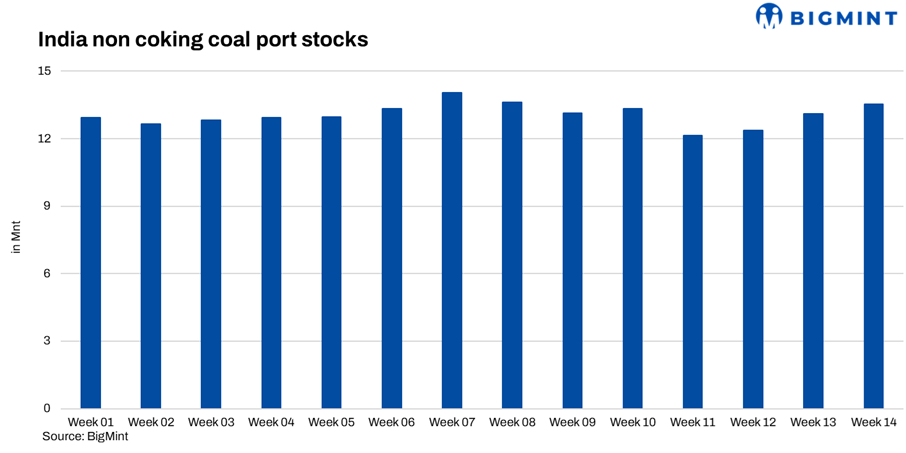
On paper, India has never been more prepared for a coal-heavy summer. Total coal inventory-including stock at power plants, stock in transit (coal already on trains or ships), and stock at pitheads (mines)-stands at a record 224 mnt. This is significantly higher than the 201 mnt available during the same period last year.
Specifically, coal stock at domestic coal-based power plants alone is around 54 mnt. At a national level, this is a comfortable buffer of about 22-24 days of average consumption.
However, our analysis of daily Central Electricity Authority reports for 1-5 April, 2026, showed that this comfort is uneven. While plants in northern and eastern India had stocks at 150-180% of their normative requirement, several critical plants in Tamil Nadu and Telangana had less than 25% of required stock. Some, like North Chennai TPS Stage 3, had less than two days of coal left.
Why coal burn will rise: The weather factor
The primary driver of higher coal demand is not industrial growth alone-it is the weather. The India Meteorological Department has forecast above-normal temperatures across most parts of the country until June. This directly translates into higher electricity consumption, particularly from air conditioners and cooling appliances.
Peak power demand is expected to reach 271 GW in May-June, up sharply from 243 GW last year when favourable weather kept demand in check. Every additional gigawatt of peak demand during evening hours (when solar is not available) must be met largely by coal.
Further, the likely absence of about 8-10 GW of gas-based capacity during peak months adds to the burden. Most gas plants in India have been stranded due to high fuel costs. If they are unavailable, the entire burden of meeting evening peaks will fall on coal. This is a critical detail: coal will have to fill a gap that gas cannot.
Hidden stress points
Despite record national stocks, three stress points remain:
1. Logistics: Coal is available at mines, but rail rakes are needed to move it to distant plants, especially in the south. Any disruption in rail movement could quickly turn national comfort into local crisis.
2. Payment issues: Some state discoms, particularly in Tamil Nadu and Telangana, have legacy dues to coal companies. This leads to supply curtailment, forcing plants to run on critically low stocks.
3. Imported coal plants: Plants designed for imported coal are running at very low PLFs (20–25%) because they cannot compete on price. They are unlikely to help during a crunch.
The bottomline
India has enough coal. Record pithead stocks, coal in transit, and power plant inventories add up to 224 million tonnes-a strong buffer. But having coal is not the same as having it in the right place at the right time.
With above-normal temperatures expected, peak demand projected to hit 271 GW, and a low base from last year’s unusually cool summer, coal plants will need to increase their burn significantly. The real test will not be in April, but in May and June, when the heat peaks and every megawatt counts.
For now, the system is prepared-but only if the coal logistics hold.
Leave a Reply