- AI boosts procurement efficiency, quality control, accuracy
- Adoption lags due to perceived high costs, awareness gaps
- Explainable AI builds trust, supports smart decision-making
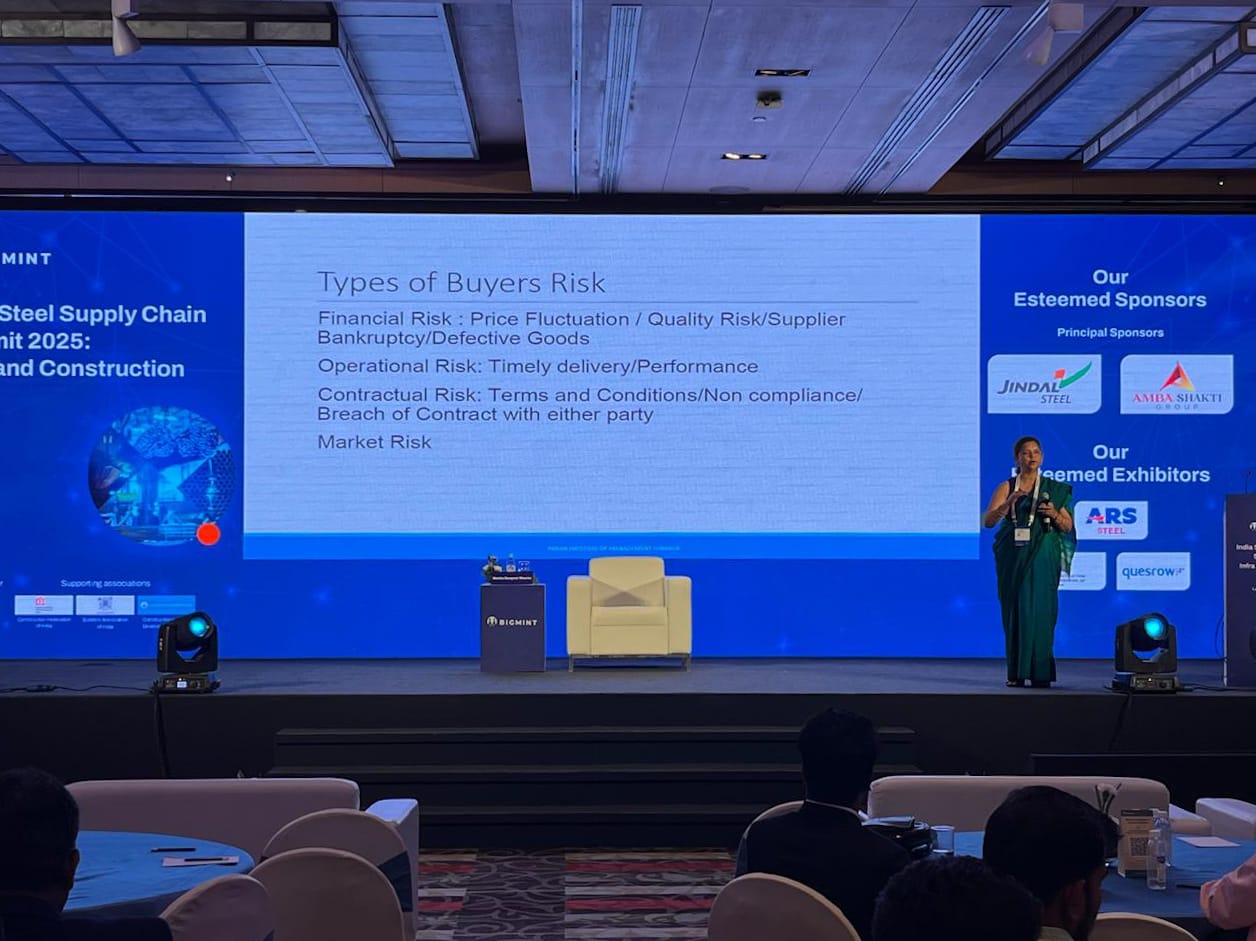
The India Steel Supply Chain Summit 2025 (ISSCS 2025), held on 17-18 April and organised by BigMint in partnership with Quesrow, brought together industry leaders to address the evolving dynamics of India’s steel sector.
A masterclass on “AI-Powered Strategies for Supply Chain Optimisation and Operational Excellence,” held in association with IIM Sirmaur, explored the vast landscape of AI applications in logistics efficiency. The speakers discussed how strategic AI integration, in areas such as demand forecasting, inventory management, and route optimisation, can lead to improved resilience, efficiency, and sustainability. They also presented case studies detailing how industry participants have used AI for boosting cost reduction, agility, and operational gains.
Key takeaways
AI adoption is no longer optional
- AI is now integral to driving efficiency, accuracy, and strategic advantage in procurement and supply chain operations.
- Early adoption enables competitive differentiation, cost savings, and faster decision-making.
Barriers to implementation remain
- Key challenges include lack of awareness, perceived high costs, skill gaps (e.g., prompt engineering), and resistance to change due to job security fears.
Explainable AI builds trust
- Explainable AI enhances credibility by providing data-backed reasoning behind decisions – critical for risk mitigation, quality assurance, and compliance.
Leveraging AI for strategic sourcing, risk management
- AI aids in identifying pricing risks, contract deviations, supplier performance issues, and operational disruptions, allowing proactive mitigation strategies.
- Dynamic pricing and AI-driven contract clauses enable smarter negotiations and vendor management.
Procurement efficiency, spend analytics
- Machine learning streamlines sourcing, requests for quotation (RFQs), and spend analysis with up to 97% accuracy, optimising cost, time, and resource allocation.
AI in quality, compliance
- AI-powered tools (e.g., computer vision and predictive risk engines) enhance material quality checks, batch consistency, and compliance validation, reducing manual inspection needs.
AI for supplier, market intelligence
- AI enables deeper supplier evaluation, scoring, and risk profiling, helping identify credible vendors and uncover new sourcing opportunities.
- It supports rerouting and scenario planning in response to global trade shifts (e.g., tariffs and geopolitical instability).
Future-ready supply chains
- AI and digital tools offer industry-wide solutions to formalise fragmented sectors such as the MSME segment, ensuring resilience, traceability, and sustainability in the supply chain.
Conclusion
AI is transforming procurement by enhancing efficiency, transparency, and decision-making across the supply chain. From predictive pricing and quality risk management to dynamic contracting and spend analysis, AI offers actionable insights. Despite adoption barriers such as cost, skills, and awareness, its integration is essential for resilience, formalisation, and competitiveness, especially in complex, volatile markets such as steel and infrastructure.

Leave a Reply