- Stiff Indian competition weighs on Pakistan exports
- Water shortages, rising costs discourage rice planting
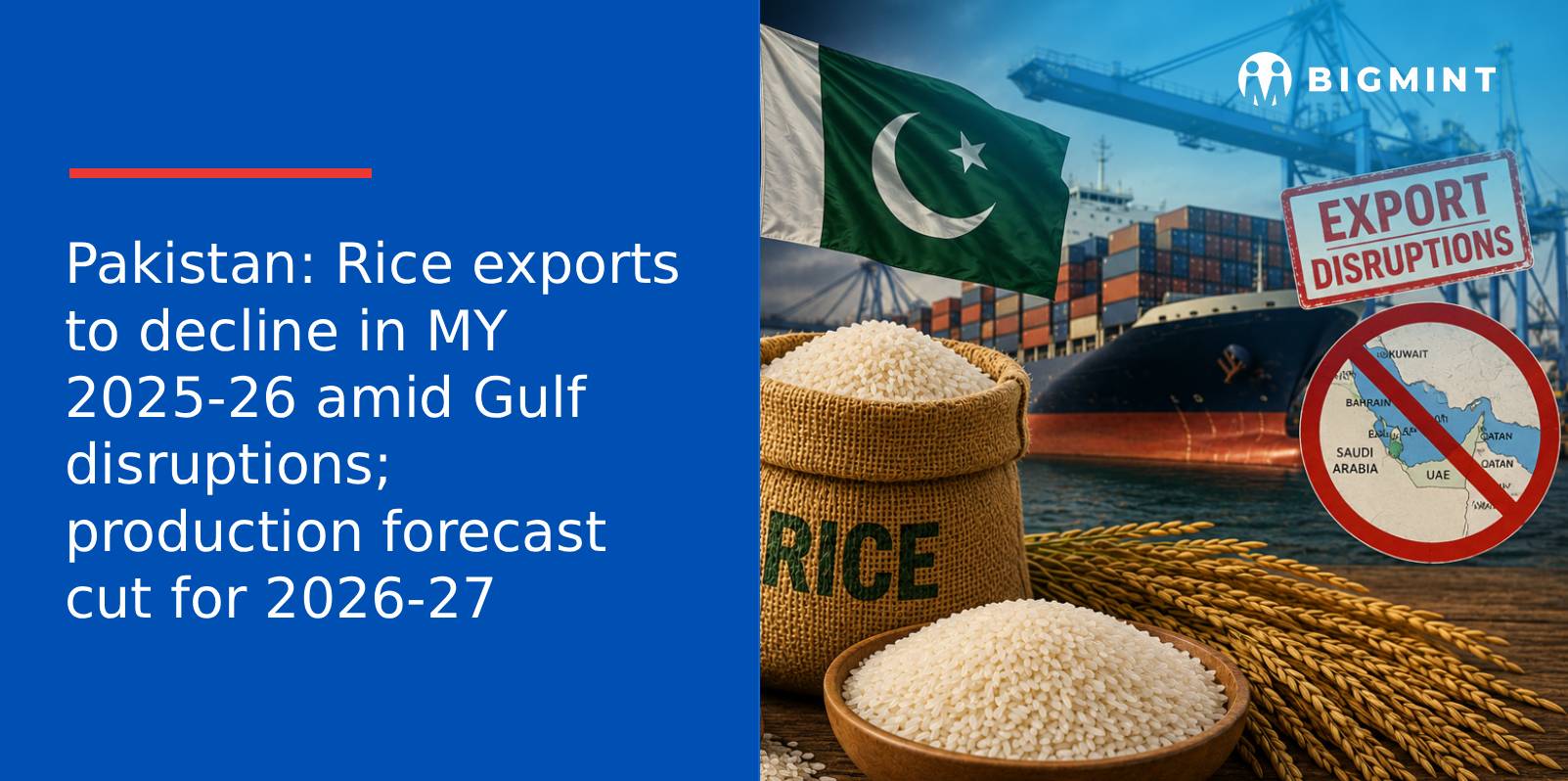
Pakistan’s rice sector is expected to face another challenging marketing year in MY 2025-26 as lower planting area, export disruptions in the Gulf region, and intensified competition from India continue to pressure the country’s rice trade.
Rice exports expected to remain below last year’s level
Pakistan’s rice exports for MY 2025-26 are projected at 4.7 mnt, lower than the 5.1 mnt exported during MY 2024-25. Export prospects have been affected by the temporary disruption of shipping through the Strait of Hormuz and stiff competition from Indian rice in international markets. Looking ahead, exports are forecast to recover modestly to 4.9 mnt in MY 2026-27, assuming logistics improve and trade flows normalise. During the first seven months of the current marketing year, Pakistan exported around 2.9 mnt of rice, including approximately 0.5 mnt of basmati and more than 2.4 mnt of non-basmati rice, reflecting the continued dominance of non-basmati varieties in the country’s export basket.
Production forecast cut for 2026-27
According to the latest USDA report, Pakistan’s 2026-27 rice production forecast has been revised down to 9.1 million tonnes (mnt) from 9.6 mnt, primarily due to reduced sowing area. Water shortages, rising input costs, and higher energy expenses have discouraged planting, while yields are expected to remain broadly in line with the three-year average.
Middle East disruptions impact shipments
The closure of the Strait of Hormuz created significant logistical challenges for Pakistan’s rice exporters. Shipments to key Gulf destinations, including Saudi Arabia, the UAE, Qatar and Iraq, experienced delays due to vessel disruptions, rising freight charges, and higher marine insurance costs.
Freights reportedly increased from around $1,200 to $5,000 per container, while exporters also faced demurrage charges and war-related surcharges. The disruption reduced Pakistan’s export competitiveness at a time when Indian rice regained momentum in global markets.
Pakistan diversifies export markets
To reduce dependence on Gulf shipping routes, Pakistan has accelerated efforts to diversify exports. The government has prioritised expanding rice shipments to China, Qatar, Kenya, Tanzania and Central Asian countries, while also introducing temporary measures to facilitate overland trade through Iran.
Authorities have operationalised new overland trade corridors to move stranded cargo, with rice designated as one of the primary commodities under the emergency transit arrangements. Pakistan has also increased marketing efforts in African markets while strengthening food security cooperation with Qatar.
Outlook
Pakistan’s rice sector is expected to remain under pressure in the near term due to lower production and continued competition from India. However, improving logistics following the reopening of the Strait of Hormuz and ongoing efforts to diversify export destinations could support a gradual recovery in shipments during MY 2026-27. Export performance will largely depend on the pace of trade normalisation and demand from key importing markets.
Leave a Reply