- Copper armature scrap prices decline d-o-d in Delhi
- Oil prices slip as Russia-Ukraine peace talks progress
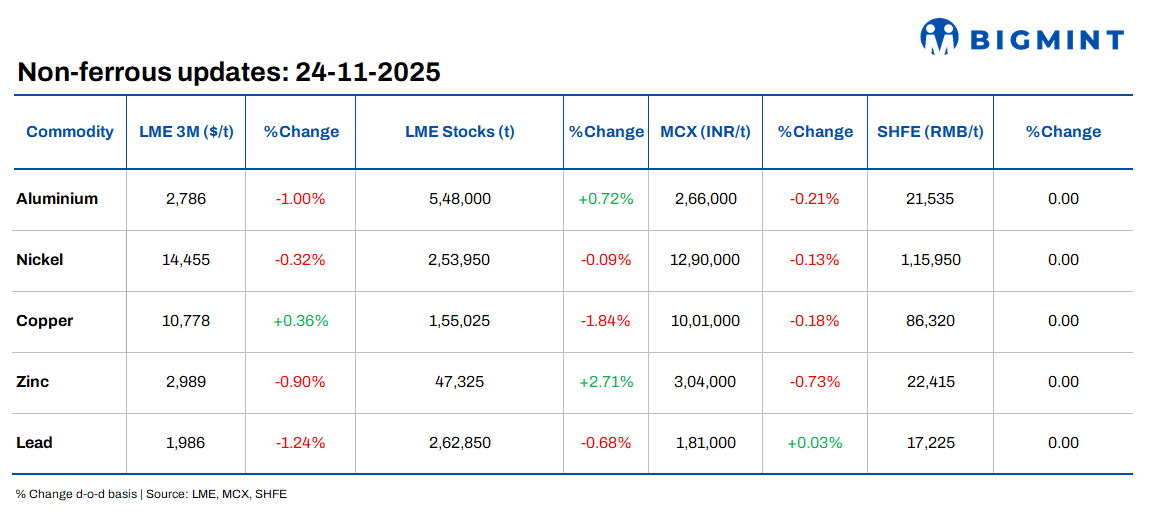
Base metals futures on the London Metal Exchange (LME) showed negative trends d-o-d, with lead decreasing by 1.24% to $1,986/tonne (t). Meanwhile, inventories at LME-registered warehouses slightly increased, with zinc recording the highest gain of 2.71%.
Domestic market overview
In India’s non-ferrous metals markets, BigMint assessed copper armature scrap at INR 877,000/t ex-Delhi, down by INR 4,000/t d-o-d. Aluminium Tense scrap prices were assessed at INR 188,000/t ex-Delhi and at INR 184,500/t ex-Chennai, both stable d-o-d.

Other market updates
Vedanta advances copper rod plant in Saudi Arabia
Vedanta Ltd. is moving forward with its first industrial investment in Saudi Arabia — a modern copper rod plant in Ras Al Khair Industrial City. The SAR 100 million project will have a production capacity of 125,000 t/year, aimed at supporting the kingdom’s growing cable and electrical components sector.
The plant strengthens Saudi Arabia’s copper value chain and aligns with the ministry’s goal of attracting global investors who create downstream value. Vedanta has also secured an exploration licence in the Jabal Sayid belt under the Kingdom’s eighth licensing round.
Oil prices slip as Russia-Ukraine peace talks progress
Oil prices retreated on Monday, extending last week’s losses as advancing Russia-Ukraine peace talks and a stronger US dollar weighed on the market. Brent fell to $62.42/barrel (bbl) and WTI to $57.91/bbl, after both benchmarks dropped about 3% last week on fears that a potential peace deal could lift sanctions and release stranded Russian supply. Expectations of renewed Russian exports overshadowed the impact of fresh US sanctions on Rosneft and Lukoil. Market sentiment was further pressured by uncertainty around US rate cuts, even as comments from the New York Fed hinted at a possible cut soon, while the rising dollar made oil costlier for non-US buyers.
Leave a Reply