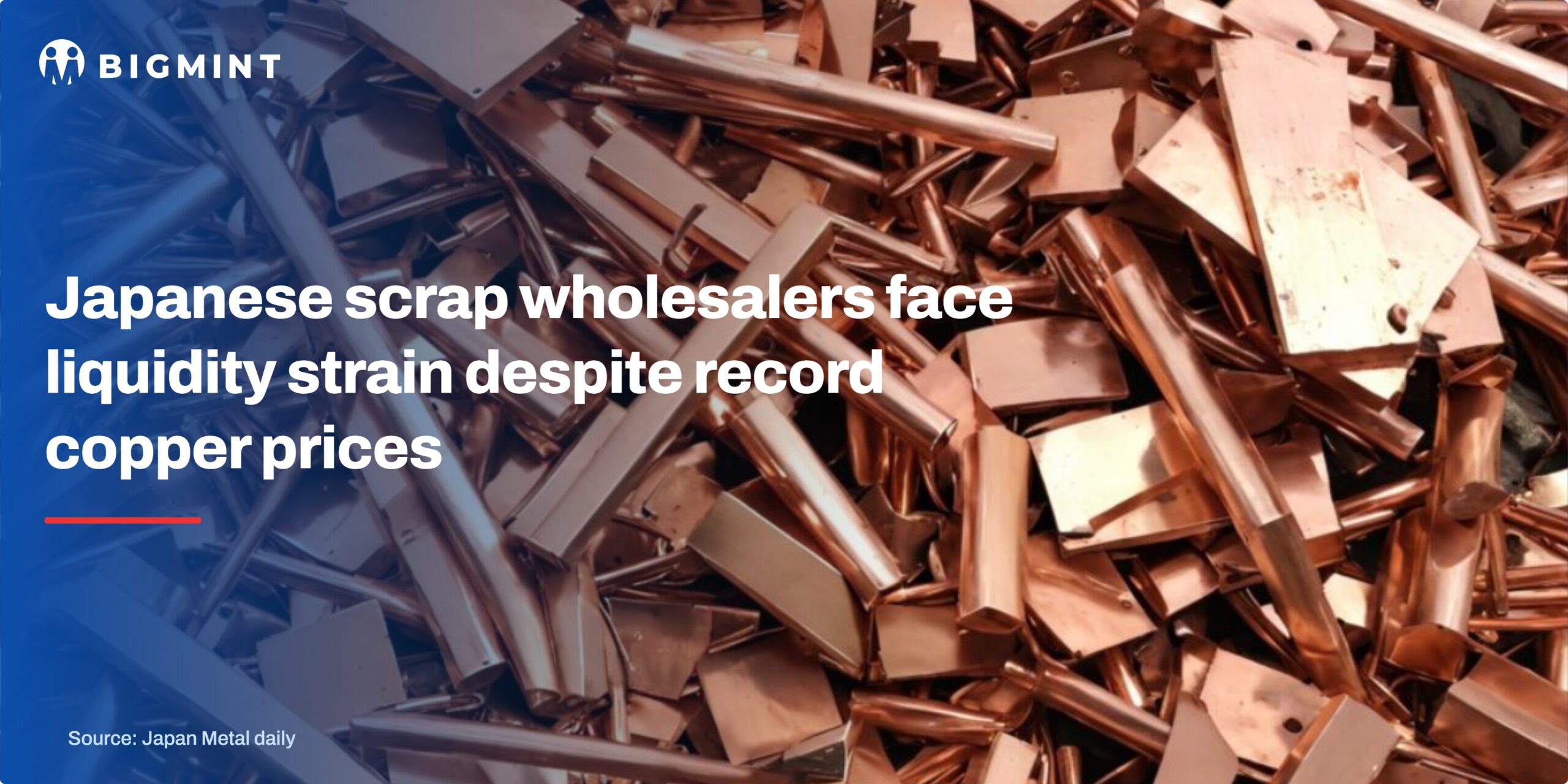
- Japanese copper scrap prices touch historic highs
- Dealers hedge to mitigate financial risk amid price volatility
Japan Metal Daily: Japan’s copper scrap market has been operating in an unprecedented price environment in CY’26, with record-high London Metal Exchange (LME) copper prices significantly influencing domestic scrap valuations. LME copper prices touched an all-time high of around $14,000/t in January and, despite persistent macroeconomic headwinds, have largely remained above the $13,000/t mark throughout the year.
Strong underlying fundamentals, including tight global copper concentrate availability, expectations of robust demand, and continued supply concerns, have helped prices remain elevated even as global markets grappled with tariff uncertainties, geopolitical tensions, fluctuating interest rate expectations, and slowing industrial activity across several major economies.
The sustained strength in LME prices has translated directly into Japan’s domestic copper market, with the benchmark electric copper price surpassing JPY 2 million/t for the first time in history at the beginning of the year and remaining above this threshold for almost the entire first half of CY’26.
Wholesalers grapple with liquidity and supply constraints
Consequently, copper scrap prices have also climbed to historic levels, creating a favourable pricing environment for Japanese copper scrap wholesalers while reshaping procurement and financing dynamics across the country’s recycling sector. Record-high scrap prices have increased inventory values and improved revenue potential, supported by steady demand from domestic smelters, fabricators, and overseas buyers.
However, the sharp increase in copper values has significantly raised working capital requirements, with traders now requiring substantially larger cash reserves to procure the same physical volumes of scrap than in previous years. As a result, liquidity management has emerged as one of the most critical concerns across the industry.
Rising interest rates have further compounded the situation by increasing borrowing costs, making inventory financing more expensive and reducing overall profitability.
Market participants note that the speed of fund settlements has become increasingly important, with same-day payments gaining prominence as wholesalers seek to recycle capital more efficiently.
At the same time, lower scrap generation from manufacturing facilities, construction activities, and demolition projects has constrained supply, while domestic and international demand has largely remained resilient. The intense competition among buyers has forced wholesalers to offer increasingly attractive procurement prices to secure material, compressing trading margins despite historically high selling prices.
Moreover, the elevated value of inventories has significantly increased exposure to price fluctuations, making inventory management considerably more challenging than during previous market cycles.
Dealers adopt strategies to safeguard supply and margins
To secure consistent raw material supplies while mitigating financial risks, many market participants have increased procurement prices for premium grades. Faster payment terms, including same-day settlements, are increasingly being used to strengthen supplier confidence and improve procurement success.
At the same time, traders are also increasingly relying on hedging and back-to-back trading strategies to minimise price risks, reduce inventory exposure, and preserve cash flow.
Meanwhile, some market participants have lowered procurement prices to protect profit margins, accepting reduced collection volumes as a trade-off for maintaining profitability amid elevated price volatility.
Outlook
Looking ahead, Japan’s copper scrap market is expected to remain supported as long as LME copper prices continue trading at historically elevated levels and underlying copper demand remains resilient. Nevertheless, the industry’s focus is likely to shift from price appreciation to financial sustainability.
Consequently, while the high-price environment continues to offer attractive revenue opportunities, wholesalers with strong balance sheets, efficient cash-flow management, diversified procurement networks, and robust hedging capabilities are expected to be best positioned to navigate the evolving market landscape and sustain profitability.
Note:This article has been written in accordance with a content exchange agreement between BigMint and Japan Metal Daily.

Leave a Reply