- China’s Baosteel hikes HRC prices by $14/t
- Construction sector weakness weighs on prices
Tokyo Steel, Japan’s leading electric arc furnace (EAF) steel producer, has held hot-rolled coil (1.7–22 mm) prices steady for August 2025 sales, marking the fifth month in a row without changes. Moreover, prices for rebars and H-beams also remained steady.
Revised prices are as follows:
- HRCs (1.7-22 mm): JPY 89,000/tonne (t) ($603/t)
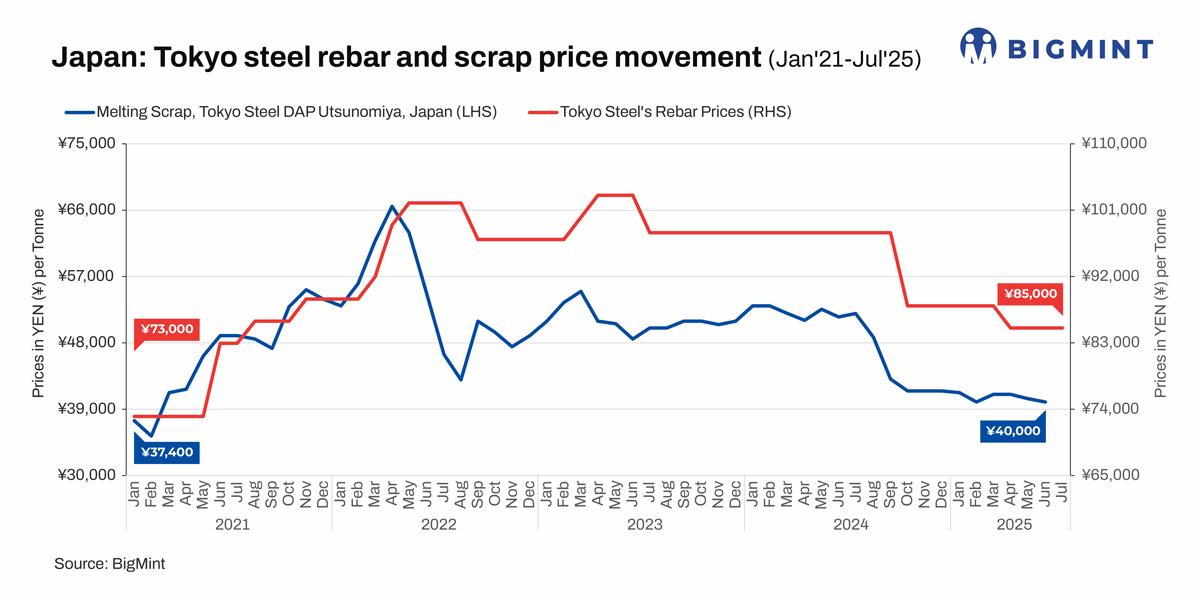
- Rebars (D13~25): JPY 85,000/t ($575/t)
- H-beams (100-300 mm): JPY 112,000/t ($758/t)
Factors influencing Tokyo Steel’s pricing
1. Domestic market: The Japanese domestic steel market currently reflects weak demand, especially in the construction sector, due to factors like extreme heat and reduced construction capacity. However, strong demand persists in industrial machinery and communication equipment, driven by ongoing digitalization trends.
2. Key global mills’ pricing trends: The world’s top steel manufacturer, Baosteel, has raised HRC prices by RMB 100/t ($14/t) m-o-m for Aug’25 sales, after keeping them unchanged in July. Additionally, prices of hot-dip galvanised were also raised by RMB 100/t ($14/t).
However, Vietnamese steel giant Formosa Ha Tinh (FHS) has reduced its hot-rolled coil (HRC) prices by approximately $11/tonne (t) m-o-m for August 2025 sales.
3. H2 scrap export offers drop: Japan’s July Kanto scrap export tender witnessed an m-o-m drop of JPY 551/t ($4/t), with a 15,000-t H2 lot awarded to a Chattogram-based mill via a trader at JPY 41,716/t ($284/t) compared to JPY 42,267/t ($291/t) FAS Japan, marking the fourth straight monthly drop.
Outlook
In the short term, Japan’s domestic steel market is expected to stay slow due to weak construction demand and reduced activity amid extreme heat. However, inquiries from sectors like logistics and data centres, along with upcoming public projects, could gradually revive steel movement by early autumn. However, broader sentiment remains cautious amid global tariff talks and postponed investments.
Leave a Reply