- Bangladesh maintains its presence in the Kanto tender for the third consecutive time
- JPY weakens to JPY 158/$, limiting the dollar-denominated price increase to $16/t m-o-m
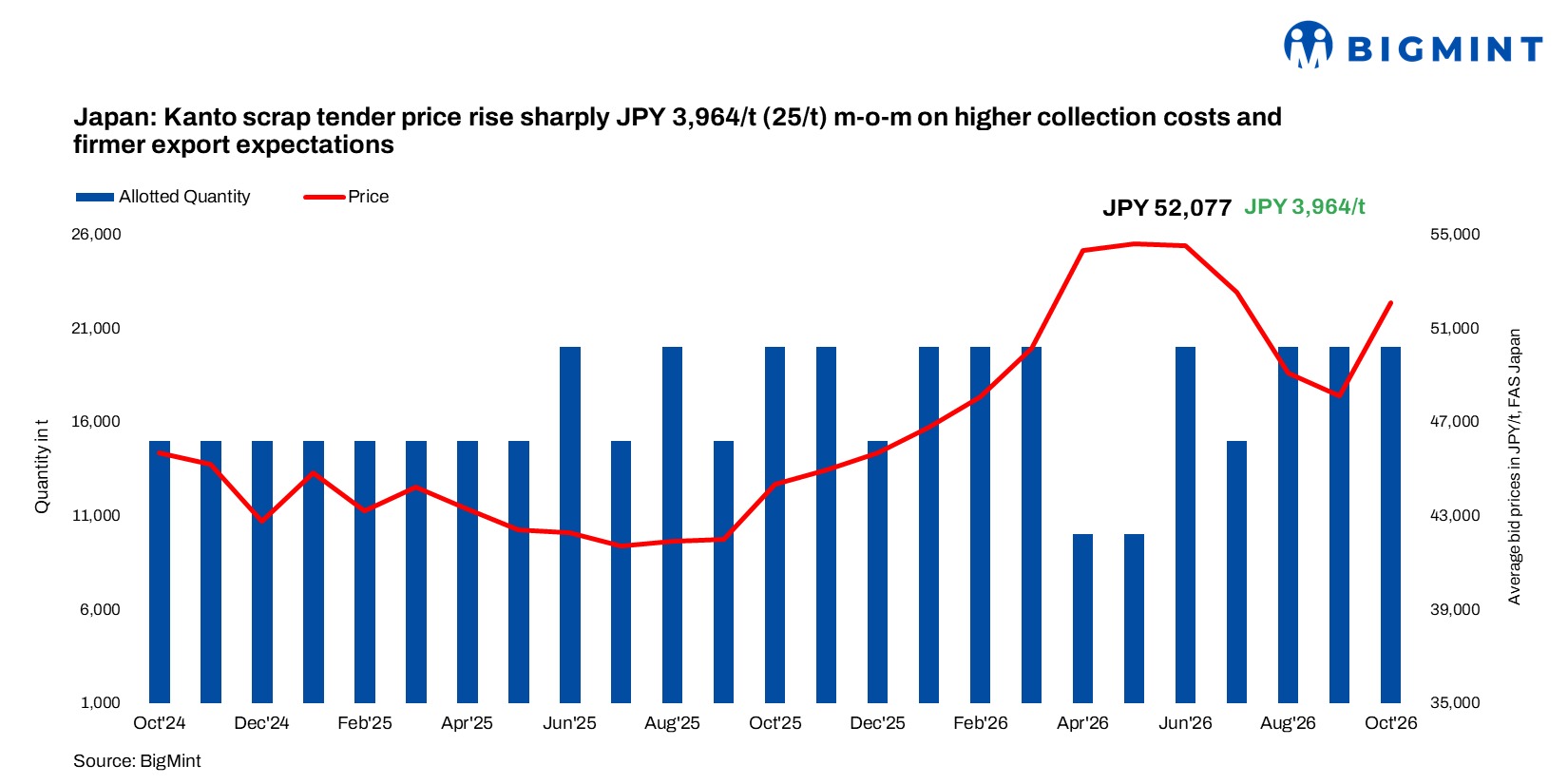
Japan’s October Kanto export scrap tender settled at JPY 52,077/t FAS ($329/t), up by JPY 3,964/t ($25/t) from the previous tender on 9 September, when it settled at JPY 48,113/t ($313/t). This marked the first sharp increase after four consecutive monthly declines. After the firm rise, the tender price remained above domestic electric-arc furnace (EAF) mill buying levels and Gulf prices.
In dollar terms, the tender price increased by only $16/t, from $313/t to $329/t, as the yen weakened against the US dollar. The exchange rate moved to around JPY 158.04/$ on 9 October, from JPY 153.2/$ during the previous tender on 9 September, limiting the dollar-denominated increase compared with the rise in yen terms.
A Southeast Asian supplier said, “Higher ocean freight puts downward pressure on FOB prices, while the weaker yen had only a slight impact. Overall, the market increased by $16/t in USD terms on an FAS basis.”
The increase was supported by rising domestic scrap collection prices, stronger export values, and expectations of higher demand in October, following the completion of maintenance at most Japanese mills.
Another trader said stronger demand is likely to lift domestic prices and prompt exporters to seek higher prices. Limited supplier offers during the Kanto tender, expectations of a stronger result, and a more favourable exchange rate also encouraged sellers to raise their bids.
The October Kanto tender received 14 bids, matching last month’s count. However, the total volume sought rose by 30,000 t to 130,400 t, pointing to stronger buying interest among traders.
Bangladesh remains successful bidder
A Chattogram-based steel mill secured 20,000 t in the October Kanto tender through a Japanese trading company, marking Bangladesh’s third consecutive month of participation. The scrap is expected to be supplied to the trader’s regular buyer in Chattogram. This follows Vietnam’s purchase of the July shipment, highlighting continued South Asian interest in Japanese scrap.
The landed cost of Japanese H2 scrap is estimated at around $400-405/t CFR Chattogram, including freight of approximately $75-80/t, broadly aligning with current import parity. Buying interest remains concentrated in Bangladesh, while demand from other major Asian destinations is subdued. Higher freight rates, at over $75-80/t to Bangladesh and $60-65/t to Vietnam for 20,000-t vessels, continue to limit buyers’ bidding flexibility.
In Vietnam, Japanese scrap export activity remains subdued despite bids rising to around $368-370/t CFR, while exchange-rate volatility continues to weigh on buying decisions.
Tokyo Steel raises scrap prices ahead of Kanto tender
Tokyo Steel, Japan’s largest EAF steelmaker, raised H2 scrap purchase prices by JPY 1,000/t ($6/t) at Tahara, Nagoya, Utsunomiya, and its Tokyo Bay satellite yard, effective 9 October. Prices at Okayama, Takamatsu, and Kyushu increased by JPY 500/t ($3/t). This marked the company’s second price hike in October.

Following the revision, H2 buying prices stood at JPY 49,000-51,500/t ($310-325/t) DAP. As of 9 October, H2 purchase prices among Kanto electric-furnace mills were around JPY 49,000-50,000/t ($310-316/t), while higher-grade HS scrap was priced at JPY 53,000-54,000/t ($335-342/t).
Outlook
Buying interest across Asian markets remains limited, which could cap further price gains. Subdued demand from Vietnam and selective procurement by Bangladeshi buyers are likely to keep market activity in check, with attention largely centred on the Kanto tender. Meanwhile, firm export prices in dollar terms and a weaker yen continue to support Japanese scrap competitiveness, keeping expectations of further domestic price hikes alive. The next Kanto export scrap tender, scheduled for 10 November, is expected to offer a clearer indication of the market’s direction.
Leave a Reply