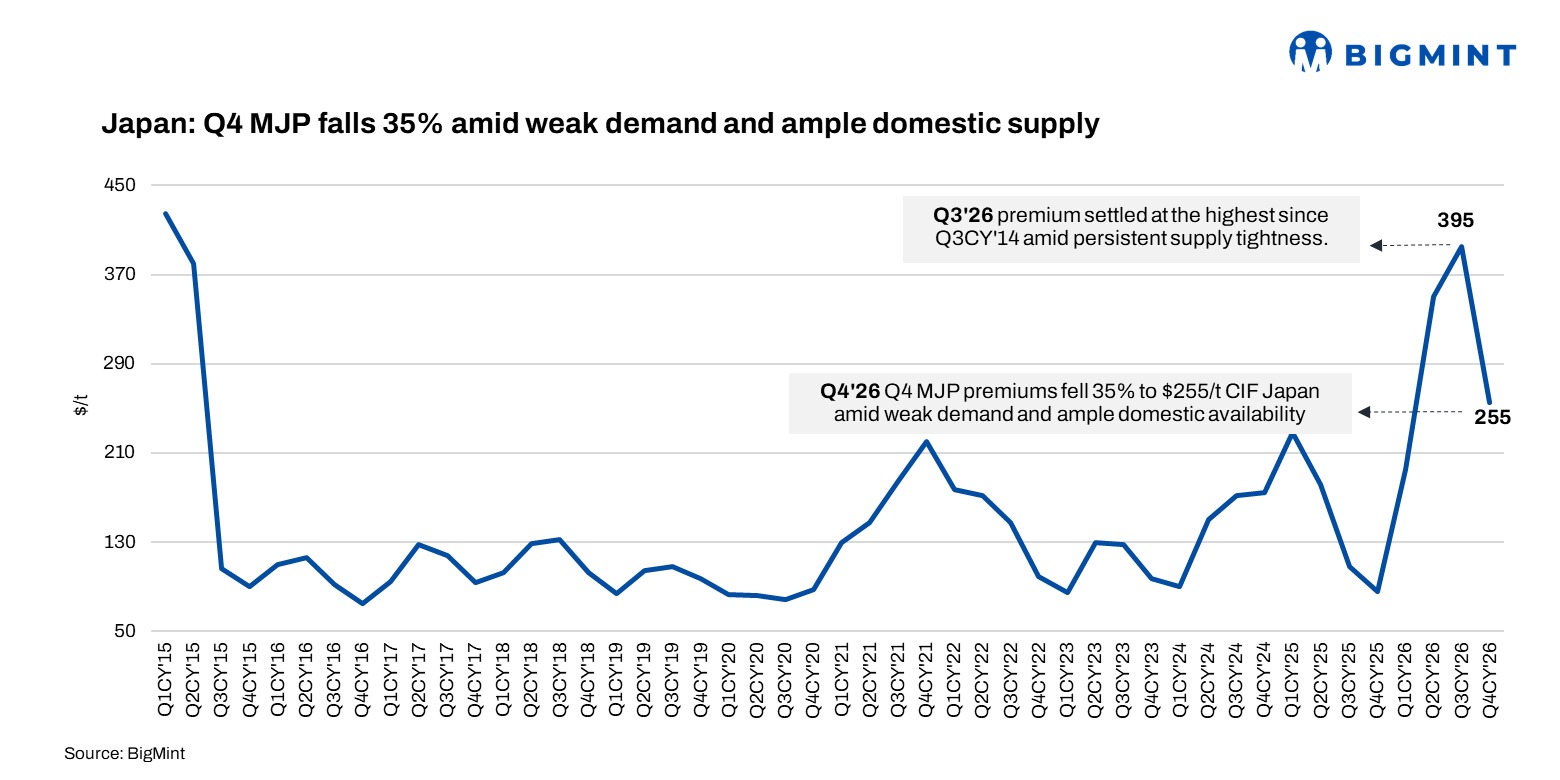
- Weak demand keeps Japanese spot premiums under pressure
- Buyers continue seeking lower quarterly premium settlements
Japanese aluminium Q4 main Japanese ports (MJP) premiums settled at $255/t CIF Japan on October 7, down 35% from Q3’s $395/t, as weak primary aluminium demand and cautious buying weighed on negotiations. As per market sources, three deals were reported at the new level, covering volumes of 2,000-3,000 tonnes per month during the fourth quarter.
The settlement was within the earlier market expectations of $250-280/t CIF Japan. However, buyer sentiment remained divided, with some participants continuing to target $220/t and holding back from accepting the concluded level. The gap suggests that, despite the sharp quarterly reduction, buyers are still seeking more competitive terms amid subdued demand.
Spot premiums remain under pressure
Japanese aluminium spot premiums edged lower in early October. Market activity remained thin, with some participants indicating tradable levels of $200-220/t CIF Japan amid weak demand and a bearish outlook. At the same time, traders reported that good Western-origin material was becoming harder to attract to Japan, as some cargoes were flowing towards Europe.
This highlights the contrast between subdued Japanese buying interest and competition for available overseas material. Lower premiums have yet to trigger a meaningful improvement in demand, with buyers continuing to negotiate cautiously.
Indonesian supply clouds the 2027 outlook
Market participants expect additional Indonesian aluminium supply to enter Asian markets in 2027, raising concerns about a potential surplus and further pressure on regional premiums. If new projects come online as scheduled, increased availability could intensify competition among suppliers and give Japanese buyers greater negotiating leverage.
However, the timing and pace of new supply remain important variables. Delays in project commissioning or a slower ramp-up could limit the expected increase in availability.
For the Japanese market, the Q4 settlement reflects a weaker premium environment, while the next phase will depend on whether demand improves and how quickly Indonesian supply reaches the wider Asian market. Until then, buyer caution and expectations of greater supply are likely to remain key factors shaping premium negotiations.
Leave a Reply