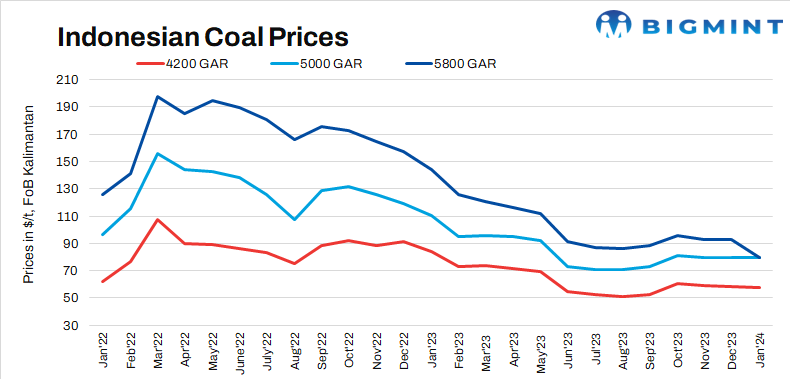
Indonesian thermal coal prices dropped last week. Low-CV (3400 GAR) coal prices decreased by $0.09/t to $37.31/t, while high-CV (5800 GAR) coal prices were down by $0.09/t to $92.84/t.
On the supply side in Indonesia, production quotas were approved on 19 January, 2024. Many Indonesian producers have already received approvals for the current year’s production target after days of waiting, leading to an increased flow of offers in the market. Some miners were still waiting for production quotas to be approved; these producers are mostly small-sized, with a yearly output of around 15 to 20 million metric tons only. The impact on the supply chain is expected to be minimal.
Demand in the Asian thermal coal market remained low; China is not buying due to high coal stockpiles at coastal power plants, characterised by reduced industrial activities leading to a decline in coal burn rates, further dampening trading activities. Approved production quotas in Indonesia are expected to flood the market with supply in the coming weeks. This surge in supply, combined with subdued demand from China, may lead to an oversupply situation and influence market dynamics.
The demand from India has remained tepid compared to that from China, primarily due to improved domestic supply and ample domestic production. Market activity in India was limited, with low coal consumption attributed to the winter season. The demand for seaborne coal remained weak. Enquiries for Indonesia coal is anticipated to pick up from early February.
India: Portside prices largely stable w-o-w
India’s portside prices for 4200 GAR coal at Kandla Port remained largely stable w-ow at INR 6,100/t.
Outlook
Anticipated easing of supply constraints is expected to lead to a further drop in Indonesian thermal coal prices, as many producers have secured production quotas. Approvals for the current year’s production targets have been received by Indonesian producers after days of waiting, contributing to an increased offer flow in the market. Additionally, demand from India and China have remained on the lower side, potentially exerting downward pressure on prices.