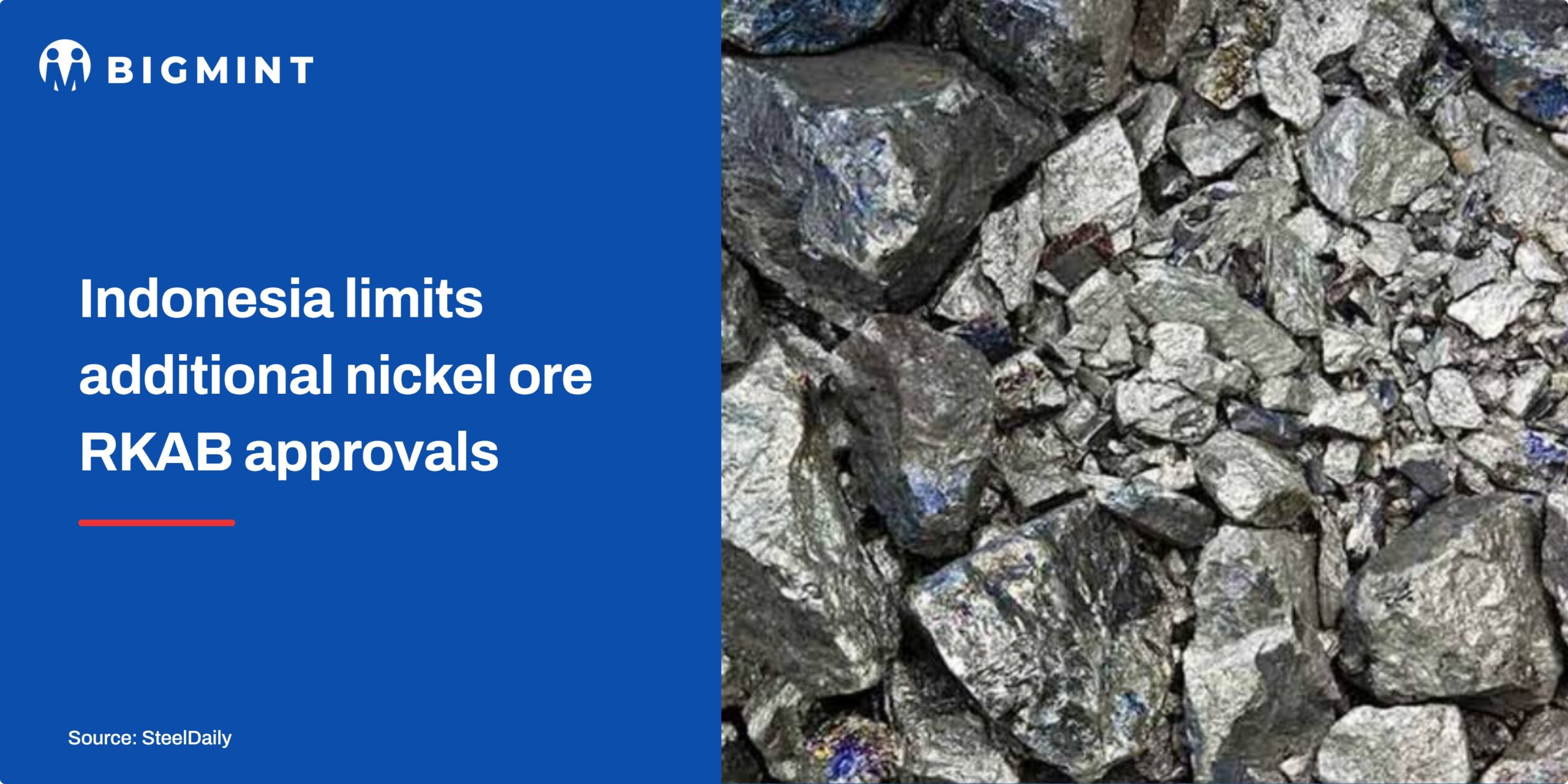
- Extra quotas only for smelters facing ore shortages
- Government maintains production control to support market stability
Indonesia has reiterated that it will not undertake a broad expansion of nickel ore production quotas (RKAB), reaffirming its commitment to controlling nickel supply. However, the government will consider limited additional allocations for domestic smelters experiencing raw material shortages to ensure operational continuity.
According to Tri Winarno, Director General of Minerals and Coal at Indonesia’s Ministry of Energy and Mineral Resources (ESDM), additional RKAB approvals will be granted only to meet the operational requirements of smelters facing verified ore shortages. The government clarified that it has no plans to increase nationwide nickel production quotas.
Government prioritises market balance
ESDM stated that a large-scale increase in nickel ore production could worsen the existing global oversupply and put further pressure on nickel prices. Therefore, while the government intends to support smelters struggling with feedstock availability, any additional allocations will remain limited and will not materially alter Indonesia’s overall production outlook.
The ministry added that quota approvals will be based on each smelter’s actual operating status, raw material requirements, and supply chain conditions, rather than providing blanket production increases across the industry.
RKAB amendments open until 31 July
Mining companies meeting regulatory requirements can submit RKAB amendment applications until 31 July, in accordance with ESDM Decree No. 17 of 2025. However, the government emphasized that filing an amendment does not guarantee additional production quotas.
Applications will undergo a comprehensive review considering production performance, smelter demand, and overall market conditions before any approval is granted.
Outlook
Indonesia’s latest stance reduces expectations of a significant increase in nickel ore supply during H2’26. While selected smelters may receive limited additional allocations to address operational shortages, the government’s broader policy of controlling nickel production is expected to remain intact. The measured approach could help support nickel prices by preventing a sharp increase in ore availability while ensuring domestic downstream operations continue uninterrupted.
Note: This article is published as part of a content exchange agreement between SteelDaily and BigMint.
Leave a Reply