- Mining quota cut signals stronger government supply control
- Ore pricing reforms likely to add to downstream cost pressures
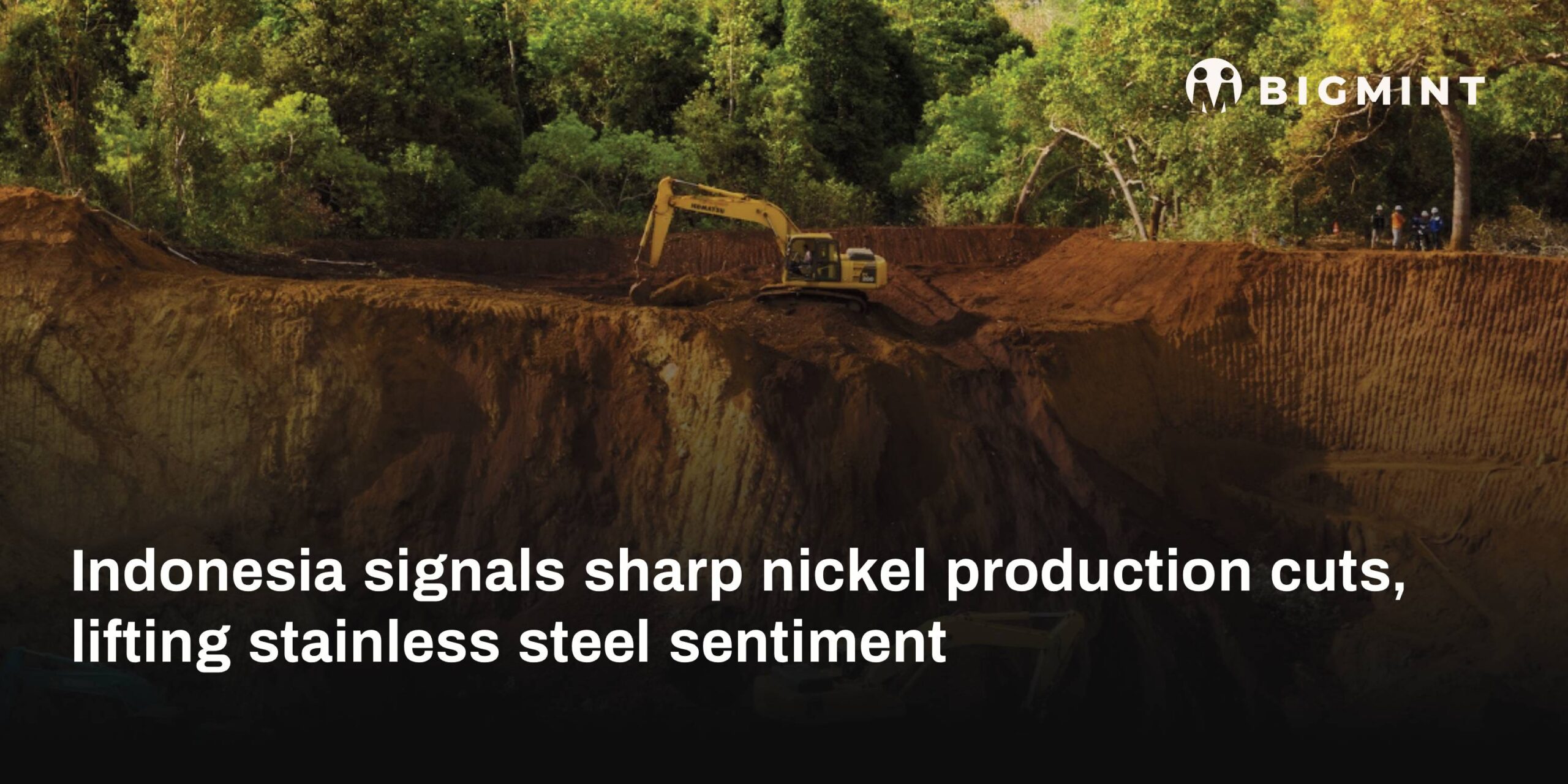
SteelDaily: Indonesia, the world’s largest nickel producer, has announced plans to significantly curb nickel mine output in 2026, reviving concerns over a potential shift from oversupply to tighter market conditions. The Indonesian Nickel Mining Association (APNI) stated that the 2026 nickel mining quota (RKAB) is likely to be capped at 250 million tonnes (mnt), marking a steep 34% reduction from the 2025 target of 379 mnt — the sharpest cut in recent years.
Ore pricing reforms add to cost pressures
Alongside quota reductions, Indonesia’s Ministry of Energy and Mineral Resources plans to revise the nickel ore benchmark price (HPM) mechanism. Under the proposed changes, cobalt — previously excluded — will be treated as a standalone commodity and subjected to royalties. Market participants estimate that the combined impact of quota cuts and pricing reforms could raise nickel intermediate production costs by RMB 400-500/t ($56-71/t), further tightening margins across the value chain.
Actual supply may tighten further
Concerns are mounting that effective ore availability could fall well below headline quotas. Industry estimates suggest Indonesia’s nickel ore demand could reach around 310 million wmt (wet metric tonne) in 2026. If the quota is capped at 250 mnt — and exploration-related reserves are excluded — actual ore available for smelters could drop closer to 200 mnt. This raises the risk of a significant supply-demand imbalance, potentially offsetting the global nickel surplus projected for next year.
Chinese prices respond sharply
The announcement has already triggered a strong reaction in China’s market. Nickel prices on the Shanghai Futures Exchange rebounded sharply from mid-December lows, rising above RMB 120,000/t ($17,071/t). Stainless steel futures also broke out of their recent trading range, posting weekly gains exceeding 5%, driven by expectations of higher raw material costs.
NPI floor strengthens; upside risks emerge
With Tsingshan’s recent bid levels forming a floor around RMB 880-900 ($125-128) per nickel unit, market participants noted that further upside in nickel pig iron (NPI) prices could materialise if Indonesia’s quota restrictions are implemented as planned.
Outlook
Indonesia’s proposed quota cuts and ore pricing reforms mark a potential inflection point for the global nickel and stainless steel markets. While uncertainties remain around implementation, the policy signals have already shifted sentiment, with rising cost expectations lending support to nickel, NPI, and stainless steel prices.
Note: This article has been published in accordance with a content exchange agreement between SteelDaily and BigMint.
Leave a Reply