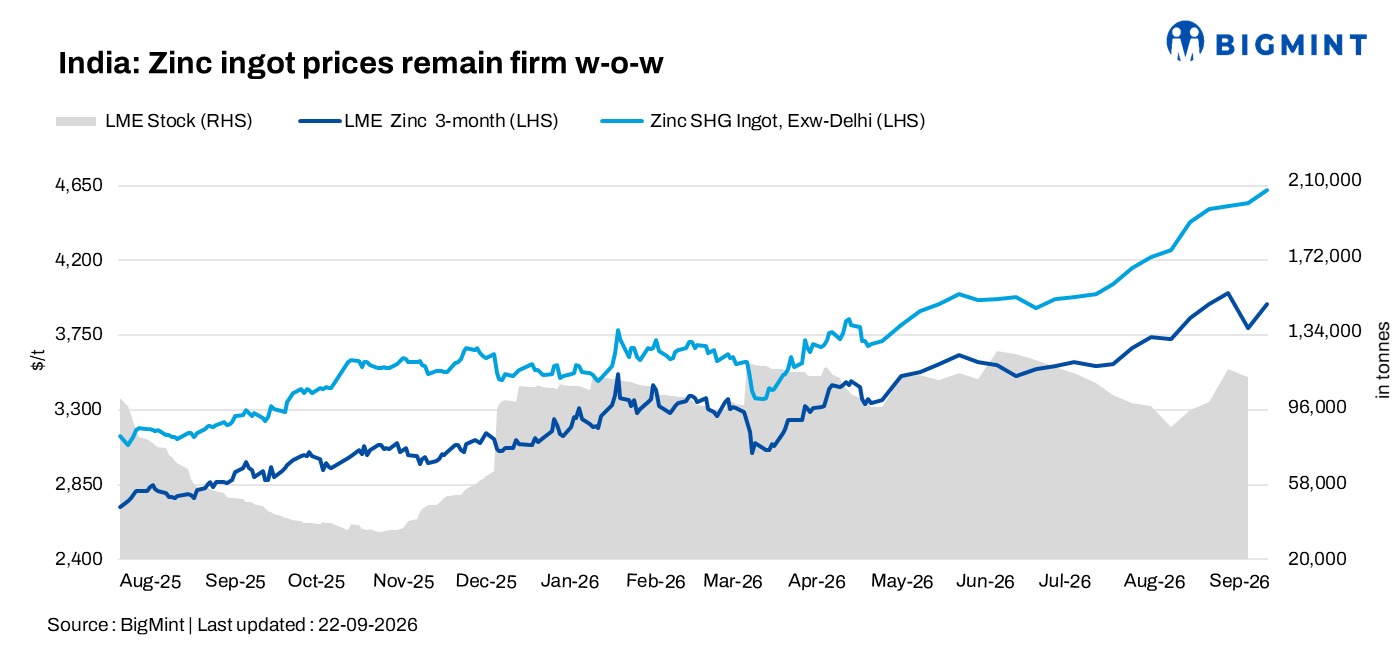
- LME zinc remains elevated, with cash prices above $4,000/t
- Galvanisers remain cautious, continue need-based purchases
India’s zinc ingot (99.995%) prices increased amid tight import availability and limited supplies, despite subdued downstream demand. BigMint’s benchmark assessment stood at INR 442,000/t ex-Delhi on 22 September, rising by INR 10,000/t w-o-w. Hindustan Zinc Ltd (HZL) raised its SHG zinc benchmark by INR 4,000/t on 21 September to INR 424,600/t.
LME zinc prices remained elevated, with cash prices above $4,000/t, while exchange stocks declined by around 2,125 t on 22 September from the previous day. Import availability remains tight, although some volumes from Korea have started arriving. Duty-free CIF premiums were indicated at around $260-265/t.
Domestic zinc prices rise amid tight availability
Domestic zinc prices moved higher as limited availability and elevated replacement costs supported the market.
BigMint’s benchmark assessment increased to INR 442,000/t ex-Delhi on 22 September. HZL raised its benchmark SHG zinc ingot price by INR 4,000/t on 21 September to INR 424,600/t.
Despite higher prices, downstream buying remained selective, with consumers largely restricting procurement to immediate requirements. High zinc costs continue to pressure galvanisers and other downstream users, limiting broader demand improvement.
Zinc imports remain tight despite lower premiums
India’s zinc import market remained tight, although CIF premiums have eased to around $260-265/t for duty-free material.
South Korean imported zinc was indicated at around $4,200-4,205/t, while Korean-origin material was heard at around INR 437,000/t in the domestic market. Australian-origin zinc remained significantly higher at around INR 475,000/t domestically.
Some volumes from Korea have started arriving, while market participants expect import quantities to improve in October. However, current supplies remain tight, limiting the immediate impact of imports on domestic availability.
Weak downstream demand continues to limit buying
Downstream zinc demand remains cautious, with buyers largely following a need-based purchasing approach amid elevated input costs.
Galvanisers continue to face pressure from high zinc prices, while limited ability to pass on higher costs to customers has kept purchasing activity subdued. The rise in domestic prices has therefore been driven more by tight availability and replacement costs than by a broad-based improvement in demand.
Zinc alloy prices remain firm
Zinc alloy prices remained elevated amid higher primary zinc costs.
In Delhi, Zamak 3 was heard at around INR 450,000/t, while Zamak 5 was indicated at around INR 456,000-457,000/t. Zinc PMI prices remained at around INR 388,000/t.
Downstream demand remained selective, with buyers continuing to procure mainly against immediate requirements.
Coated steel prices continue to increase
India’s coated flat steel trade-level prices increased by around INR 900-2,900/t following major domestic steel mill price hikes of INR 2,000-2,500/t in mid-September.
The increase in mill offers has pushed up market enquiries, although actual demand has not strengthened significantly. Buyers remain cautious, with purchases largely restricted to immediate requirements.
Market inventories are currently at medium to slightly lower levels, mainly due to limited material availability from domestic mills. Reduced supplies have kept distributor and trader inventories relatively lean, providing support to trade-level prices despite limited improvement in underlying demand.

Outlook
India’s zinc ingot market is expected to remain supported in the near term by tight supplies, elevated replacement costs and limited import availability.
However, subdued downstream demand could limit further price gains. LME zinc cash prices stood at $4,006/t on 22 September, while stocks declined to 114,725 t from 116,850 t on 21 September.
Duty-free CIF premiums have eased to around $260-265/t, while some Korean-origin supplies have started arriving. Import quantities are expected to improve in October, which could gradually ease domestic supply tightness.
Leave a Reply