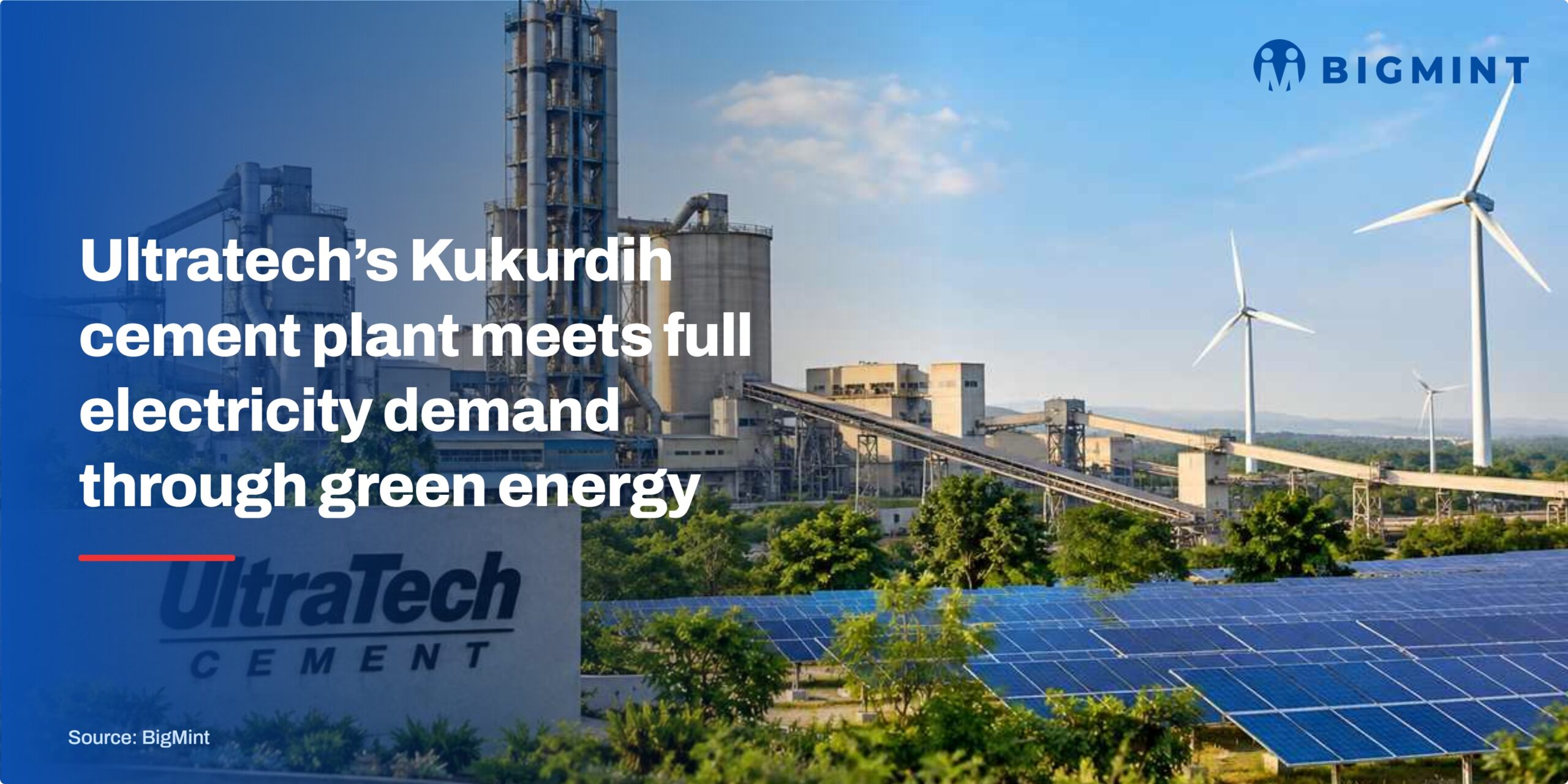
- Renewable power, WHR cover plant’s monthly electricity needs
- Green power capacity reaches 1,897 MW across network
Ultratech Cement’s 3.3 mnt/year integrated cement plant at Kukurdih, Chhattisgarh, has been meeting 100% of its monthly electricity requirement through renewable energy and waste heat recovery (WHR) since April 2026. The milestone highlights the growing role of captive renewable power and Waste Heat Recovery (WHR) in reducing conventional power dependence across energy-intensive cement operations.
Green power integration
The Kukurdih unit, commissioned in 2024, is using a combination of renewable power sourcing and WHR systems to meet its electricity requirement while maintaining operational reliability. The development also indicates how newer integrated cement facilities are increasingly being designed around lower-carbon energy systems.
Since April, nearly one-third of the producer’s 76 manufacturing units in India have recorded green energy utilization of more than 50% of their electricity consumption. Five units, including Kukurdih, have exceeded 95%.
The company has also been deploying battery energy storage systems (BESS) across its manufacturing network to improve renewable energy integration and manage variability in generation.
Captive capacity expands
As of Q1FY27, captive non-fossil-fuel energy capacity stood at 1,897 MW. This included 1,463 MW of renewable capacity from solar, wind and hybrid sources, while WHR accounted for another 434 MW.
The continued expansion of non-fossil-fuel capacity is significant for cement producers, where electricity forms an important component of overall manufacturing costs. Greater utilisation of renewable power and WHR can reduce exposure to conventional electricity costs while supporting emissions reduction.
The company has invested in new captive thermal power capacity for greenfield projects or brownfield expansions at integrated units for more than a decade.
Outlook
The increasing use of renewable power, WHR and BESS is expected to accelerate the shift in cement plants’ electricity sourcing over the coming years. The company targets an 85% share of green power in its overall electricity mix by 2030 and 100% by 2050. Greater renewable integration could gradually reduce dependence on conventional captive power while increasing the importance of storage and hybrid power systems for reliable plant operations.
Leave a Reply