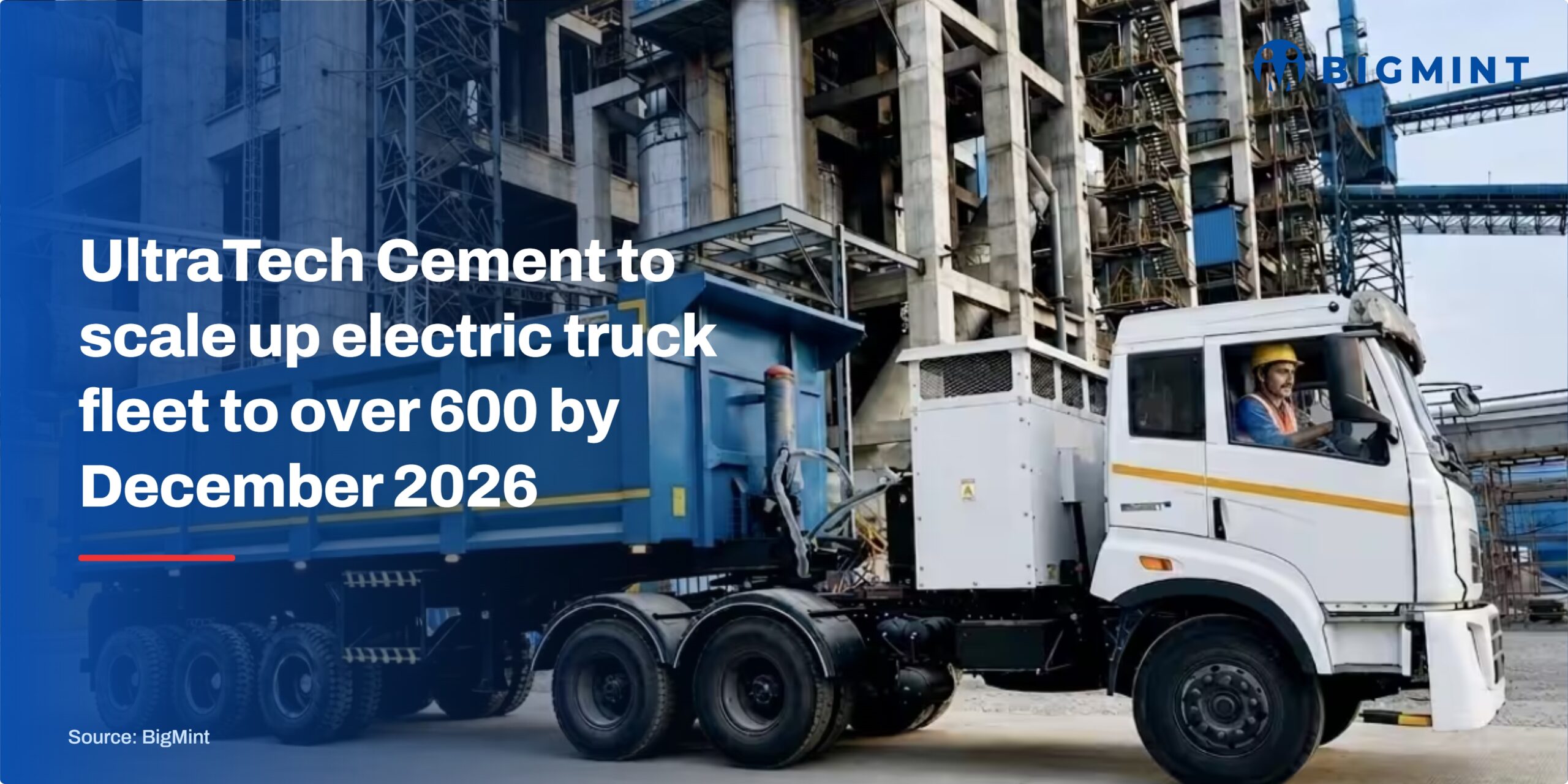
- EV fleet to transport 5 mnt of clinker, other materials annually
- Electrification targets over 117,000 t of annual CO2 reduction
UltraTech Cement plans to expand its electric heavy-duty truck fleet to more than 600 vehicles by December 2026, strengthening the electrification of its logistics operations. The fleet is expected to transport around 5 million tonnes (mnt) of clinker and other key materials annually across Gujarat, Uttar Pradesh, Madhya Pradesh, Rajasthan, Chhattisgarh, Maharashtra, and Odisha.
Logistics network moves towards electrification
The company has signed service contracts with Tata Motors, Ashok Leyland, IPLTech, Energy in Motion, Sany, and their subsidiaries, along with other third-party logistics providers, to deploy electric trucks.
The company said the fleet, once fully operational, could reduce annual CO₂ emissions by more than 117,000 t and displace around 39 million litres of diesel annually. The deployment will cover movements from mines to plants as well as inter-plant transportation of clinker and other key materials.
UltraTech Cement currently operates more than 850 trucks under its green logistics programme, including CNG and electric vehicles. The company introduced CNG trucks in 2021 and electric trucks in 2024.
Operational implications
The scale-up could reduce diesel dependence across high-volume, long-haul logistics routes while increasing the use of lower-emission transport in the cement supply chain. The impact on operating costs will depend on vehicle utilisation, charging infrastructure, electricity costs and route characteristics.
Outlook
By December 2026, the expanded EV fleet is expected to strengthen the company’s decarbonisation efforts across its logistics network. Higher utilisation of electric trucks on clinker and raw material routes could gradually reduce diesel consumption and logistics-related emissions. However, the pace of further electrification is likely to depend on charging infrastructure, vehicle economics and the operational suitability of EVs for long-haul cement logistics.
Leave a Reply