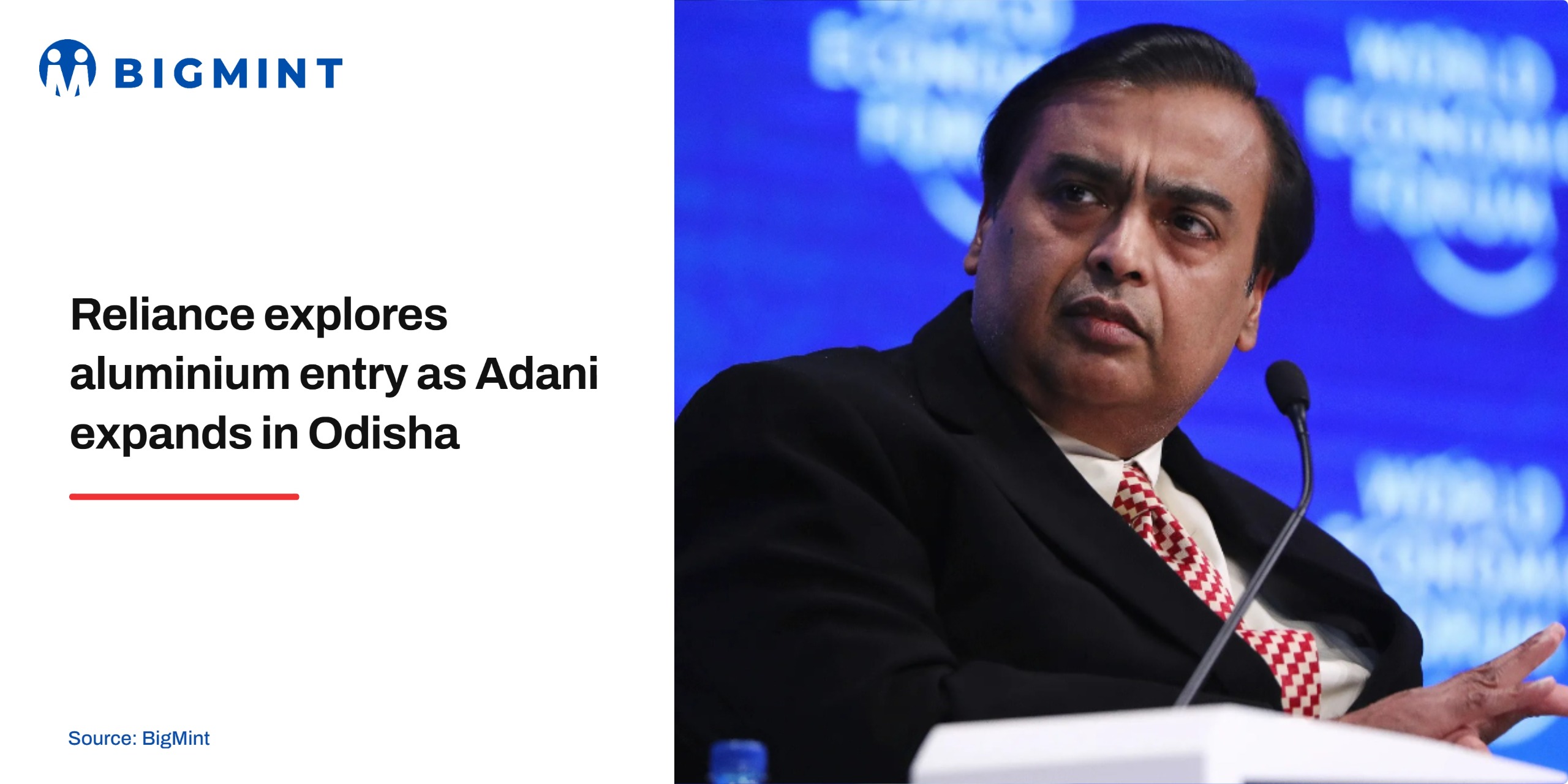
- Reliance’s interest in Karlapat bauxite mine signals upstream ambitions
- Planned coal gasification project could support energy-intensive operations
Reliance Industries Ltd (RIL) is reportedly evaluating an entry into aluminium production, potentially marking the conglomerate’s expansion into one of India’s most energy-intensive metals industries. The move is being considered alongside Reliance’s plans to develop a large-scale coal gasification project in Andhra Pradesh, creating the possibility of integrating energy generation with alumina and aluminium production.
According to media reports citing people familiar with the matter, Reliance is assessing opportunities in the metals business, although the plans remain at an early stage and no final investment decision has been taken.
Karlapat bauxite interest adds to speculation
Reliance has reportedly purchased tender documents for Odisha’s Karlapat bauxite block, indicating its interest in securing access to upstream raw material resources. The block, spread across around 3,100 hectares, is estimated to contain more than 200 mnt of bauxite.
Reliance and the Adani Group were among the companies reported to have shown interest in the block. However, BALCO, a subsidiary of Vedanta Aluminium, emerged as the preferred bidder after quoting a final auction premium of 175%.
Reliance’s participation in the tender process, although it did not secure the block, has added to market speculation around its potential plans for an integrated aluminium business.
Coal gasification could provide energy linkage
Reliance’s aluminium ambitions could potentially be linked with its proposed coal gasification operations in Andhra Pradesh. The company has won two coal blocks in the state, Recherla and Chintalapudi, and has proposed an investment of around INR 2.73 lakh crore over 30 years for an integrated underground coal gasification complex.
Coal gasification converts coal into synthesis gas, or syngas, which can be used for power generation and industrial applications. Given the substantial energy requirements of alumina refining and aluminium smelting, Reliance could potentially leverage gasification derived fuel or power to improve the economics of a future metals operation.
However, the extent to which such integration could be commercially viable will depend on the eventual technology configuration, scale of operations, energy costs and availability of suitable bauxite resources.
Adani also targets large scale aluminium production
Reliance’s reported evaluation comes at a time when the Adani Group is preparing for a major expansion in aluminium. Adani Enterprises Ltd announced in July plans to invest around $11.5 billion to develop a 2-million-tonne-per-year aluminium project in Odisha in partnership with UAE-based International Holding Company (IHC).
The proposed investment could significantly alter India’s aluminium production landscape, particularly as the country seeks to expand domestic capacity to meet rising consumption from automobiles, construction, power, renewable energy and other industrial sectors.
Competition could intensify in India’s aluminium sector
India’s aluminium industry is currently dominated by established producers, with Vedanta Aluminium having around 2.5 mnt/year of production capacity, followed by Hindalco Industries at around 1.4 mnt/year and state-owned NALCO at around 0.5 mnt/year.
The potential entry of Reliance, alongside Adani’s proposed 2 mnt/year project, could therefore introduce two major new players into the sector. Beyond adding production capacity, the developments could accelerate investment across the aluminium value chain, including bauxite mining, alumina refining, power generation and downstream manufacturing.
For Reliance, an aluminium venture could also fit into its broader strategy of integrating energy and industrial businesses. However, the company’s plans are still under evaluation, and any potential project would need to progress through detailed feasibility, resource and investment assessments before becoming a confirmed capacity addition.
Leave a Reply