- Move to cut transport permit processing time to 10-15 min
- New system to also address iron ore grade manipulation
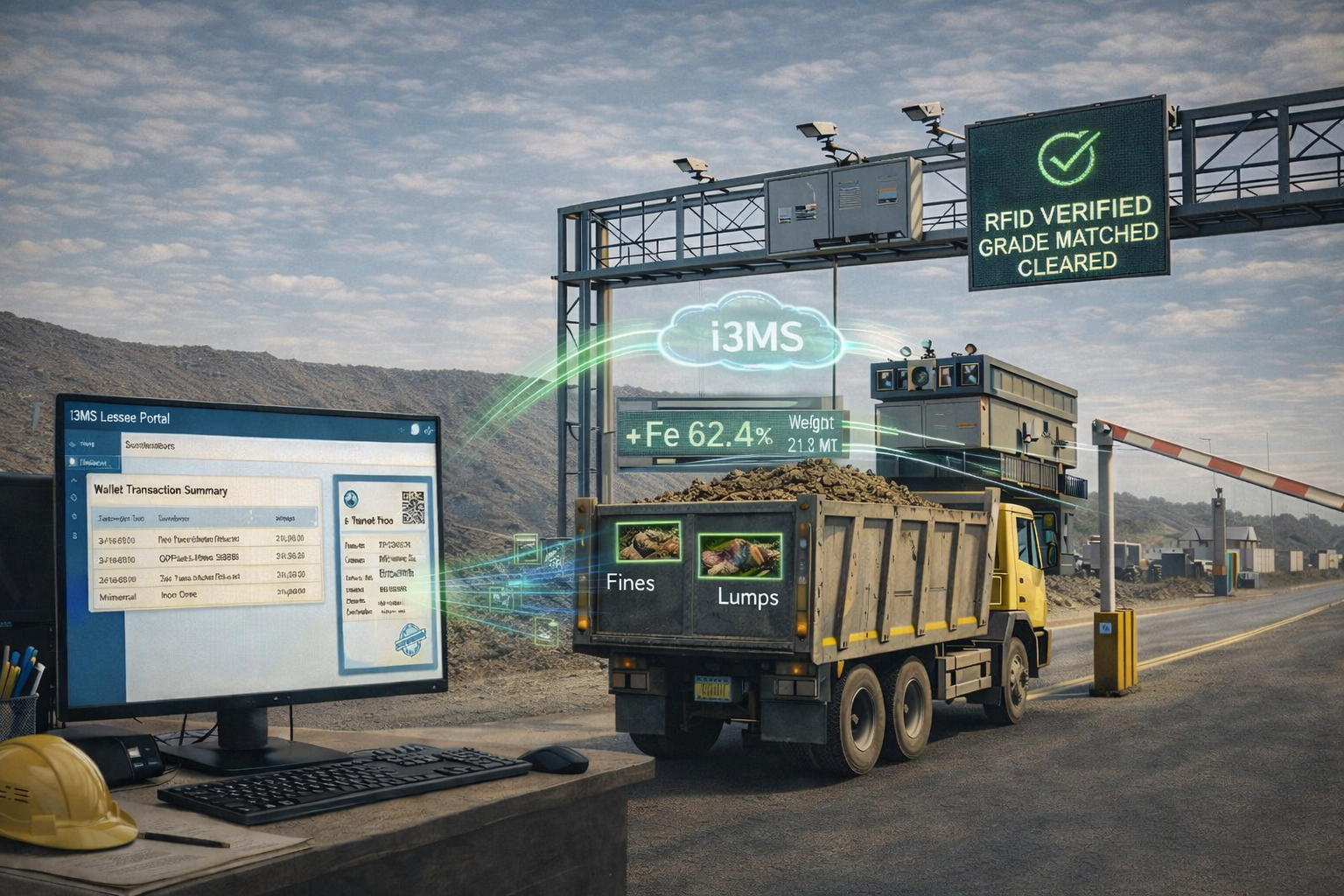
Odisha is implementing a comprehensive AI-enabled ore monitoring and transport system (OMPTS) that will reduce transport permit processing time from 7-10 days to just 10-15 minutes while addressing grade manipulation that has cost the state thousands of crores in lost revenue.
The existing Odisha Mineral (Prevention of Theft, Smuggling, and Illegal Mining and Regulation of Possession, Storage, Trading, and Transportation) Act framework, introduced in 2007 to curb a mining scam being investigated by a central commission, has now become obsolete due to technological advances. Automation is also a necessity for a department of approximately 150 people overseeing the production of nearly 180 million tonnes (mnt) of iron ore annually, along with 6 million tonnes (mnt) of bauxite and 2 million tonnes (mnt) of chromite.
Background
A Comptroller and Auditor General (CAG) audit flagged under-reporting of grades across five to six iron ore leases, computing losses of approximately INR 4,500 crore. However, the Steel and Mines Department’s Secretary, Surender Kumar, called this a “very charitable estimate”.
The Department’s internal assessment of 14 iron ore mines — half of Odisha’s operating iron ore mines — revealed systematic under-reporting. High-grade mines were reporting grades that had never produced in the entire life of 70-80 years of the mine. “A mine that began operations in October, and which had never produced less than Fe 60% historically, is now selling 51% and 53% Fe material,” Kumar explained. This systemic manipulation cannot happen without officer complicity, acknowledged candidly by the Secretary. The new system thus eliminates human interference completely.
Under the existing process, lessees must maintain physical stacks of about 20,000 tonnes (t) of ore before applying for sampling and dispatch through the Integrated Major Mineral Mining Management System (i3MS). A randomly assigned mining officer collects samples from multiple points, seals them, and sends three samples (A, B, and umpire) to a chemical laboratory (Odisha has only three laboratories located within the state). Payments must be made before a dispatch permit can be issued. The entire process from ore raising to dispatch takes 7-10 days.
Automated Grading and Analysis
The proposed system eliminates stacking entirely — a practice that costs lessees approximately INR 40-50/t. Once ore is excavated and crushed, it moves directly onto conveyor belts through a cross-belt analyser. Odisha has identified three analyser types (and remains open to other proven technologies):
- PGNA (Prompt Gamma Neutron Activation Analysis) – Atomic Energy Regulatory Board (AERB) clearance
- PFTNA (Pulsed Fast Thermal Neutron Activation Analysis)
- LIBS (Laser-Induced Breakdown Spectroscopy)
These analysers, which cost between INR 80 lakhs and INR 2.5 crore, claim 95-98% accuracy subject to continuous calibration. They will require monthly OEM certification and NABL accreditation. Smaller mines may opt for fixed auger systems costing INR 1.5-2 crore. For quality control, physical samples will still be drawn for every 50,000 t processed. If analyser readings diverge materially from lab analysis, lessees may appeal, with the umpire sample being final. For every 50,000 t processed by an analyser, physical samples will still be drawn and split into Sample A, Sample B, and an umpire sample. If the analyser reading diverges materially from lab analysis, the lessee may appeal. The umpire sample is final.
AI Camera Integration
Analysers measure chemical grade but cannot distinguish ore size or type. AI cameras capable of even detecting dust will identify:
- Lumps (size categories: 5×18 mm, 10×40 mm)
- CLOs
- Fines (0-5 mm)
Ore will then be loaded onto trucks positioned on weighbridges, where tare and laden weights are captured digitally and transmitted to i3MS in real-time ore grade, type, and quantity.
At this point, the system automatically calculates the lessee’s dues — royalty, DMF, and NMEDT — using the latest IBM-published Average Sale Price (ASP) and auto-debits from a prepaid wallet. The auction premium is settled separately on the 20th of the following month per statutory timelines. Each departmentally registered vehicle will have the following information added to its RFID:
- Source mine
- Lessee name
- Destination
- Consignee
- Ore grade
- Ore type
- Quantity
RFID/FASTag Integration
Odisha’s Steel and Mine Department has been in talks with the MoRTH to transfer this information on the FASTag already present in the vehicle, so no additional RFID tags need to be fitted. The data is validated automatically, before the boom barriers can open. Vehicle routes from weighbridge to mine exits are geofenced, and any manual override or deviation will trigger a red flag.
The vehicles’ FASTag (highway permits) can track the route of the vehicle, but the state proposes to have its own independent AI cameras installed on highways to verify the vehicles’ journey. At the destination, whether plant or port, the state proposes that the lessee install at their own cost boom barriers with RFID readers to verify what has arrived. Final offloading can happen once consignor-consignee data matches.
Odisha was also among the first states to auction operating iron ore mines under the new mining regime in 2019-20. Aggressive bidding pushed average auction premiums to approximately 109-110%. When royalty, DMF, and NMEDT (now at 3%) contributions (roughly 19%) and operational costs are added, lessees effectively pay about 127% of the sale value to the state. “Until and unless the lessee resorts to under-invoicing and under-reporting of grade, there is no way he can profit,” the official explained, referring to the phenomenon as the mining industry’s “winner’s curse.”
While the model, the bids, and the obligation to produce a minimum amount (MDPA) create strong economic incentives for misreporting grades, the government seeks compliance and not prosecutions that end up in long legal battles, said Kumar. Some of the finer details addressing criminality and retrospective claims on account of differences have thus to be rewritten.
The government has given miners a window of 15 months to align its systems to the new rule; the lead time for the supply of this equipment is about 14-16 weeks, it says. Considering the demand – with companies such as JSW, Tata, Rungta, JSPL, ArcelorMittal possibly requiring 8 to 10 machines – many (analyser) companies are considering setting up manufacturing facilities in India. Kumar said many miners have already placed orders and are confident of completing installation in 3-4 months.
Leave a Reply