- Duty rollback to aid downstream manufacturers
- Proposal supports India’s 1.6-1.8 mnt scrap imports
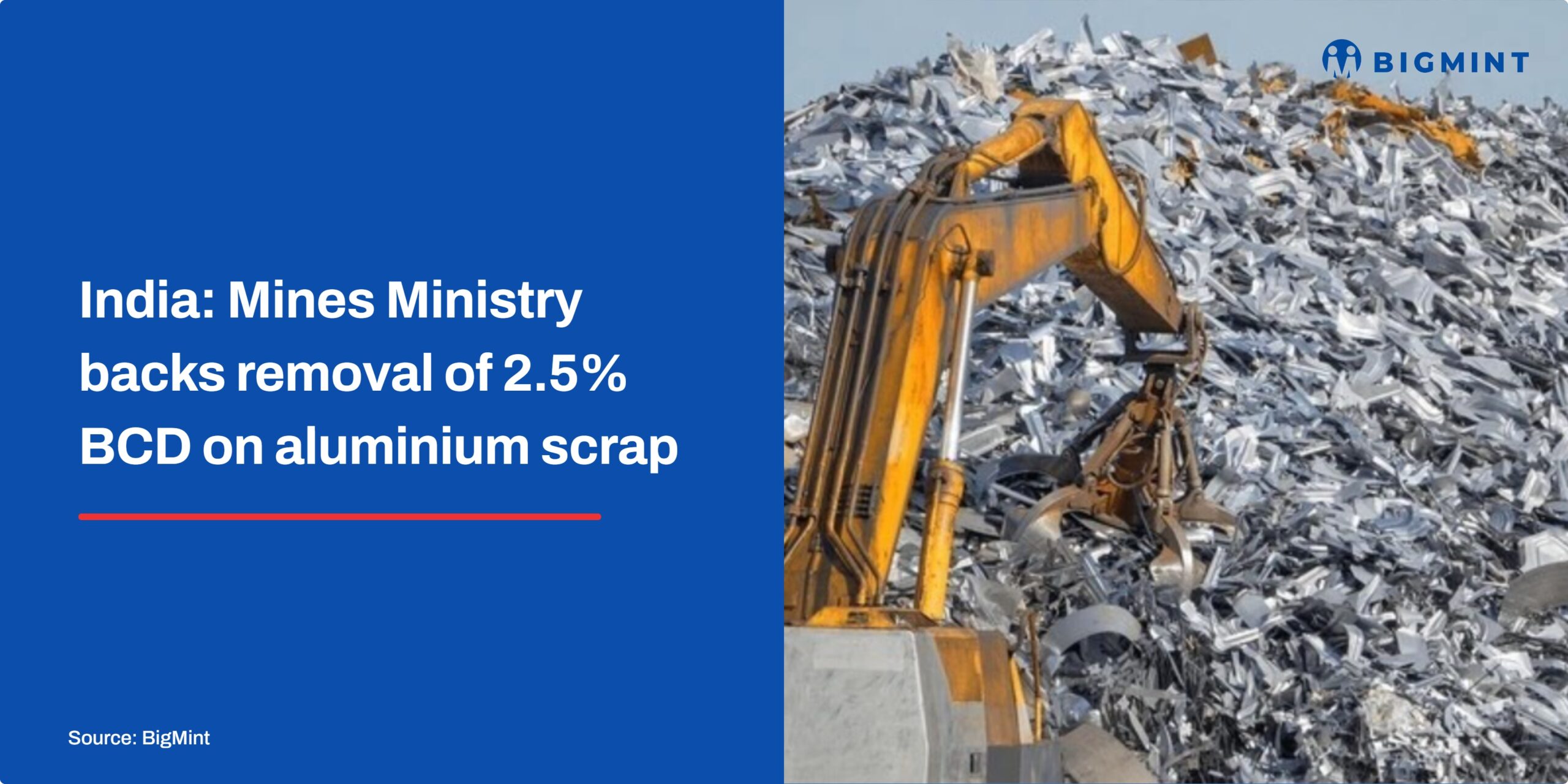
A working group under the Ministry of Mines has reportedly reached a consensus to abolish the 2.5% basic customs duty (BCD) on aluminium scrap imports and is expected to submit its recommendation to the Ministry of Finance this month or next for a final decision. The proposal seeks to address the inverted duty structure, which industry stakeholders say has increased raw material costs for domestic downstream manufacturers while allowing finished aluminium products from free trade agreement (FTA) partners, particularly ASEAN countries, to enter India at lower or zero import duties.
The current duty structure has been a longstanding concern for downstream aluminium manufacturers, including recyclers, rolling mills, and producers of auto components and utensils, who rely heavily on imported scrap as a key raw material. While these manufacturers pay import duty on scrap, they compete with finished aluminium products that often enter India duty-free under FTAs, affecting the competitiveness of domestic value addition. According to sources, the Ministry of Mines supports removing the duty, noting that aluminium is the only major non-ferrous metal currently subject to such an import levy.
The proposal comes amid elevated aluminium prices. LME aluminium prices climbed from around $2,300-2,600/t in 2024 to over $3,800/t by mid-2026, driven by supply disruptions linked to the West Asia conflict and production issues at major smelters. Although prices have moderated in recent weeks, they remain well above last year’s levels, while aluminium scrap prices have also increased by 20-25%, reflecting stronger primary aluminium prices and tighter scrap availability.
India imports around 1.6-1.8 mnt of aluminium scrap annually, primarily from Europe, the US and the UK, with imports expected to increase to 1.9-2 mnt this fiscal as demand for recycled, low-carbon aluminium continues to grow. However, global scrap availability is becoming increasingly constrained as several countries, particularly in Europe, retain more recyclable material for domestic recycling instead of exporting it.
The country’s dependence on imported scrap is expected to continue over the medium term. India’s per capita aluminium consumption stands at around 2.5 kg, significantly below the global average of 11 kg, limiting domestic scrap generation. Industry estimates suggest India is unlikely to generate sufficient aluminium scrap domestically to meet demand for at least the next decade as consumption continues to rise.
Some primary aluminium producers have called for stricter quality standards for imported scrap before any duty reduction is implemented. However, industry sources argue that imported scrap is sourced from diverse end-of-life products, making rigid product specifications impractical. They also noted that existing import classification norms are adequate and that quality standards should be addressed separately from the proposed customs duty decision.
Leave a Reply