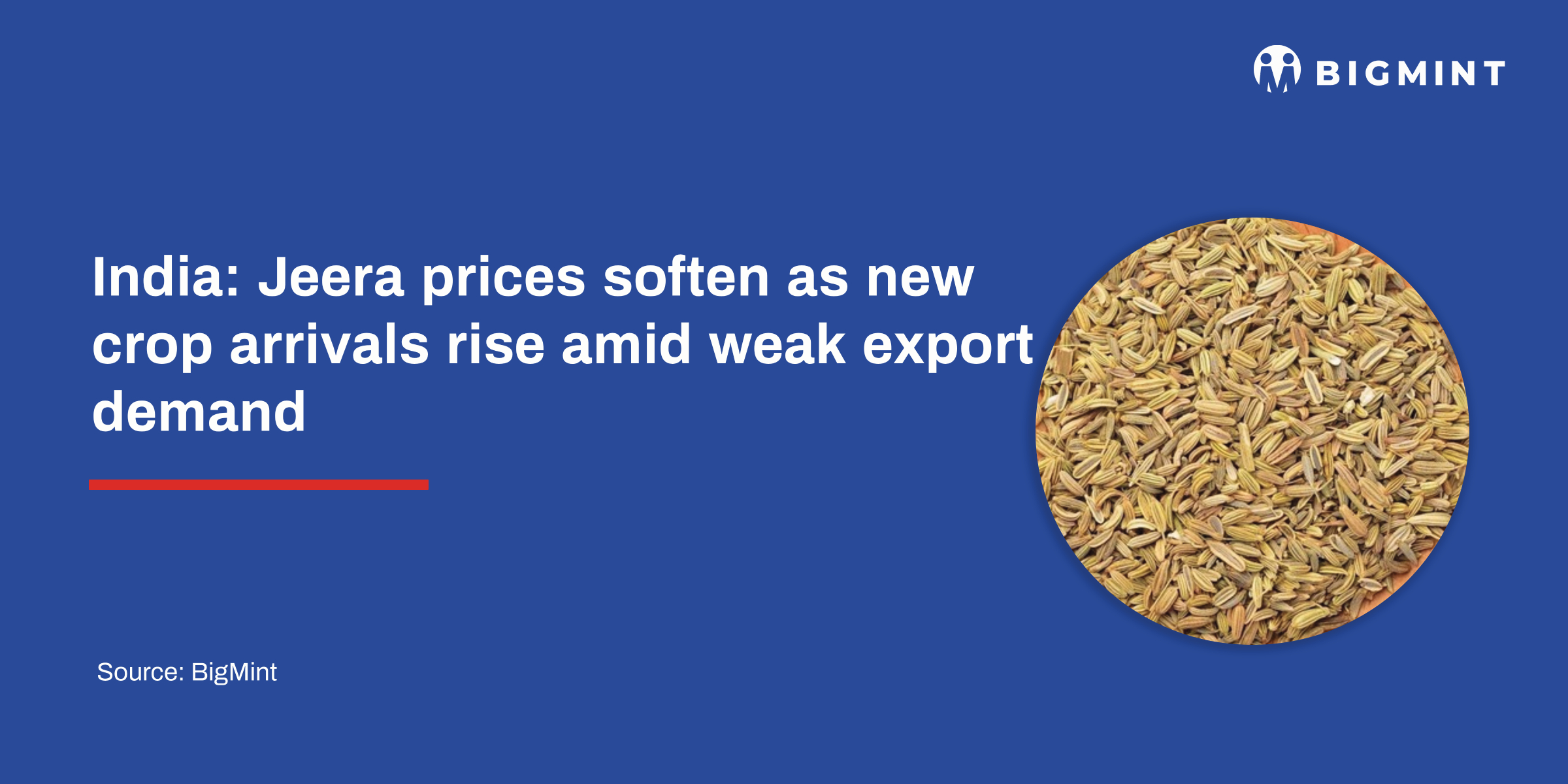
- Higher mandi inflows weigh on spot and futures prices
- Weak exports and geopolitical disruptions cap upside despite lower Gujarat output
India’s jeera market is witnessing mild price pressure as fresh crop arrivals have started entering key trading centres across Gujarat and Rajasthan. According to market estimates, total mandi arrivals on 16 March 2026 were around 91,500 bags, slightly higher than about 90,200 bags recorded during the same period last year, indicating the gradual entry of the new crop into the physical market. The benchmark trading hub Unjha reported arrivals of roughly 49,000-51,000 bags, compared with around 40,000 bags last year, while other mandis such as Rajkot, Halwad, Gondal, Jamnagar, and North Gujarat also recorded steady inflows. As fresh supplies begin reaching the market, traders and exporters have adopted a cautious buying approach, which has weighed on prices in both spot and futures markets. In the physical market, Unjha jeera prices were reported near INR 21,780-21,800 per quintal, while NCDEX jeera futures are currently trading close to INR 21,700 per quintal, reflecting the short-term pressure created by increasing arrivals.
On the supply side, India’s cumin production for the 2025-26 season is estimated near 5.13 lakh tonnes, around 5% lower year-on-year. The production outlook remains uneven across key states. Gujarat’s output is projected to decline sharply by about 27% to around 1.83 lakh tonnes, largely due to lower acreage and yield losses linked to erratic weather and disease pressure, while Rajasthan’s production is expected to rise roughly 15% to around 3.29 lakh tonnes, partly offsetting the supply shortfall. Despite this relatively tighter production outlook, demand conditions remain weak in the export market. India’s cumin exports during April-December 2025 declined by about 12% year-on-year to 145,137 tonnes, compared with 165,084 tonnes in the same period last year, as many exporters continue fulfilling orders using carry-forward inventories rather than fresh purchases. Additionally, escalating geopolitical tensions in West Asia following the Iran-Israel conflict have disrupted shipping routes and increased freight and insurance costs, slowing exports to key Middle Eastern destinations and further dampening near-term demand for Indian jeera.
From a market structure perspective, the futures segment indicates that traders are positioning cautiously amid rising arrivals and weak export demand. Open interest in NCDEX jeera futures has increased while prices have declined, suggesting fresh short positions entering the market. Technically, the contract has corrected sharply from highs near INR 24,700-25,000 recorded earlier this year and is currently trading near important support levels. Immediate support is seen around INR 21,650-21,700, and a sustained break below this range could push prices toward INR 21,200. On the upside, INR 22,300 remains the first key resistance, followed by INR 22,500-22,600. For traders and exporters, the near-term direction will largely depend on the pace of arrivals over the coming weeks and whether export demand improves. While increasing arrivals may keep prices under pressure in the short term, the downside could remain limited due to lower production in Gujarat and relatively tight carry-forward stocks. If export demand from the Middle East and Asian buyers revives, the market may witness short covering in futures, which could push jeera prices back toward INR 22,800-23,200 per quintal in the coming weeks.
Leave a Reply