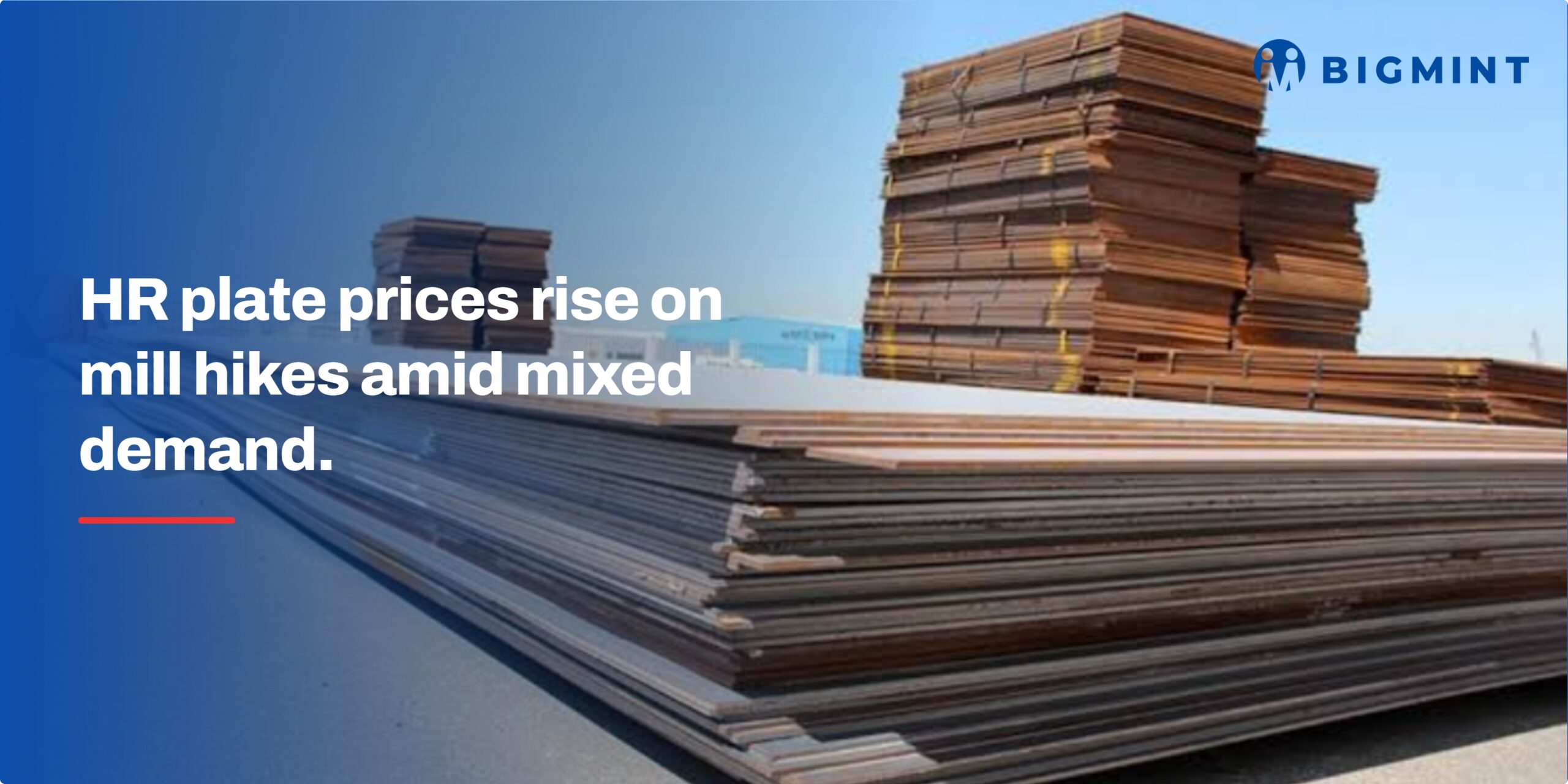
- Mumbai and Delhi prices gain INR 1,000-1,300/t w-o-w
- Northern buyers increase procurement amid price expectations
Indian hot-rolled (HR) plate prices increased across key markets in the week ended 7 October, supported by higher mill price indications and tighter availability in specific thicknesses, although buying activity remained subdued.
Mumbai HR plate prices for IS 2062 Grade E250 Br, 20-40 mm, rose INR 1,000/t w-o-w to INR 67,900/t, while Delhi prices increased INR 1,300/t to INR 68,100/t.

The price increases followed mill price hikes announced at the start of October. However, higher mill indications were only partially passed through to the trade market as buyers remained cautious at elevated price levels.
Demand remains mixed
Demand conditions varied across regions during the week. In western India, buying remained largely requirement-based, with buyers limiting purchases despite higher offers.
Northern India, meanwhile, reported an improvement in buying activity as market participants anticipated further price increases. However, overall market activity remained moderate as buyers assessed the sustainability of the latest price hikes.
Inventories were reported to be adequate, reducing the urgency among buyers to build stocks at current price levels.
HRC prices also rise
The broader flat steel market also moved higher during the week. The bi-weekly benchmark assessment for Mumbai HRC, 2.5-8 mm/CTL, IS 2062 Grade E250 Br, increased by around INR 800/t w-o-w to INR 64,700/t ex-Mumbai as of 6 October.
The increase in the HRC benchmark provided additional support to HR plate prices, although the higher mill indications were not fully reflected in trade-market buying.
Imports remain significant
India’s HR plate imports stood at 54,641 t as of September 2026, while exports stood at 1,116 t.
Chinese material imported under the Advance Authorisation Scheme by a major domestic mill was also reported in the market for re-export requirements.
A Mumbai-based stockist said they may start importing HR plates by the end of 2026, indicating potential interest in overseas material if domestic prices remain elevated.
Outlook
HR plate prices are expected to remain firm through October as mills seek to sustain higher price levels. However, the extent of further increases will depend on trade buying, which remains largely requirement-based in western India.
Stronger procurement in northern India could support prices, but adequate inventories and buyer resistance to higher offers may limit further price increases unless demand broadens across regions.
Leave a Reply