- Move comes as India’s coal demand expected to reach 1.6 bnt by 2030
- Quality remains key test, 16 agencies empanelled for quality assurance
The Indian government expects the new coal exchange to capture 15-20% of the domestic coal market within its first two years, as it seeks to move coal trading beyond the traditional one-to-many sales model and introduce a more transparent, market-based mechanism for price discovery.
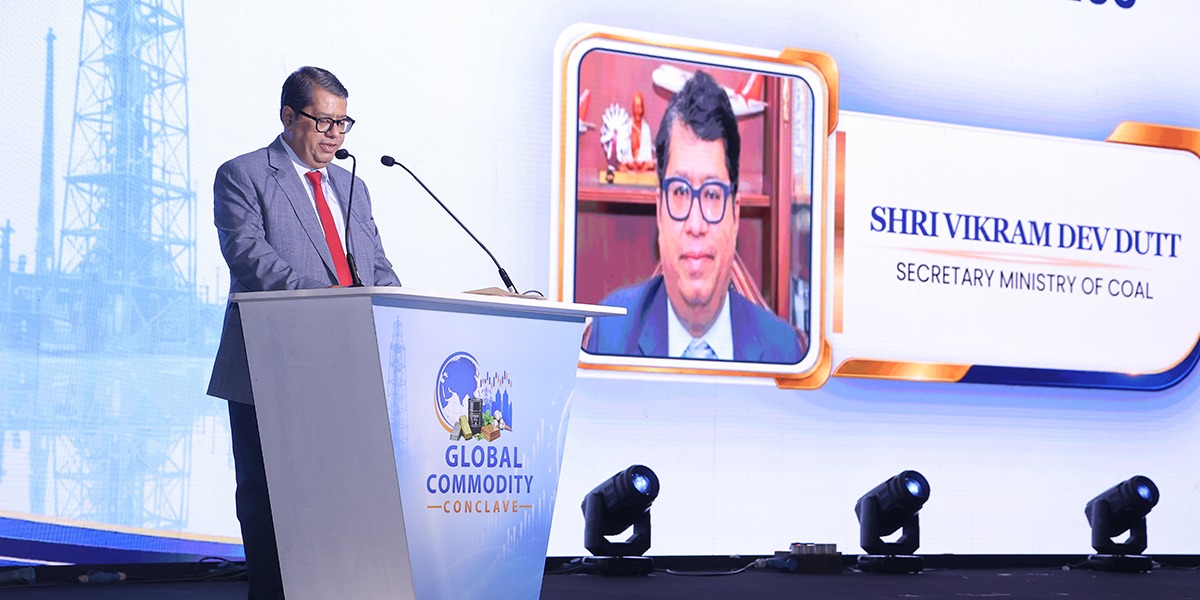
“Coal in India has largely been sold through a one-to-many model,” Vikram Dev Dutt, secretary of the Ministry of Coal, said at the Global Commodity Conclave 2026 hosted by the Multi-Commodity Exchange in partnership with BigMint. The existing system, built around Coal India, Singareni Collieries, and periodic e-auctions, had served its purpose but did not fully reflect the level of competition and market maturity in the country, he said.
The coal exchange will allow buyers and sellers to bid simultaneously, with transactions supported by standardised contracts, quality assurance, clearing and settlement, and market surveillance. The aim is to create a more transparent and competitive mechanism for price discovery while giving consumers access to coal from multiple domestic producers.
The change comes as India’s coal market becomes more mature. Domestic coal production crossed 1 billion tonnes for the first time in FY’25 and remained above that level in FY’26, while commercial and captive coal mines now account for about 21% of annual production, according to the Coal Ministry. Coal demand is projected to reach 1.6 billion tonnes by 2030, increasing the need for a broader and more efficient trading mechanism.
Quality remains key test
The success of the exchange will depend partly on whether it can address the physical characteristics that make coal different from more standardised exchange-traded commodities.
Unlike electricity, where the traded product is relatively uniform, coal varies by grade and quality, while transportation and delivery are central to the transaction. The government has therefore placed particular emphasis on third-party sampling and quality assurance.
Around 16 third-party sampling agencies have already been empanelled, with guidelines for quality sampling also being developed. This will be important in reducing disputes between buyers and sellers and building confidence in exchange-based transactions.
The government is also working towards standardised coal grades and contracts over time. That could improve comparability between different supplies and help create dedicated coal trading hubs as liquidity develops.
Exchange could initially capture 15-20% of market
The ministry estimates that the exchange could account for around 15-20% of the market in its first one or two years. Existing e-auction platforms currently handle around 200-210 million tonnes (mnt) of coal annually, providing a potential base of transactions that could migrate to the exchange.
The Coal Exchange Rules stipulate that existing similar platforms will cease to operate six months after the first coal exchange becomes operational. This could accelerate the shift of volumes towards the new platform and help concentrate liquidity, rather than allowing multiple competing platforms to fragment trading.
Price discovery framework still evolving
The exchange’s biggest long-term test will be whether it can develop a credible benchmark price for coal without disrupting existing long-term supply arrangements.
India has a large volume of coal sold through linkages and long-term agreements, where pricing is based on established mechanisms. The government has deliberately not yet prescribed a single price discovery methodology for the exchange, leaving options such as contract-driven or contract-agnostic mechanisms open for further consideration.
That flexibility reflects the complexity of India’s coal market. A price discovered on the exchange will need to account for differences in grade, quality, location, freight, and delivery terms if it is to become a useful market reference.
The exchange could eventually also go beyond spot transactions. The Ministry of Coal sees the development of a liquid physical market as a potential foundation for a coal derivatives market in India, allowing the commodity to move towards greater integration between physical trading and financial markets. This could provide market participants with additional tools for price risk management as exchange-based coal trading develops.

Leave a Reply