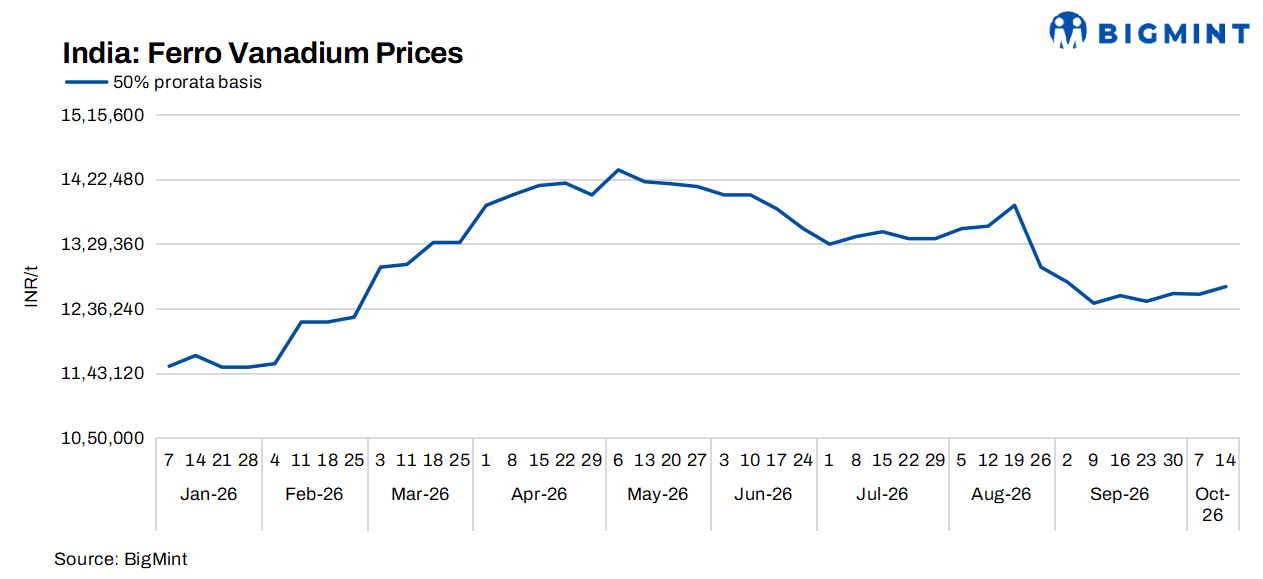
- Domestic supply dynamics support higher offers
- Weaker Chinese prices limit further upward momentum
Indian ferro vanadium (FeV 50%) prices rose w-o-w to INR 1,268,000/t ($13,238/t) on 14 October, as domestic sellers maintained firm offers amid changing international vanadium market dynamics. The price movement comes despite softer Chinese indicators, suggesting that domestic price formation may also be influenced by local availability, sellers’ replacement-cost expectations and the terms of spot negotiations.
Domestic supply dynamics lent support to prices
Indian ferro vanadium prices remained supported as domestic sellers maintained firm offers despite weaker price indications in China. Sellers were reluctant to reduce prices, as the cost of replacing existing stocks and the availability of material influenced their pricing decisions. Meanwhile, buyers continued to compare domestic offers with international prices before making fresh purchases. This helped domestic prices move higher even as overseas market indicators weakened.
International feedstock prices remain under pressure
Chinese market indicators presented a mixed picture on 14 October. Chemical-grade vanadium pentoxide was assessed at RMB 79,000/t ($11,080/t, down RMB 1,000/t ($140/t) or 1.25% on the day. Meanwhile, Chinese FeV 50% quotations on 12 October were reported at RMB 86,500-87,500/t ($12,140-12,280/t), down RMB 500/t ($70/t) from the previous assessment. These movements indicate that the latest Indian price increase cannot be attributed to a broad-based rise in Chinese vanadium prices.
Nevertheless, international price changes do not necessarily translate immediately into Indian spot prices, as differences in material availability, import costs, delivery requirements and transaction timing can affect domestic offers.
Outlook
Indian ferro vanadium prices may remain supported if domestic sellers continue to hold firm offers and prompt availability remains limited. However, continued weakness in Chinese feedstock and ferro vanadium quotations could eventually weigh on Indian replacement-cost expectations.
Leave a Reply