- Firm cost base offers support to prices
- Steel demand recovery drives price momentum
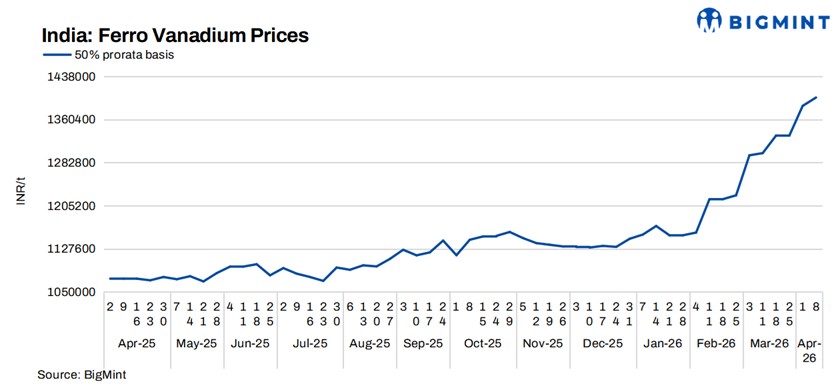
Indian ferro vanadium prices increased by INR 14,000/t ($15/t) to INR 1,400,000/t ($15,000/t) ex-works Raipur on 8 April 2026. Prices trended upward, supported by elevated raw material costs and improving steel demand, while tight supply conditions and firm producer sentiment continue to reinforce the bullish market trajectory.
Factors impacting prices
Cost push and raw material strength: Ferro vanadium producers faced sustained cost pressures due to elevated vanadium raw material prices. Strong quotations from major suppliers and limited availability of low-cost material have tightened procurement conditions. Domestic producers, operating with constrained margins, are reluctant to offer at lower levels, preferring to hold inventories or sell selectively. This firm cost base has provided a solid floor to ferro vanadium prices. Additionally, alignment of spot prices with higher input costs has reduced arbitrage opportunities, further strengthening producer confidence and supporting upward price momentum across the market.
Demand recovery and tight spot availability: On the demand side, improving activity in the Indian special steel sector, particularly with fresh April procurement cycles, has supported ferro vanadium consumption. Rising bid prices from steelmakers indicate increased acceptance of higher alloy costs. Simultaneously, limited spot availability in the domestic market has intensified competition among buyers. Traders are actively seeking material amid shrinking low-priced inventories, contributing to heightened market activity. This combination of steady demand recovery and restricted supply has reinforced bullish sentiment, allowing sellers to maintain firm offers and gradually push transaction prices higher.
Outlook
Ferro vanadium prices are expected to stay resilient, backed by firm cost structures, constrained availability, steady steel sector demand, and growing energy storage applications.

Leave a Reply