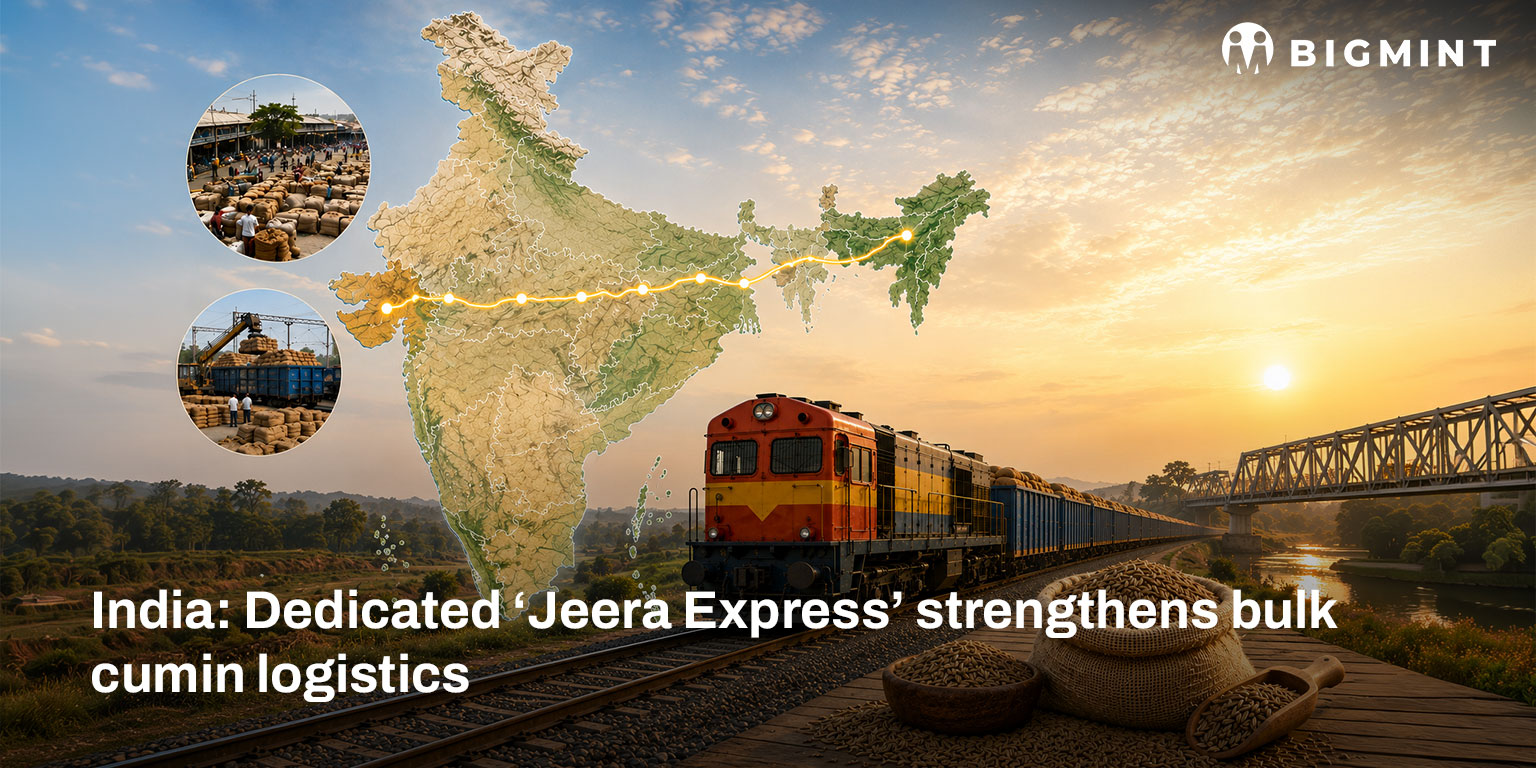
- Indian Railways moves 420 t of cumin from Gujarat to Assam
- Rail logistics is a cost-efficient alternative for long-distance spice movement
Indian Railways has transported 420 t of cumin seeds, or jeera, from Gujarat to Assam through a dedicated parcel freight service, marking the first organised rail movement of spices from the Ahmedabad Division. The 30-wagon rake departed from Mehsana in Gujarat for Azara in Assam, covering around 2,477 km and carrying nearly 13,800 bags of cumin.
Western Railway said the shipment generated freight revenue of more than INR 25.28 lakh, highlighting the increasing role of rail transportation in India’s spice supply chain. Gujarat, particularly the Unjha-Mehsana belt, remains the country’s largest cumin-producing and trading region, serving both domestic and export markets.
Rail logistics gains traction in spice trade
The dedicated cumin movement comes at a time when spice traders are exploring cost-efficient alternatives to road transport amid fluctuating freight rates and vehicle availability. Industry participants said bulk rail movement could help streamline dispatches to distant consumption centres, especially in eastern and northeastern India, while improving cargo safety and shipment predictability.
Railway officials described the initiative as a milestone for freight diversification, noting that organised spice transportation through rail had not previously been executed from the Ahmedabad corridor. The move also aligns with Indian Railways’ broader strategy to increase non-passenger freight volumes through agri commodities and value-added logistics services.
Market participants said sustained availability of dedicated spice rakes could support smoother inter-state movement of cumin and other seed spices, particularly during peak trading seasons when logistics bottlenecks tend to intensify.
Additional inputs that could strengthen the article include prevailing Unjha cumin prices, comparison between rail and road freight costs, and exporter comments on the commercial feasibility of rail-based spice logistics.
Leave a Reply