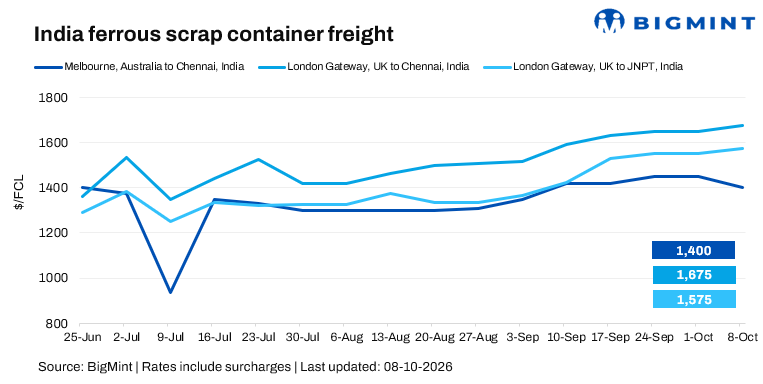
- Container shortages, demand from competing destinations support freights
- Buyers prioritise freight reliability amid cautious purchasing
India-bound ferrous scrap container freight sentiment remained mixed, with rates rising on some routes despite subdued scrap demand. Tight container availability and stronger demand from alternative markets, particularly Indonesia, supported freight levels, while easing space constraints at Australian ports and slow India-bound exports limited the upside.
India saw buyers resist higher UK-origin offers amid cautious buying, while Pakistan remained subdued due to elevated prices and weak mill activity. Bangladesh continued to face firm offers despite limited trading activity.

A market participant stated, “Freight sentiment softened as congestion and space constraints at Australian ports eased, putting downward pressure on freight levels. Meanwhile, Australia-India export activity remained slow, while stronger demand from Indonesia provided comparatively better support to the market.”
A shipbroker informed, “Freight has risen due to the demand and shortage of containers.”
“Buyers remain active but cautious. When freight rises sharply, some buyers delay bookings or reduce quantities because steel margins become difficult. I would describe the market as disciplined rather than weak.” another shipbroker told BigMint.
Meanwhile, Singapore (VLSFO) bunker prices fell to $803.5/tonne (t), down $41.5/t w-o-w from $845/t. The decline was driven by softer crude oil prices, improved prompt fuel availability and relatively subdued regional shipping demand, which eased near-term buying pressure.
Outlook
India-bound scrap freight rates are likely to remain firm in the near term, supported by container shortages and competing demand from Indonesia. However, slow India-bound export activity and cautious scrap buying could limit further gains. Any renewed tightening of Australian port capacity or stronger container demand could provide additional upward pressure.
Leave a Reply