- Ferrous and aluminium scrap face the greatest exposure in India
- Final authorised-country list due by 21 November 2026
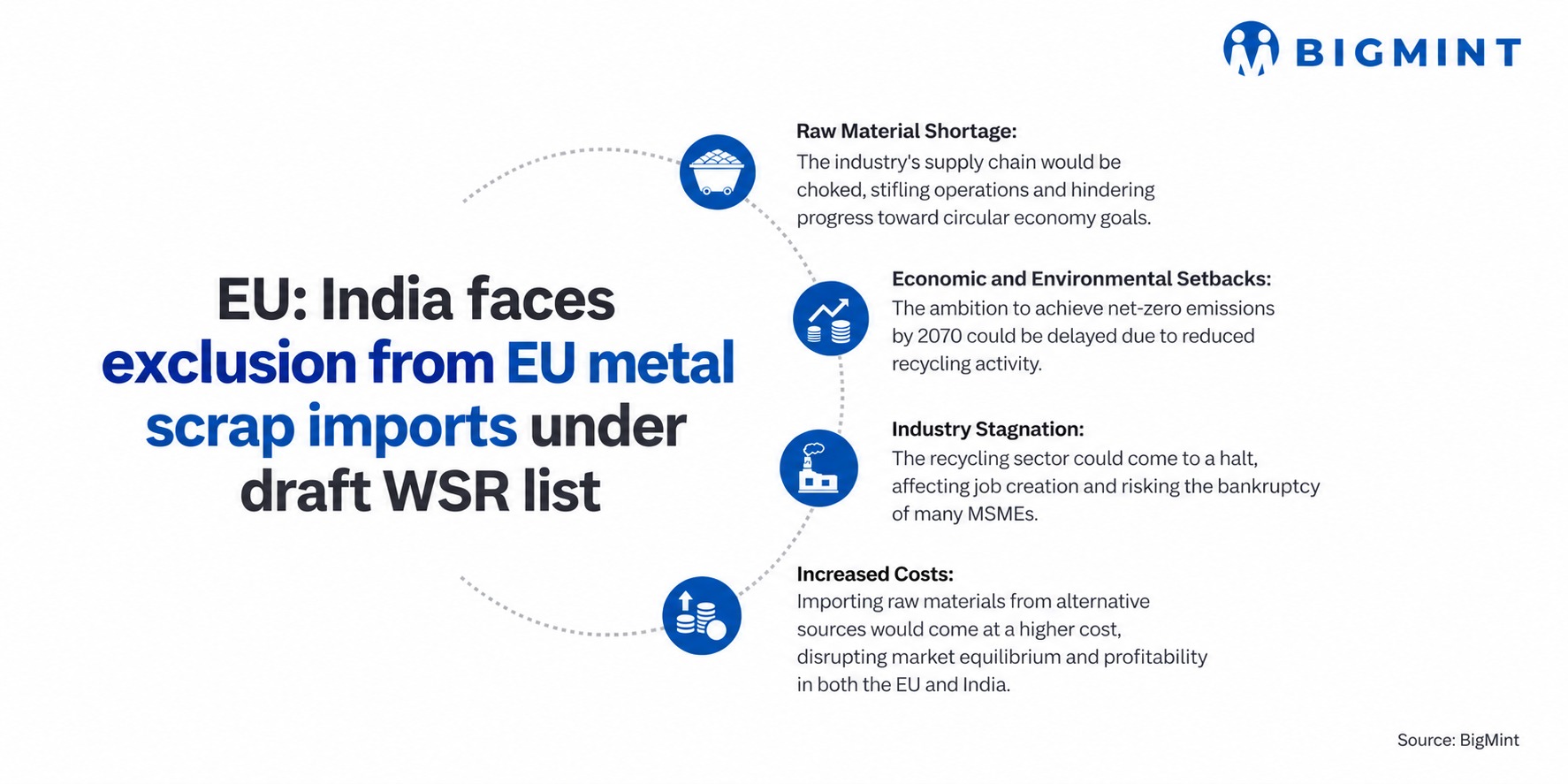
The European Commission’s latest draft under the EU Waste Shipment Regulation (WSR) could restrict India’s access to EU-origin metal scrap from 21 May 2027. The draft currently does not authorise metal waste exports to India, although it remains open for stakeholder feedback and is not yet final.
For India, ferrous and aluminium scrap are likely to face the greatest exposure, with the EU-27 accounting for around 20-25% of ferrous scrap imports and 20% of aluminium scrap imports. Stainless steel and copper scrap have comparatively lower exposure in this context.
India’s inclusion in the EU’s authorised list will be crucial for sustaining these established trade flows.
India excluded from metal waste in draft
India had applied to receive several EU waste categories, including metal waste. Following its assessment, the Commission concluded that India had not demonstrated the necessary measures to ensure the environmentally sound management of metal waste.
As a result, EU exports of metal waste to India would not be authorised under the current draft. This could affect the availability of EU-origin ferrous and non-ferrous scrap in India and alter sourcing and pricing dynamics.
Other waste categories remain eligible: The draft does not exclude India from all EU waste streams. The Commission found India compliant with the requirements for paper, wood, rubber, textile, organic and agri-food, mineral, acidic, glass, ceramic, and paint, dye and ink waste. Metal waste is the key exception.
UK scrap flows remain outside the EU WSR restriction
There is another important aspect of this development: the EU WSR applies to waste shipments originating from the EU and does not directly cover UK-origin scrap, as the UK is no longer an EU member. Therefore, the EU draft excluding India from the authorised list for metal waste would not automatically restrict UK-origin metal scrap shipments to India.
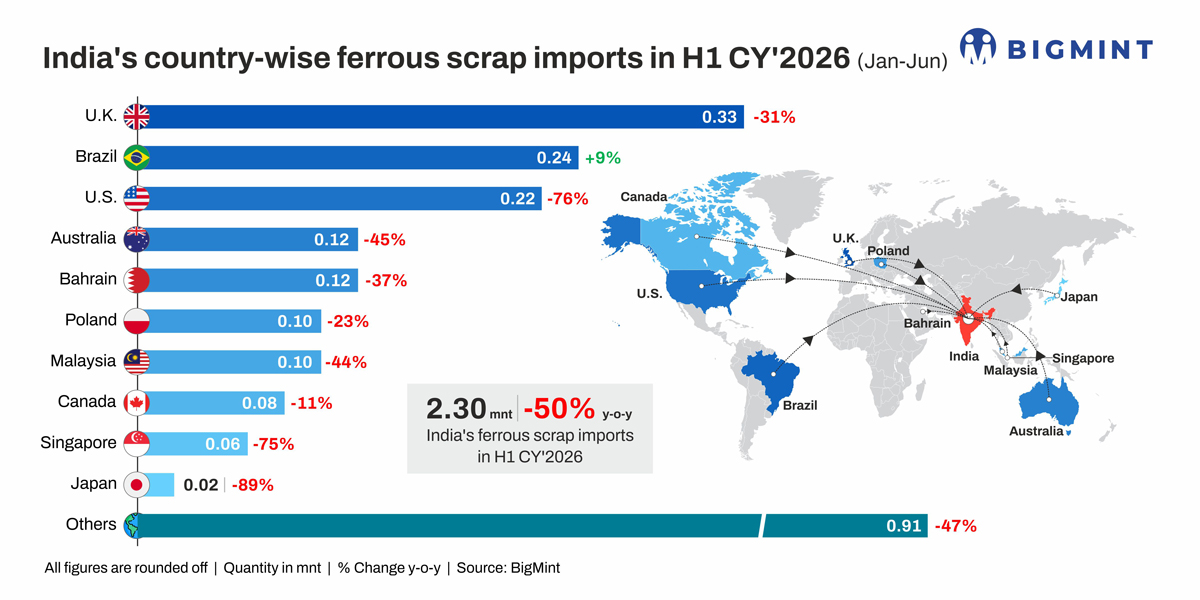
India imported nearly 1.2 mnt of metal scrap, including ferrous and non-ferrous scrap, from Europe, including the UK, in 2026. More than 50% of this volume originated from EU-27 countries.
For comparison, European countries exported around 2.7 mnt of metal scrap to India in 2025. Of this, around 1.5 mnt came from EU-27 countries, accounting for nearly 55% of India’s scrap imports.
Aluminium scrap faces additional supply risks
The potential impact is also significant for aluminium scrap. India remained the largest buyer of aluminium scrap from the EU-27, with around 20% of its overall aluminium scrap imports sourced from the region.
Separately, the UAE imposed a temporary four-month export restriction on aluminum, copper, and ferrous scrap from June to October 2026. While the UAE accounts for around 8% of India’s overall aluminium scrap imports, its geographical proximity and shorter transit times make it an important sourcing destination for Indian recyclers.
Taken together, these developments could affect nearly 30% of India’s aluminium scrap imports. This is particularly significant as imports meet around 85-87% of India’s aluminium scrap requirements, while the country has nearly 2.5 MTPA of secondary aluminium capacity.

Any prolonged disruption in these key supply sources could therefore create raw material challenges for secondary aluminium producers.
Higher scrap costs could pressure ADC12: The supply constraints could also add cost pressure. Market participants estimate that aluminium scrap costs could increase by around 20%, potentially pushing up secondary aluminium and alloy ingot prices, particularly ADC12, which is widely used in the automotive sector.
Nearly 60% of India’s secondary aluminium consumption is estimated to go into automotive applications. Higher raw material and alloy prices could therefore eventually be passed on to downstream consumers.
According to a secondary alloy producer based in South India, a significant rise in domestic ADC12 prices could once again encourage duty-advantaged FTA material into India, similar to the trend seen in the first half of 2026, when elevated domestic prices made imports more competitive.
Malaysia is one of the key sources of ADC12 imports into India and benefits from the India-Malaysia trade arrangement. While India levies a 2.5% BCD on aluminium scrap, Malaysia does not impose a comparable BCD on scrap, providing its producers with a cost advantage. In addition, preferential FTA treatment can eliminate the applicable 7.5% import duty on ADC12, further improving the landed-cost competitiveness of Malaysian material.
A renewed increase in FTA-origin ADC12 imports could therefore intensify pricing pressure on domestic secondary alloy producers, particularly if domestic scrap and production costs continue to rise.
Industry response focuses on compliance
While sharing his views on the EU WSR with BigMint, Mr. Sanjay Mehta, President, Material Recycling Association of India (MRAI), said India’s exclusion from the EU’s proposed authorised list for metal waste is a serious concern for both Indian and European recyclers, given India’s importance as a destination for European scrap.
He said MRAI is pursuing a government-level solution and is currently liaising with the Indian government. The association plans to consult industry stakeholders and submit a formal application, targeted for 15 October.
One proposal being considered is a separate HS code for processed secondary raw material (End-of-Waste). The idea is to create a clear distinction between conventional waste and high-quality processed scrap or secondary raw material that meets defined specifications.
“High-quality material should ideally be treated differently from waste. If the material meets sufficiently high-quality specifications, for example around 98% or more metal content, it could potentially fall under an End-of-Waste category, subject to the regulatory framework,” Mehta said.
He said such an approach could allow higher-quality material to continue flowing to India, while lower-quality scrap would face greater scrutiny if it remains classified as waste.
Materials such as lower-grade Zorba, with around 93% metal content, incinerator meatballs, and certain compressor scrap could potentially be more affected. If these lower-quality streams are restricted, overall EU-to-India scrap volumes could decline, even if higher-quality material continues to move. This could also reduce scrap availability and increase raw-material costs for Indian recyclers.
Mehta stressed that the proposal is not aimed at finding ways around the EU WSR. He does not see routing scrap through another country as a legitimate solution, as the material would still need to meet traceability and compliance requirements and remain subject to periodic audits.
“The objective is not to circumvent the EU WSR. The approach should be to establish a legitimate regulatory distinction between waste and processed End-of-Waste or secondary raw material,” he said.
He added that India had already notified the EU in February 2025 about the commodities permitted for import into India for recycling, including metal scrap and other scrap categories.
Compliance requirements and market impact
Going forward, Mehta said the government and industry would need to strengthen responsible melting, recycling, traceability, and monitoring. A three-layer audit process is also expected, with only qualifying recycling units allowed to receive the material. “The units qualified in the audit will receive material, while those that do not qualify will not receive material,” he said.
The proposed system is expected to apply from May 2027, giving recyclers time to prepare their facilities and compliance systems. Mehta said the impact could be significant but is still difficult to quantify. It will depend on scrap availability, DRI and sponge iron economics, alternative import sources, and the number of Indian recycling units meeting the new requirements.
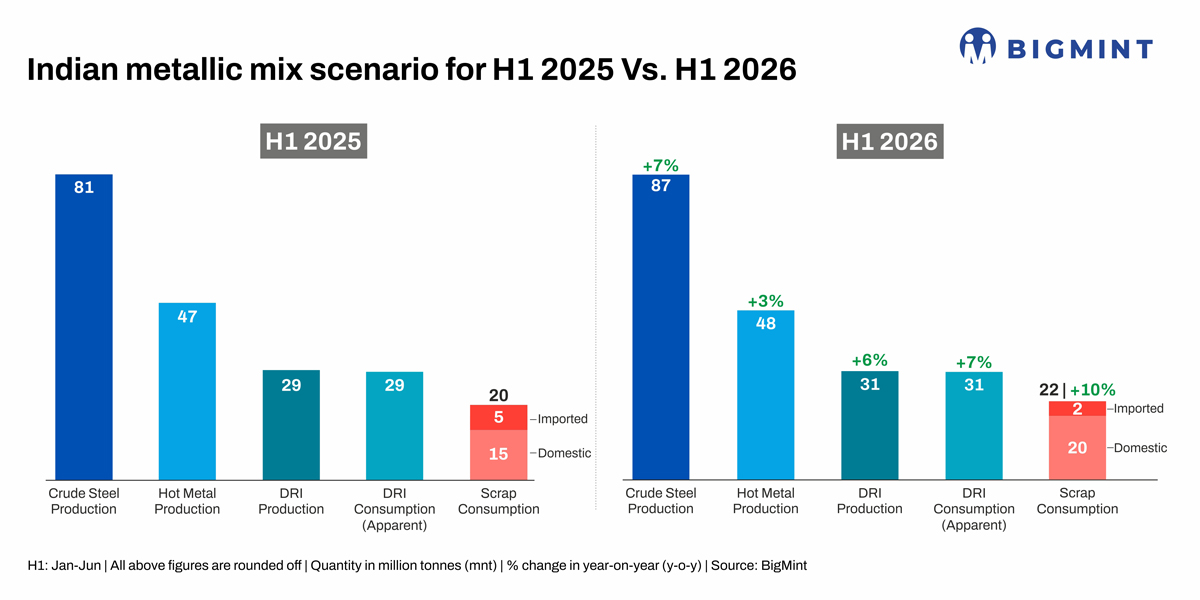
He added that rising DRI and sponge iron use could provide mills with an alternative source of metallics and potentially reduce some dependence on imported scrap.
Draft still under consultation
The current document is a draft delegated regulation and is not yet final. The Commission has opened a four-week feedback period, with stakeholder responses to be considered before the regulation is finalised.
The Commission is required to establish the final list of authorised countries by 21 November 2026. The list can also be reviewed and updated subsequently.
For Indian scrap recyclers and importers, the immediate focus is likely to be on understanding the compliance requirements, strengthening traceability, and preparing recycling facilities for the proposed audit process. The impact on Indian metal scrap imports will become clearer once the final EU list and compliance requirements are established ahead of May 2027.
Leave a Reply