- High iron ore prices eroding Indian steel industry competitiveness
- Global excess capacity threatens sustained capacity expansion, profitability
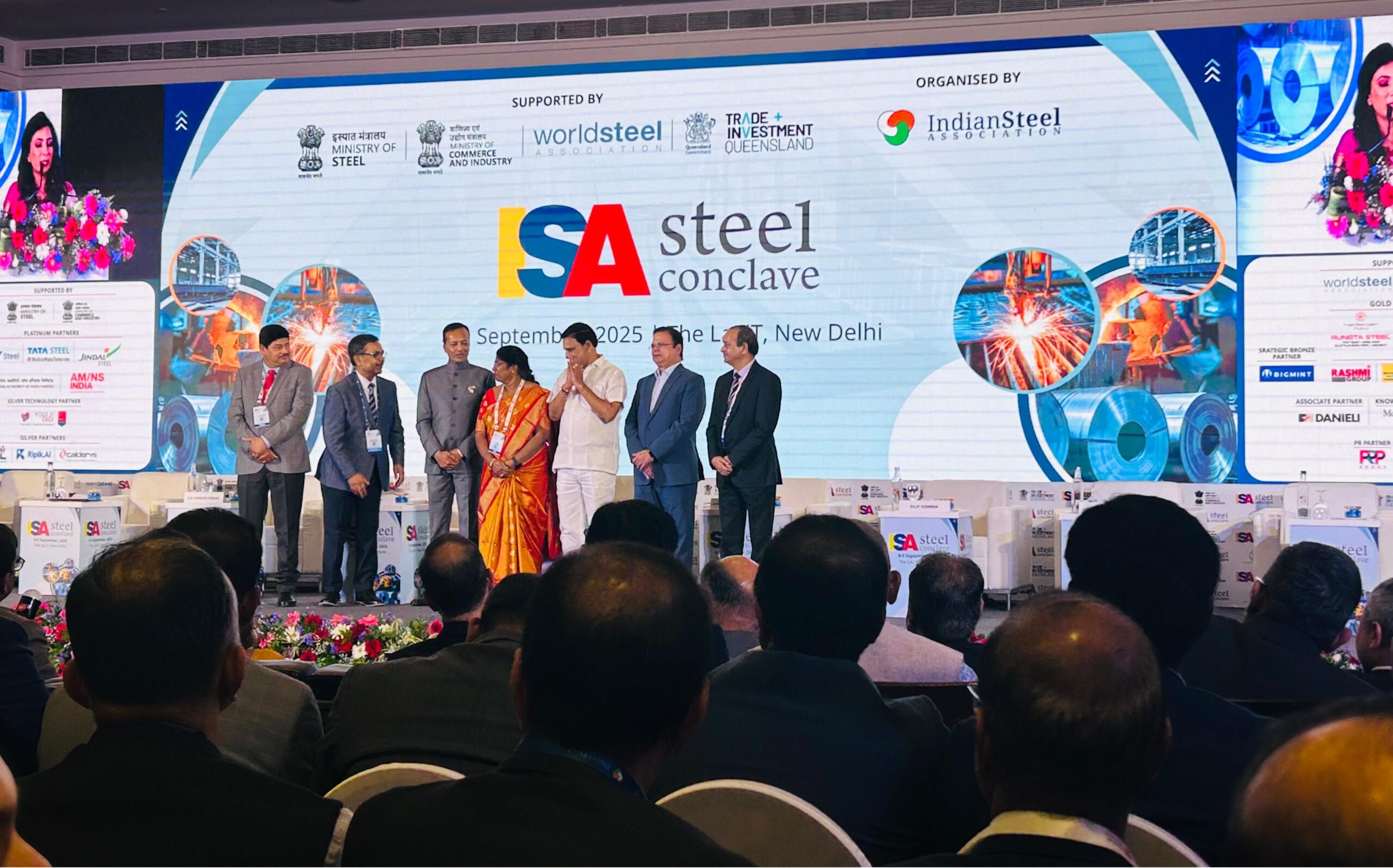
The 6th Edition of the Indian Steel Association’s (ISA) Steel Conclave held on September 8, 2025, focused on the critical theme “Steel for Aatmanirbhar Bharat: Driving Sustainability and Growth.” The inaugural session set a visionary tone by emphasising India’s steel industry as the world’s second largest producer and consumer, producing over 151 million tonnes (mnt) of steel in FY’24-25, with an ambitious plan to reach 300 mnt of capacity by 2030 as per National Steel policy.
Major challenges
Key challenges highlighted included securing high-grade raw materials, reducing dependence on imported coking coal, enhancing logistics, and lowering high trade costs. Industry stakeholders reiterated the necessity for steel that is smarter, greener, and globally competitive to power Indian infrastructure, strengthen industries, and support MSMEs.
The conclave was firmly aligned with the nation’s resolve to achieve Atmanirbhar Bharat (self-reliant India) and Viksit Bharat (developed India by 2047), reflecting the Prime Minister’s vision for a developed India on the centenary of independence. The event united government, industry leaders, and partners around a shared roadmap for sustainable growth and leadership in steel manufacturing.
Excess capacity
The Leadership Panel on “Key Enablers for Growth of Steel Industry” featured an insightful discussion on market dynamics and policy frameworks shaping the future of steel production. Global trends showed a shift of production from the West to the East, with India’s steel production rising strongly despite a global decline.
The panel focused on addressing the critical issue of excess global steel capacity, citing OECD data that projects 165 mnt of new capacity by 2027 against a demand of only 46 mnt in OECD countries, exacerbated by market-distorting subsidies—most intensively by China. This excess capacity drives export surges, creating market distortions and undermining the effectiveness of trade remedies.
Panelists stressed the urgent need for multilateral and structural solutions beyond existing trade measures to reduce excess capacity and enable sustainable industry profits and investments, particularly for decarbonization efforts.
Downstream capacity growth
Indian industry leaders called for policy interventions to reduce raw material costs, improve logistics, and build policy frameworks to make steel production competitive globally. The need for emphasis on downstream capacity growth to match increased steel production was highlighted, alongside concerns about rising iron ore prices squeezing margins and investment capacity. Strengthening raw material R&D and improving steel quality standards were also urged to ensure that India’s infrastructure develops on high-quality steel, consistent with the vision for Viksit Bharat.
Green steel & finance
Additionally, the panel explored the long-term prospects of green steel, noting that its current visibility is limited but expected to grow exponentially, aided by innovation, decarbonization technologies, and government-industry collaboration.
A special session on transition finance underscored the massive investments required for the green transition of the steel sector, the role of government policy in channeling finance, and the lack of credit worthiness of the vast MSME steel sector. Experts discussed the role of GPP, CCTS and various strategies being adopted to aid the small and medium producers to embrace energy efficiency and emissions reduction goals, emphasizing on the need for ambitious targets in accelerating industry transition.
The stainless steel sector highlighted the importance of sustainability from a triple bottom line perspective—people, planet, and prosperity—with a need to develop ecosystems that enhance product utilization and customer pull, including support for MSMEs in skill development.
Coking coal
The sessions on coking coal highlighted India’s import diversification strategies adopted to minimise dependence on traditional sources, the lack of pricing power of Indian coking coal buyers and the need for a CFR India coking coal index for fairer price discovery and rational representation of global trade movements.
In summary, the conclave underscored steel’s foundational role in India’s economic and infrastructural growth, the urgent need to tackle global structural challenges like excess capacity, and the critical enablers—policies, innovation, market reforms, and sustainability initiatives—that will drive India’s steel industry towards global competitiveness and self-reliance.
Leave a Reply