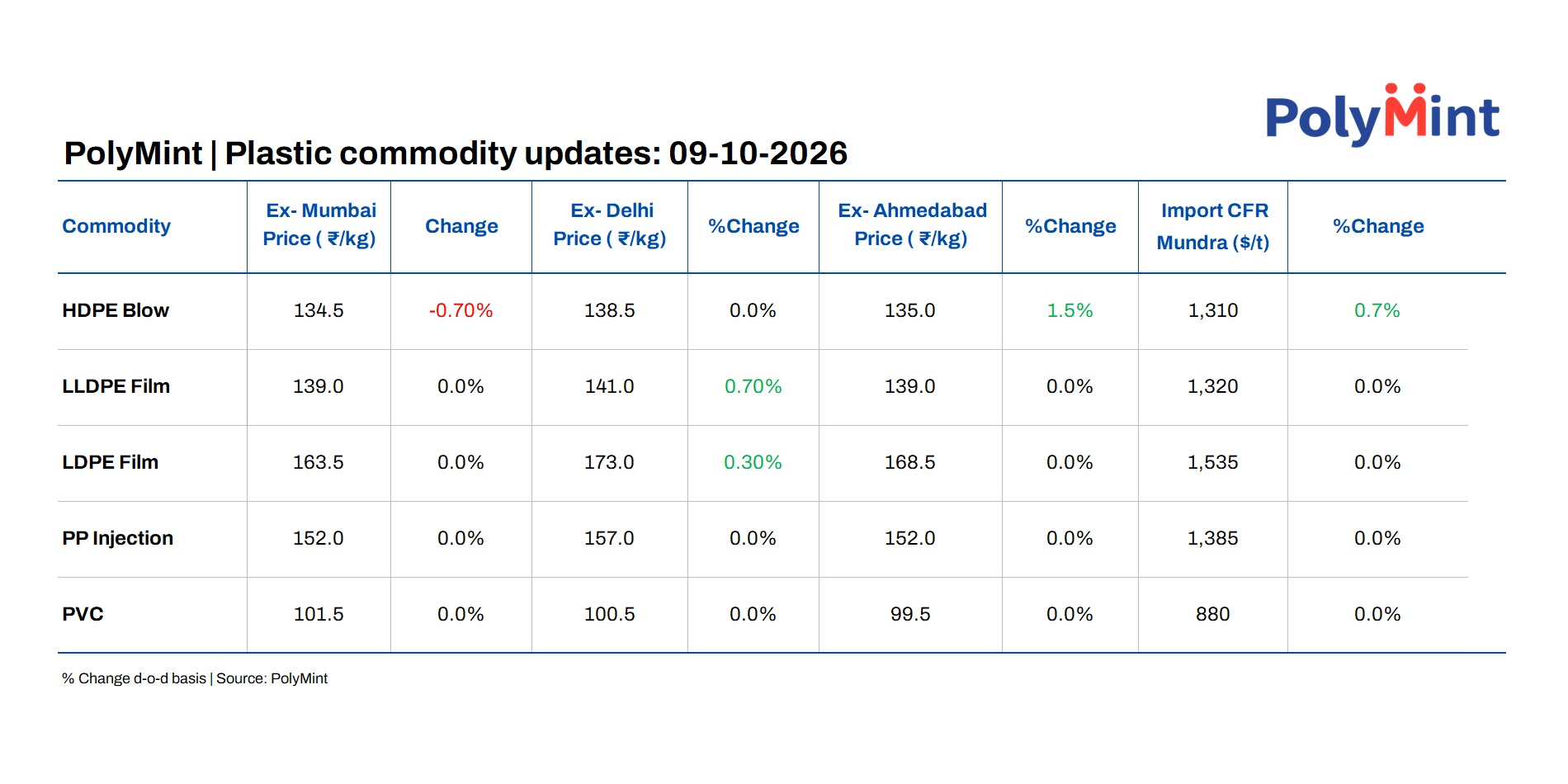
- Regional PP and HDPE prices show selective movements
- Hormuz disruptions and rising naphtha add to feedstock uncertainty
In upstream markets, crude oil prices weakened on 9 October, with Brent falling 1.09% to $103.13/barrel and WTI declining 0.54% to $90.71/barrel. However, naphtha prices rose 3.80% to $972/t, indicating divergent feedstock trends. Meanwhile, the Indian rupee depreciated by 0.18% against the US dollar to ₹96.96, potentially adding to the landed cost of imported polymers and feedstocks.
India’s polymer market witnessed mixed regional price movements on 8 October. PP raffia prices increased by INR 1/kg to INR 150.5/kg in Ahmedabad but declined by the same amount to INR 150/kg in Mumbai. PP injection prices rose by INR 0.5/kg to INR 151/kg in Ahmedabad. HDPE blow moulding prices gained INR 1.5/kg in Ahmedabad but fell by INR 1/kg in Mumbai. Prices of other reported grades remained stable.
Domestic market overview
Regional movements remained concentrated in selected grades, with Delhi prices unchanged across the reported polypropylene and polyethylene products. Ahmedabad recorded increases in PP raffia, PP injection, and HDPE blow moulding, while Mumbai saw declines in PP raffia and HDPE blow moulding.
Meanwhile, India’s polyethylene (PE) market remained soft amid improved availability and weak demand, which pressured premiums. However, tight low-density polyethylene (LDPE) lamination supply supported prices. India’s polystyrene (PS) market remained firm on steady demand and sellers’ offers, although buyers continued to purchase mainly for immediate requirements.
In the recycled segment, improved export sentiment for recycled polyethylene terephthalate (rPET) was supported by lower freight costs, although export indications remained largely unchanged. India’s biaxially oriented polyethylene terephthalate (BOPET) market faced tighter import conditions after the Directorate General of Trade Remedies (DGTR) recommended anti-dumping duties on imports from China, Bangladesh, and Thailand, pending final notification.

Other updates
Oil prices fall as US-Iran talks ease supply concerns
Oil prices declined on 9 October after US President Donald Trump reported productive discussions with Iran and said Washington would not attack the country before the 3 November midterm elections. Brent crude futures fell 0.9% to $103.36/barrel, while WTI declined 0.8% to $90.74/barrel during early trading, according to Reuters. However, uncertainty over negotiations and shipping safety continued to influence the supply outlook.
Strait of Hormuz transits fall to lowest in over two months
Commodity vessel transits through the Strait of Hormuz fell to seven on 6 October, the lowest since 23 July, following increased tanker attacks. Crude flows through the strait declined 27% from their wartime peak to at least 10.1 million barrels/day. Continued shipping disruptions could sustain freight costs and petrochemical supply risks for Indian polymer importers.
Shell partially restarts Qatar’s Pearl plant
Shell partially restarted its Pearl gas-to-liquids plant in Qatar, while QatarEnergy resumed offering naphtha cargoes in the spot market. Repairs to the plant’s second processing train are expected to finish in Q1 2027. The partial restart could gradually improve feedstock availability, although regional security and shipping constraints remain risks. India’s Haldia Petrochemicals has also received 50,000 tonnes of naphtha under its quarterly contract.
Leave a Reply