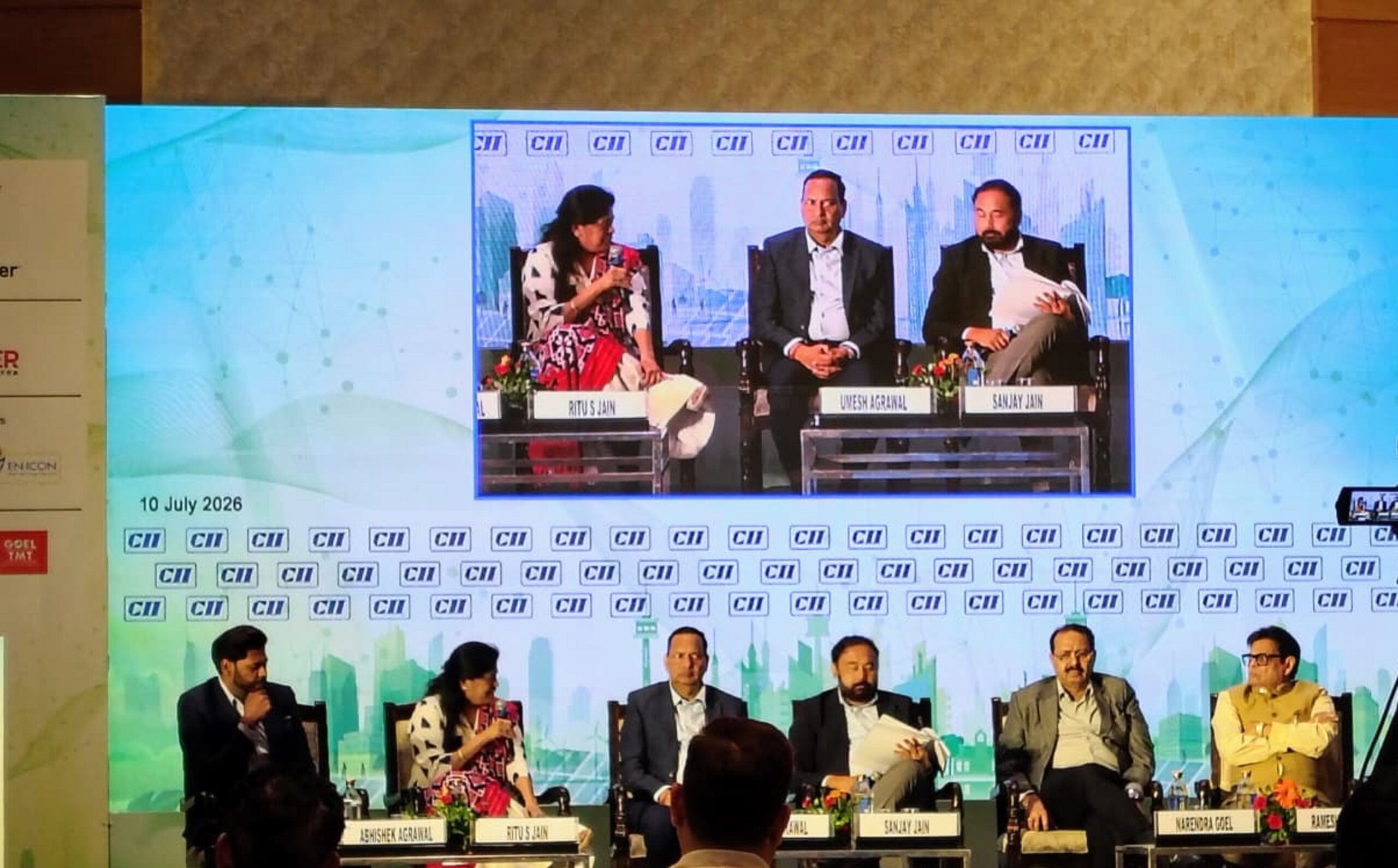
- Chhattisgarh’s renewable potential to support industrial growth
- Energy storage and thermal modernization critical for grid reliability
Energy storage, thermal power modernisation and grid flexibility emerged as the central themes at the CII Chhattisgarh Energy Conclave 2026 held in Raipur on 10 July, as policymakers, utilities and industry leaders outlined the infrastructure required to support India’s accelerating renewable energy transition. Discussions highlighted that while renewable capacity addition will remain a priority, ensuring reliable and uninterrupted power supply through pumped hydro projects, Battery Energy Storage Systems (BESS), modernised thermal power plants and smarter grid infrastructure will become equally important in meeting the country’s rising industrial power demand.
Setting the tone for the conclave, Shailendra Shukla, Chairman of SRVs Solar Limited, said India aims to achieve 940 GW of installed power capacity by 2034, with more than 350 GW expected to be added over the next three years. He said thermal power plant modernisation, pumped hydro storage and Battery Energy Storage Systems (BESS) would play an increasingly important role in maintaining grid reliability as renewable energy assumes a larger share of the country’s generation mix.
Industry shifts focus towards large-scale energy storage
K.K. Sarda, Past Chairman of the CII Chhattisgarh State Council and Managing Director of Sarda Group, outlined the company’s growing focus on green energy, announcing plans to develop 1 GW of pumped hydro capacity to support renewable integration. He compared capital investment requirements across different generation technologies, estimating costs at around INR 3-3.5 crore/MW for solar, INR 5-6 crore/MW for wind, approximately INR 10 crore/MW for thermal power and INR 12-17 crore/MW for hydropower. While hydropower involves the highest capital expenditure, Sarda said its reliability makes it an essential component of a renewable-dominated power system, with pumped hydro and BESS expected to address renewable intermittency.
Thermal modernisation remains integral to energy security
The conclave also underscored that coal-based generation will continue supporting India’s energy security even as renewable capacity expands. Sanjiv Kumar Katiyar, Managing Director of CSPGCL, said the utility currently operates 2,987 MW of installed capacity, comprising 2,840 MW of thermal and 140 MW of hydro generation, and is pursuing additional capacity through a joint venture with NTPC. He added that pumped storage and BESS would become increasingly important in strengthening grid reliability alongside conventional generation.
The role of technology in improving thermal plant performance also featured prominently during the discussions. Anand Vijayakumar, Business Head – New Products at Fluxgen Sustainable Technologies, highlighted intelligent water management and automated monitoring of reservoirs and water bodies as opportunities to improve operational efficiency, while Abhishek Pandey, Manager at Siemens, showcased flexible steam turbine operations, predictive maintenance, equipment performance analytics and energy storage integration as key technologies for extending plant life and improving operational flexibility.
Policy support and market reforms remain critical
Addressing developments in hybrid power generation, C.N. Singh, Business Head at JSW Energy, said hybrid generation technologies would become increasingly important in addressing renewable intermittency, adding that environmental compliance and decarbonisation remain key priorities, with gas-based generation expected to assume a larger role over time.
Discussions on industrial power consumption highlighted sustainability, energy security, cost competitiveness and evolving customer requirements as the principal drivers of green power adoption across energy-intensive industries. Speakers said Open Access and Green Energy Open Access mechanisms are improving access to renewable electricity, while comparing Battery Energy Storage Systems with pumped hydro projects for different industrial applications. BESS projects were estimated to offer payback periods of around three to four years, with different battery configurations providing operational flexibility depending on industrial requirements.
The CEO Roundtable concluded that stronger power markets, energy trading platforms, carbon markets and innovative financing mechanisms will be necessary to mobilise investment into conventional and renewable energy infrastructure. Participants also highlighted land availability, grid integration and policy support as the principal challenges facing renewable energy expansion, reinforcing the view that India’s energy transition will increasingly depend on balancing renewable capacity growth with modernised thermal generation, large-scale energy storage and more flexible power systems.
Leave a Reply