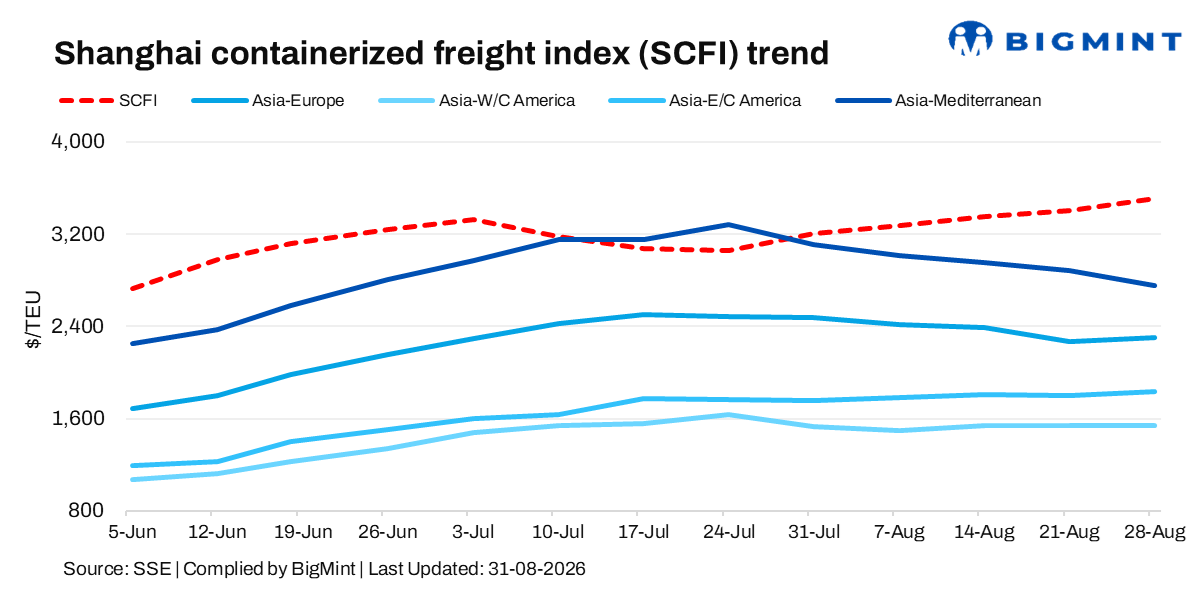
- Asia-Europe rates recover, while Asia-Mediterranean rates drop
- Port disruptions tighten effective capacity across key trade routes
The Shanghai Containerized Freight Index (SCFI) rose 2.9% w-o-w to 3,509.53 on 28 August 2026, from 3,409.63 a week earlier. The increase was driven mainly by firmer US-bound markets, while Europe-bound routes showed divergent trends amid changing capacity and service patterns.
Transpacific markets remain firm
Asia-US East Coast rates increased 1.9%, supported by resilient demand and constrained effective capacity. Storm-related disruptions across East Asia have affected vessel schedules and reduced available capacity, while rising congestion at the Panama Canal is adding to operational pressure.
Asia-US West Coast rates, however, edged down 0.2% as additional capacity offset support from steady demand and port congestion. The marginal decline suggests that rate momentum on the route is beginning to moderate.

Europe-bound routes show divergent trends
Asia-Europe freight rates rose 1.3%, supported by tighter effective capacity and operational disruptions in Asian ports. However, the route remains vulnerable to additional capacity as carriers gradually resume selected services through the Suez/Red Sea corridor.
Asia-Mediterranean rates declined 4.3%, reflecting softer demand and increasing capacity. The gradual return of direct Suez services is adding further pressure as more capacity becomes available on the trade.
Capacity shifts shape market direction
The latest movements highlight a market increasingly influenced by capacity availability, vessel schedules and port disruptions, rather than demand alone. Weather-related interruptions are tightening capacity on some routes, while additional tonnage and returning Suez services are weighing on others.
Outlook
Transpacific freight rates are likely to remain comparatively supported by congestion and operational constraints, although additional capacity could limit gains. Asia-Europe rates may remain volatile as service patterns evolve, while Asia-Mediterranean rates could face further pressure if Suez capacity continues to return.
Leave a Reply