- Washeries turn to Russian coal amid competitive delivered costs
- Shanxi output unlikely to return to pre-accident levels by end-Dec
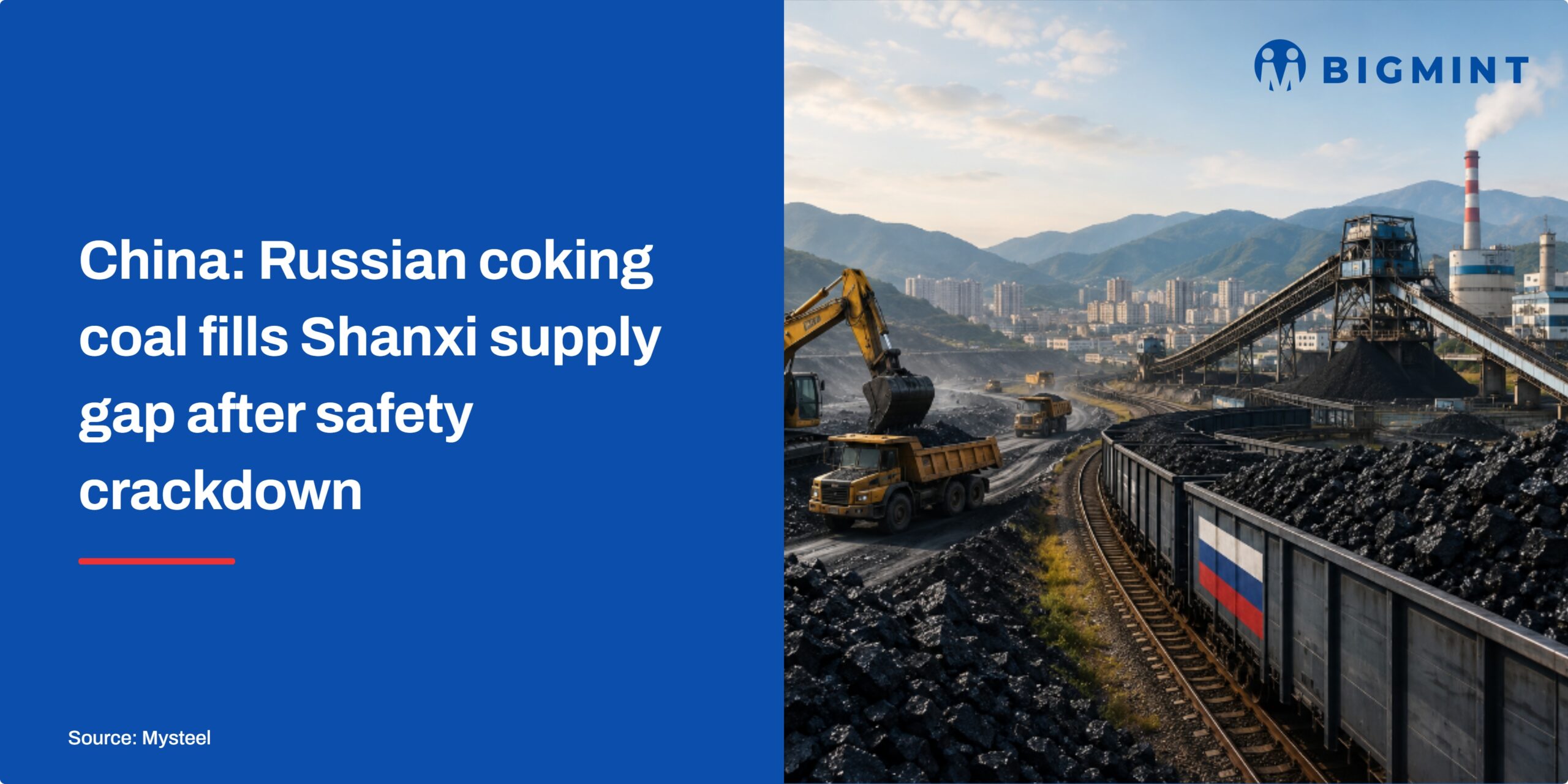
Mysteel Global: Russian coking coal is being railed from east-coast Chinese ports westward to Shanxi province, China’s traditional coking coal heartland, in an unusual “reverse” flow that underscores how severely the provincial government’s mining safety crackdown has disrupted local supply, Mysteel Global has learnt.
Rather than selling to Chinese steel mills nearby, some traders handing imported Russian coking coal at Caofeidian port in Hebei province have reportedly sold their coal to washeries around Xiaoyi and Jiexiu in Shanxi, railing it in the opposite direction from the traditional flow of Shanxi coal moving east to ports.
Such a rare movement highlights how supply is short in Shanxi. After the gas explosion at a mine in Qinyuan county on 22 May that killed 82 miners, province-wide safety checks have kept a large portion of Shanxi’s mining capacity idled while inspectors do their work, as reported.
According to Mysteel’s tracking, 171 coking coal mines across the province had halted production at some point since 23 May, involving 230.6 million tonnes (mnt)/year of capacity. As of 8 July, 98 mines with 134.95 mnt/year had resumed, but 73 mines with 95.65 mnt/year remained suspended.
The impact on production has been severe. Shanxi’s raw coal output in June plummeted by 31.5% y-o-y to 78.01 mnt, while national output dropped 9.7% y-o-y to 381 mnt — the steepest monthly decline since 2016, data from the National Bureau of Statistics shows.
Mysteel’s sample of 523 coking coal mines across the nation showed that the daily output of raw coal averaged around 1.5 mnt since the beginning of June, compared with above 2 mnt/d in April and in the weeks ahead of the accident in May.
Why Russian coal fits
Russian coking coal grades — including K4 hard coking coal, K10 semi-soft coking coal, GJ 1/3 coking coal, and Elga and Inagli fat coal — have been widely accepted by Shanxi’s well-established coal blending industry. Washing plants, particularly in Xiaoyi and Jiexiu, combine Russian coal with domestic material to optimise coking performance and meet the specifications required by steel mills, market participants said.
Russian coal is typically used at blending ratios of up to 20%. While Russian coking coal alone lacks sufficient coking strength for standalone use, its lower price makes it an attractive blending component, they say.
Meanwhile, sources noted that competitive pricing has further incentivised Shanxi’s washing plants to secure Russian coal. Since mid-July, prices of all Russian coking coal grades at Caofeidian port have trended downward, falling by RMB 10-30/tonne ($1.5-4.4/t). With freight from Caofeidian to the Xiaoyi area at roughly RMB 160/t, the delivered cost remains competitive against locally mined alternatives.
Imports fill the gap
China’s coking coal import market is dominated by Mongolia and Russia. In the first half of this year, China imported 66.88 mnt of coking coal, up 26.5% y-o-y. Imports from Mongolia stood at 40.58 mnt, soaring 63.9% y-o-y, followed by 17.27 million from Russia, a 16.1% rise. Both accounted for 86.5% of the country’s total.
In addition, Mysteel Global has learnt that some Mongolian coking coal shipped through the Ceke and Ganqimaodu ports on the Sino-Mongolian border also makes its way to Shanxi. While this coal is low in ash and sulphur, it typically exhibits lower coke strength after reaction (CSR) — a key quality indicator — than Shanxi’s primary coking coal. Local washing plants, therefore, blend Mongolian material with domestic coals to lower costs while maintaining final quality, sources said.
With the recovery in Shanxi’s domestic production proving slow, and mine-safety enforcement showing no signs of easing, the supply gap is likely to persist, keeping the “reverse” import channel from ports to Shanxi active, participants noted.
According to Mysteel estimates, coking coal production in Shanxi is unlikely to return to pre-accident levels between now and end-December. The latest survey findings indicate that most mines that have resumed operations are currently running at only 30-70% of their previous capacity.
Furthermore, a series of new regulations enacted after the accident will enforce stricter operational compliance, effectively curbing previously illegal activities, such as operating hidden workfaces or working mining zones omitted from official plans and regulatory filings.
Note: This article has been published in accordance with a content exchange agreement between Mysteel Global and BigMint.
Leave a Reply