- Weak property activity continues to weigh on steel demand
- Blast furnace maintenance and mill losses affect production
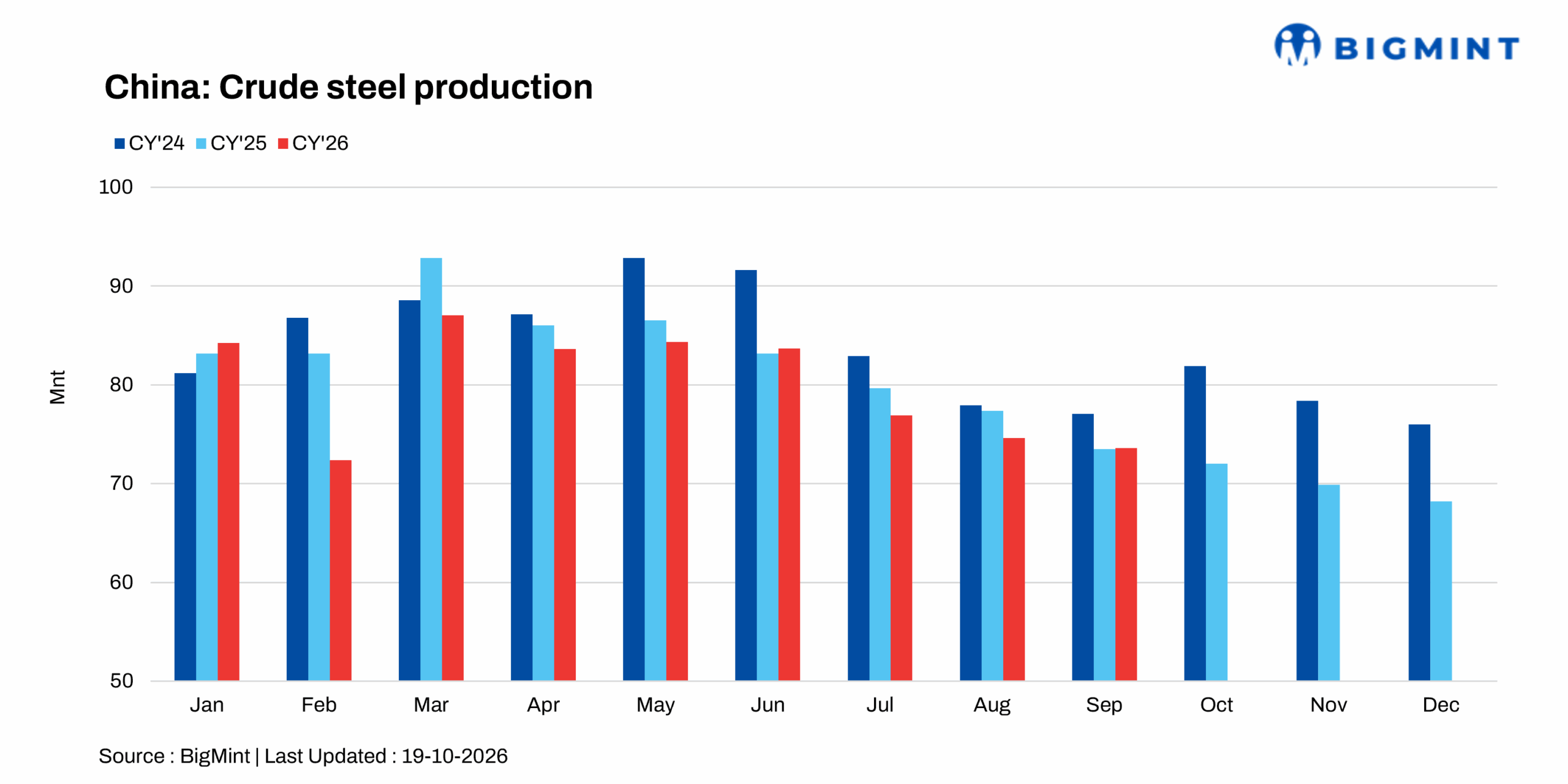
China’s crude steel production edged up by 0.1% y-o-y to 73.59 million tonnes (mnt) in September 2026, according to data released by the National Bureau of Statistics (NBS). Average daily crude steel output stood at around 2.453 mnt, down by 2.9% m-o-m from around 2.407 mnt in August. The marginal annual increase came despite persistent weakness in steel demand, while production levels varied across mills amid maintenance and margin pressures.
Weak property sector weighs on steel demand
China’s property sector continued to weigh on domestic steel demand, with real estate development investment falling 20.6% y-o-y during January-September 2026. This decline constrained construction activity and consumption of construction steel. Sluggish activity also kept developers and contractors cautious about procurement, limiting the scope for a broader recovery in steel demand.
Blast furnace maintenance and mill losses affect production
Amid weak demand, mounting losses and a slower-than-expected seasonal recovery prompted Chinese steelmakers to adjust operations. Blast furnace maintenance increased at some mills in September, reducing hot metal output at affected facilities. Squeezed margins further discouraged production, although national crude steel output edged up marginally y-o-y, reflecting differences in operating conditions across mills.
Inventories reflect a slow demand recovery
Finished steel inventories highlighted the challenge of balancing supply with downstream consumption, as demand fell short of seasonal expectations. Following the National Day holiday, cautious buying and inventory levels remained key concerns for the market. With property-related demand yet to recover meaningfully, stronger downstream procurement will be necessary to absorb available supplies and ease pressure on mill profitability.
Pig iron production also declines
China’s pig iron production fell by 1.4% y-o-y to 63.34 mnt in September. Cumulative output during January-September declined by 3.0% y-o-y to 628.44 mnt. The steeper decline in pig iron production compared with crude steel points to continued weakness in the ironmaking stage, although production-route differences and mill-level operating adjustments also influence the relationship between the two indicators.
Outlook
China’s steel market is likely to remain under pressure in October as weak domestic demand continues to limit mills pricing power, despite easing raw material costs. Lower input costs may offer some relief to production margins, although the extent of any improvement will depend on finished steel prices and operating conditions.
The property sector is expected to remain a key constraint on long steel demand. Seasonal construction activity may provide some support, but if the recovery falls short of expectations, buyers are likely to remain cautious about restocking. A sustained improvement in downstream procurement will be important for absorbing available supplies and supporting steel prices.
Leave a Reply