- Weak demand, oversupply trigger steel production cuts
- Mills cut output ahead of Victory Day to curb air pollution
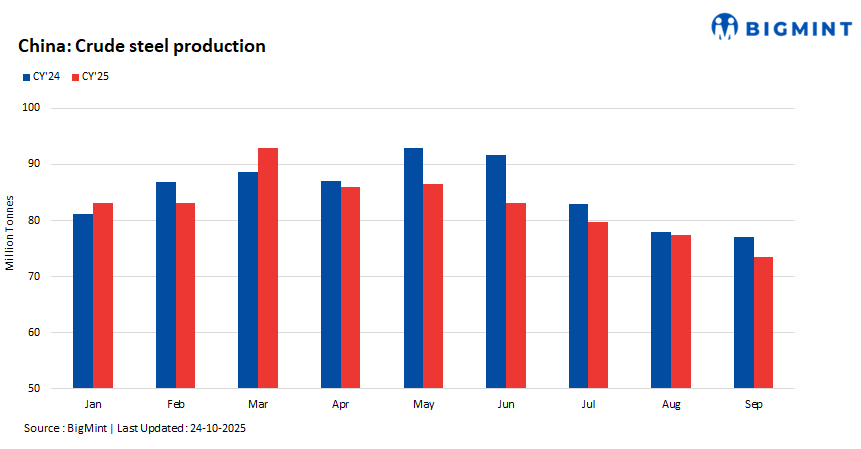
China’s crude steel production in September 2025 stood at 73.49 million tonnes (mnt), down by 4.6% y-o-y as compared to 77.07 mnt last year, according to data from the National Bureau of Statistics (NBS).
Additionally, crude steel production declined by 5% against 77.37 mnt in August 2025.
In January-September 2025, the country produced around 746.25 mnt, representing a drop of 2.9% y-o-y from 766.07 mnt in the same period a year ago.
Factors affecting output
Domestic demand remains subdued: Sluggish domestic steel demand in China, worsened by logistics and construction disruptions from Super Typhoon Ragasa, led to a significant oversupply. A pessimistic market outlook before the Golden Week holidays also dampened consumption. With inventory building up and muted domestic trading as buyers and sellers adopted a wait-and-watch approach, producers were compelled to cut crude steel production to manage their excess stock.
Mills cut output on environmental, policy-driven concerns: China’s crude steel production was curtailed in September 2025 mainly to boost air quality ahead of the Victory Day military parade. Mills in certain regions of China faced significant operational cuts to reduce pollution. This aligned with the government’s goals to curb overcapacity and promote cleaner industries. The temporary restrictions led to a notable monthly output drop. Implemented specifically for the parade to meet strict environmental norms, these cuts were lifted post-event. Overall, the moves reflected a balance of environmental protection and industrial policy objectives amid ongoing capacity management efforts in China’s steel sector.
Outlook
The short-term outlook for crude steel suggests that production may see an immediate uptick as temporary environmental restrictions put in place for the military parade have been removed. However, this rebound will be significantly moderated by sluggish domestic demand, leading to persistent oversupply and inventory concerns. Furthermore, the government’s ongoing policy to curb overcapacity will continue to impose a check on output, keeping the sector under sustained market and policy pressure.
Leave a Reply