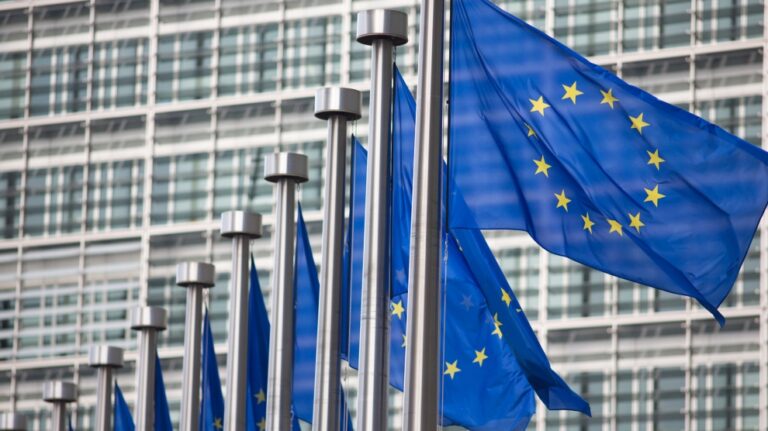
- EU CBAM live; steel dominates imports
- Turkish steel output rises, supply diversifies
SteelOrbis: The European Union has announced that the Carbon Border Adjustment Mechanism (CBAM) entered into force on 1 January 2026, following coordinated implementation across all EU member states. The CBAM registry has been fully integrated with national customs systems, TARIC and the EU Customs Single Window, allowing real-time data exchange, automated validation of CBAM declarants and uninterrupted release of goods for free circulation at the EU’s external borders.
Customs authorities now verify CBAM authorizations prior to the release of goods for free circulation, including enforcement of the 50-mt annual threshold. Simplified arrangements apply for SME importers in line with the Omnibus package.
Strong initial uptake by economic operators
During the 1-7 January, 2026 period, more than 12,000 economic operators submitted applications for CBAM authorization. Over 4,100 operators obtained authorized declarant status either before or immediately after the start of the definitive phase.
In the same period, 10,483 import customs declarations containing CBAM goods were validated automatically and in real time through the integrated customs systems.
Steel dominates early CBAM-covered trade
In the first reporting window covering imports between 1 and 6 January, 2026, CBAM-covered trade volumes totaled approximately 1.66 million mt. Iron and steel products accounted for 98 percent of the declared volumes.
Aluminum represented around 0.3 percent of the reported volumes, fertilizers 1.2 percent and cement 0.5 percent. No measurable volumes were recorded for electricity or hydrogen during this period.
Turkey, China and India among leading origins
The main countries of origin for CBAM-covered imports in the initial reporting window were Turkey, China, India, Canada, Taiwan and Vietnam. On the importing side, the highest volumes of CBAM declarations were recorded in Belgium, Spain, Romania, the Netherlands, France and Germany.
Turkey’s Kocaer Çelik announces record output and sales volumes for 2025
According to a statement made by Turkish steelmaker Kocaer Çelik Sanayi ve Ticaret A.Ş. to Turkey’s Public Disclosure Platform (KAP), the company achieved the highest production and sales levels in its history in 2025.
According to Kocaer Çelik’s statement, based on production carried out at the company’s own facilities, total production volume in 2025 was recorded at 648,105 mt, marking a year-on-year increase of 26 percent. As stated in the same disclosure, its sales volume increased by 17.6 percent over the same period to reach 682,873 mt, setting a new record.
Kocaer stated that, thanks to its geographically diversified export network, deeper penetration in existing markets and its ability to access new markets, it was able to overcome the negative impact of frequently changing trade policies, taxes and protectionist practices in the global steel sector.
The producer noted that the results reflect the impact of modernization and capacity expansion investments completed in recent years, as well as a growth strategy focused on high value-added products.
Turkish stainless steel industry cooperates with Malaysia
An important step has been taken to increase supply and market diversification in the Turkish stainless steel industry. Turkey’s Stainless Industrialists and Business Association (PASİD) has announced that it has signed a memorandum of understanding with Bahru Stainless, one of Malaysia’s leading stainless steel producers. The agreement aims to establish a non-exclusive and non-binding framework for cooperation and market development in the Turkish stainless steel industry, positioning Malaysia as an alternative supplier, particularly for stainless steel raw materials.
Under the memorandum, which does not create any obligation for purchase, sale, delivery, or supply, PASİD will provide facilitating and supportive services to Bahru Stainless in Turkey, including the promotion of stainless steel products, market access, and support in supply processes.
Highlighting the importance of the agreement for the industry, Arslan Küçükemre, PASİD chairman, stated that Bahru Stainless has become an alternative producer for the industry, enabling Turkish companies to source the products they need from a different supply channel.
Contribution to Turkey-Malaysia trade relations
In addition to this agreement, which was signed during the official visit of the Malaysian prime minister to Turkey on 6-8 January, several memoranda aimed at enhancing technology transfer and trade between the two countries were also concluded. The target of increasing the bilateral trade volume from $5 billion to $10 billion between Turkey and Malaysia was also formally confirmed.
Note: This article has been written in accordance with a content exchange agreement between SteelOrbis and BigMint.
Leave a Reply