- Australian iron ore shipments recover on improving Capesize cargo availability
- Higher Port Hedland loadings despite softer Chinese demand, elevated inventories
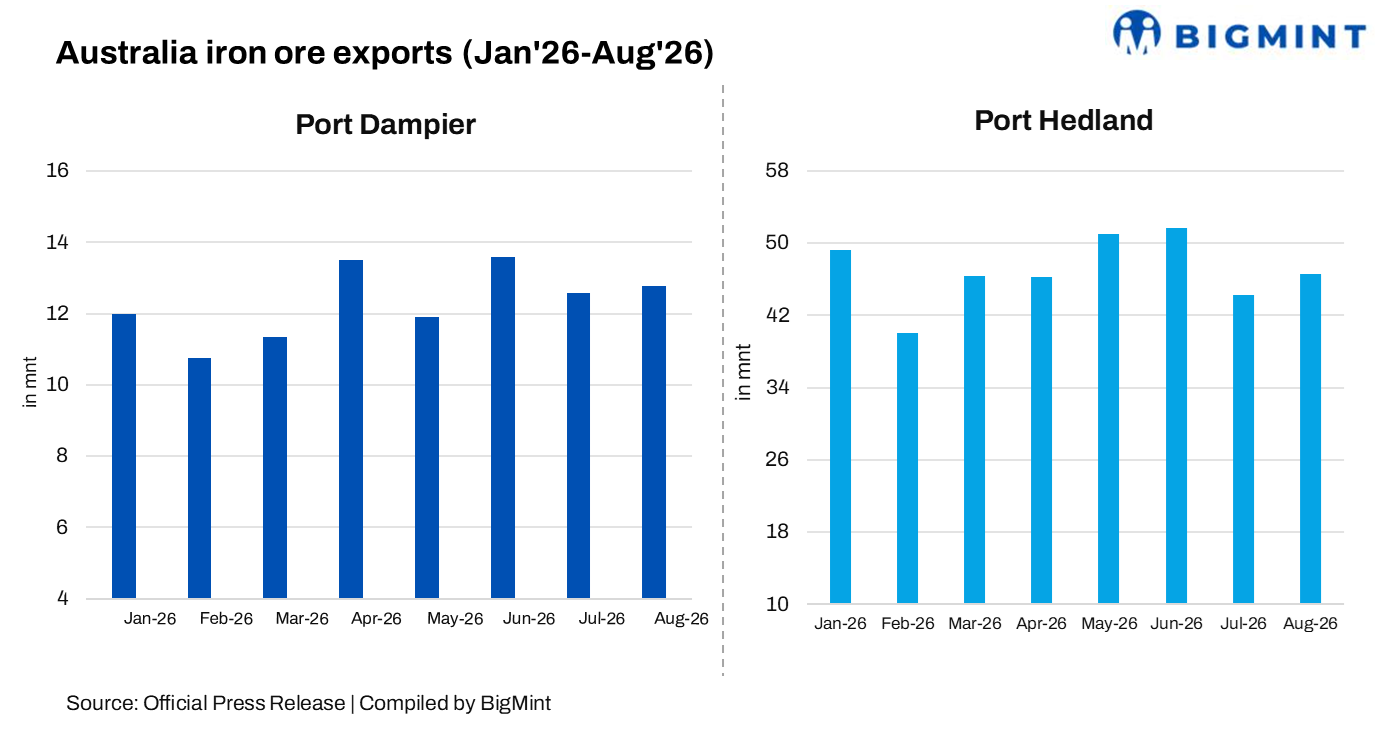
Australian iron ore shipments from Port Hedland and Dampier increased to 59.4 million tonnes (mnt) in August 2026, up 4.6% m-o-m from 56.8 mnt in July. The increase was driven by higher loadings at both major Pilbara ports, improving cargo availability for Capesize vessels.
Port-wise iron ore shipments
- Port Hedland: Shipments rose 5.4% m-o-m to 46.6 mnt in August from 44.2 mnt in July. Port Hedland shipments increased in August, reflecting a recovery in overall export activity after softer volumes in July. Improved operating conditions and vessel movements supported higher cargo handling during the month, while steady demand from major iron ore markets helped sustain export flows.
- Port Dampier: Shipments increased 1.7% m-o-m to 12.8 mnt in August from 12.6 mnt in July. The modest recovery provided some support to Pacific cargo availability. However, overall Pilbara shipments remained subject to market conditions, weather disruptions, maintenance activity and customer requirements, while Dampier’s contribution remained relatively subdued.
Freight market sentiment
The recovery in August shipments provided better cargo support for the Pacific Capesize market, with higher Australian loadings increasing vessel employment opportunities. However, the freight impact was partly restrained by softer Chinese steel-sector fundamentals, elevated iron ore inventories and increasing seaborne supply, including rising volumes from Guinea’s Simandou project.
Outlook
Higher Australian loadings should provide a firmer cargo base for Capesize freight, particularly on the Australia-China route. However, elevated Chinese inventories, subdued steel demand and growing global iron ore supply could limit the upside. Freight sentiment is therefore likely to remain dependent on the sustainability of Australian shipments and the pace of Chinese restocking.
Leave a Reply