- Australian iron ore shipments fall, weighing on Capesize demand
- Lower China-bound volumes weaken freight market support
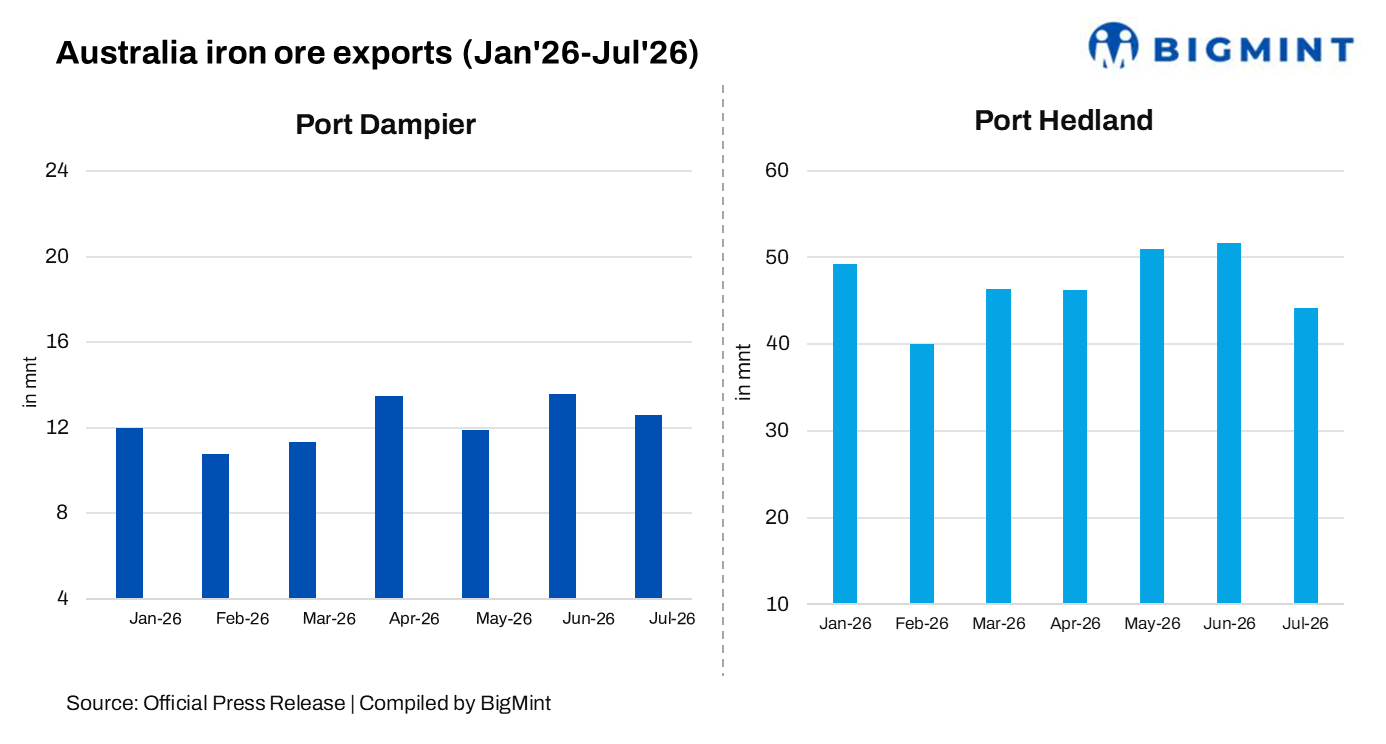
Australian iron ore shipments from Port Hedland and Dampier declined to 56.8 million tonnes (mnt) in July 2026, down 13% m-o-m from 65.3 mnt in June. The decline was led by sharply lower loadings at Port Hedland, while Dampier also recorded a moderate contraction, reducing cargo availability for Capesize vessels on the Australia-China route.
Port-wise iron ore shipments
- Port Hedland: Shipments fell 14.5% m-o-m to 44.2 mnt in July from 51.7 mnt in June, accounting for the bulk of the decline in overall Pilbara exports. China remained the dominant destination, underlining the port’s significance for Australia-China Capesize flows.
- Port Dampier: Shipments declined 7.5% m-o-m to 12.6 mnt from 13.6 mnt in June. Although the contraction was less severe than at Port Hedland, it further reduced overall cargo availability during the month.
Freight market sentiment
The lower export volumes created a weaker cargo backdrop for the Capesize market, potentially weighing on vessel utilisation and Australia-China freight demand. The sharp fall at Port Hedland suggests softer cargo scheduling in July, while the concurrent decline at Dampier limited support from alternative Pilbara loadings.
However, the pullback appears to reflect monthly shipment volatility rather than a structural disruption to Australian supply. A rebound in loadings could therefore quickly improve cargo availability and Capesize demand.
Outlook
Capesize sentiment in the coming months will largely depend on the recovery in Australian iron ore loadings and the pace of Chinese buying. Higher shipments from Port Hedland, in particular, would strengthen cargo availability and support Australia-China freight rates.
For now, the July decline presents a downside risk to freight demand. Any sustained recovery will depend on stronger Australian loadings, continued Chinese iron ore procurement and underlying steel-sector demand.
Leave a Reply