- Drought raises concerns over kharif production in 2026 season
- Andhra Pradesh declares drought across 21 of its 28 districts
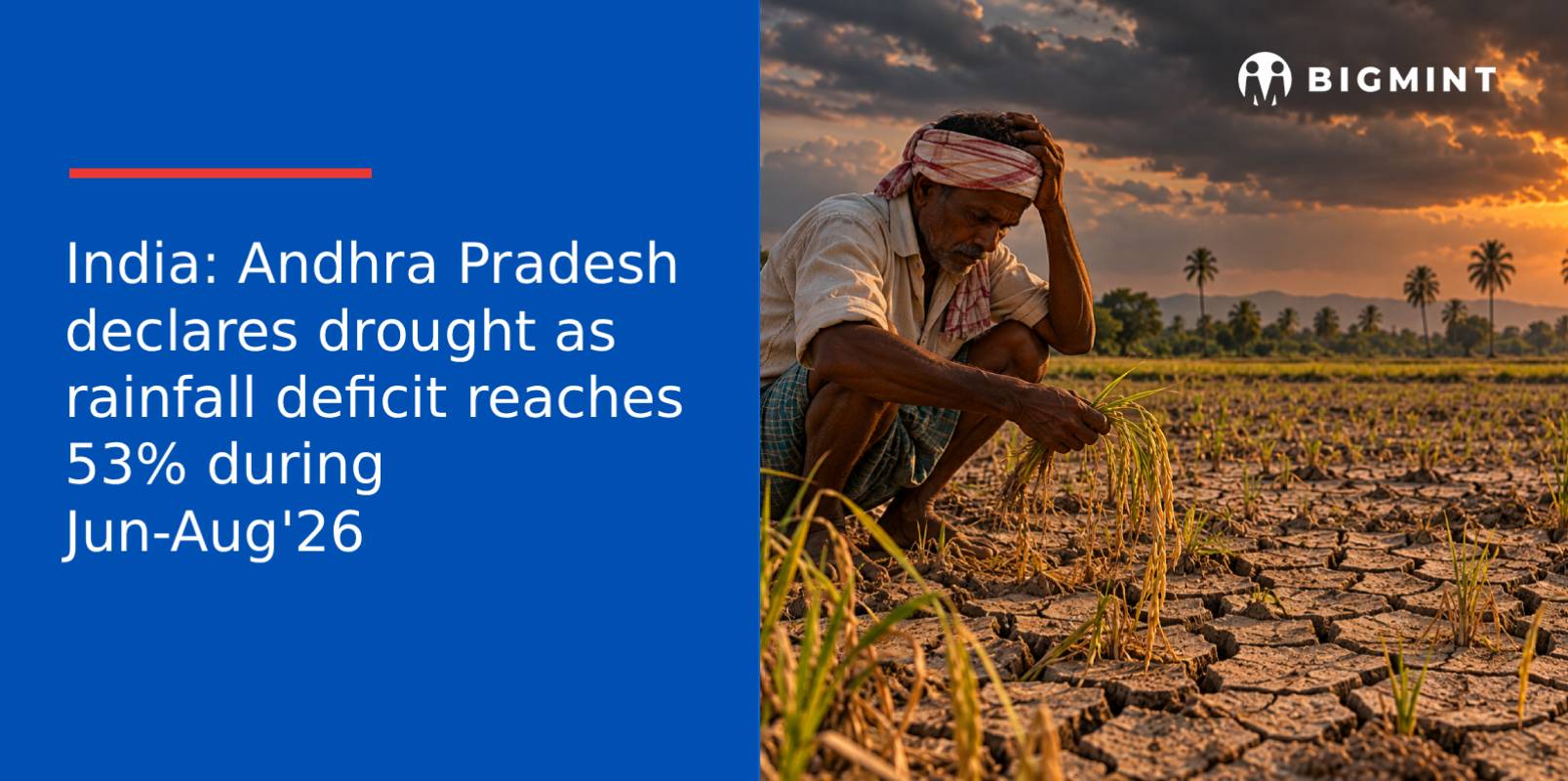
The Andhra Pradesh government has declared drought in 21 of the state’s 28 districts for the 2026 kharif season after rainfall during June-August stood at 53% below normal, The state received an average rainfall of 197.6 mm against the normal 424.3 mm between 1 June and 31 August, leaving a shortfall of 226.7 mm. The government declared the drought on 1 October, earlier than the usual timing for such announcements.
Rainfall deficit raises concerns over kharif crops
The affected districts include Srikakulam, Vizianagaram, Visakhapatnam, Anakapalli, Kakinada, East Godavari, Eluru, Krishna, Guntur, Prakasam, Kurnool, Nandyal, Anantapuramu, Chittoor and other districts across the state.
The rainfall shortfall could affect soil moisture, water availability and crop development, particularly in areas dependent on monsoon rainfall. The extent of crop damage and the impact on agricultural output will depend on local rainfall distribution, irrigation availability and crop conditions.
The rainfall deficit could be partly attributed to El Nino, a climate phenomenon involving warmer-than-normal sea surface temperatures in the central and eastern Pacific Ocean that can influence India’s monsoon patterns.
India’s monsoon ends with 13% rainfall deficit
The India Meteorological Department (IMD) reported that the 2026 southwest monsoon season ended on 30 September with rainfall 12.6% below the long-period average. The season was described as the driest in 11 years and the fourth driest of the 21st century.
The monsoon arrived over Kerala on 4 June, three days later than its usual onset date of 1 June, and covered the entire country by 9 July, one day later than normal.
In September, Maharashtra also declared drought conditions in 74% of its subdistricts amid deficient southwest monsoon rainfall.
Outlook
The rainfall deficit in Andhra Pradesh could affect kharif crop yields, particularly in rain-fed areas, and increase dependence on irrigation. The impact on agricultural production and prices will depend on crop losses, soil moisture conditions and water availability in the coming months.
Leave a Reply