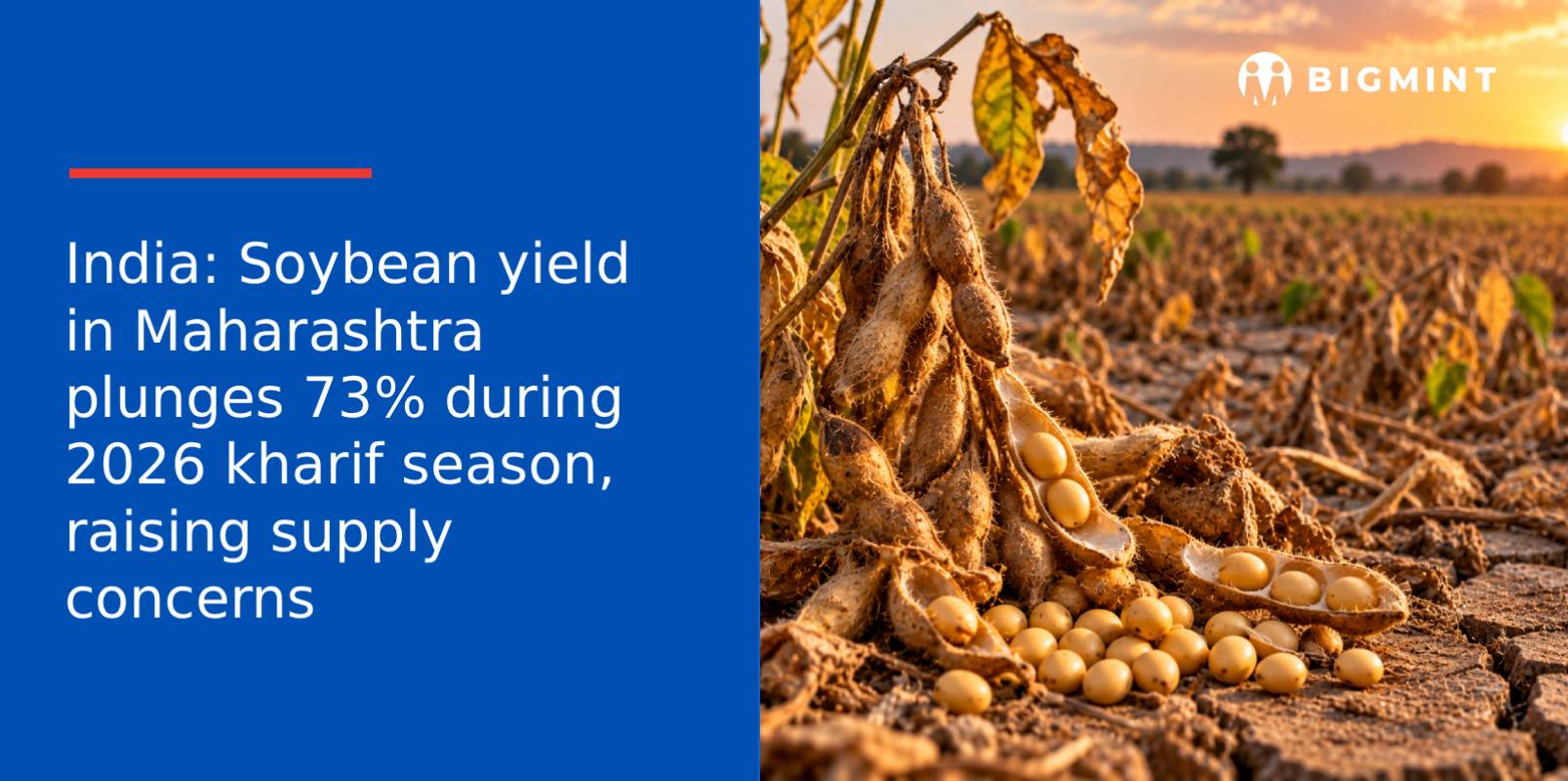
- Average yield falls to 410 kg/hectare from five-year average of 1,534 kg/hectare
- Prolonged dry spells during Aug, Sep threaten crop productivity
India’s soybean market faces potential supply constraints after a sharp decline in estimated crop productivity in Maharashtra during the 2026 kharif season. Average soybean yield in the affected region has fallen to 410 kg/hectare, down more than 73% from the five-year average of 1,534 kg/hectare. Irregular monsoon rainfall and prolonged dry spells during August and September have raised concerns over production, market arrivals, and domestic soybean prices.
Maharashtra dry spells weigh on soybean yield
The estimated yield has declined by 1,124 kg/hectare from the five-year average, highlighting the severity of weather-related stress on crop development. Although soybean acreage remains substantial, inadequate rainfall during critical growth stages has weakened production prospects.
Approximately 4.619 million hectares were sown across the Marathwada region of Maharashtra during the 2026 kharif season, including 2.574 million hectares under soybean cultivation.
Lower yields could reduce marketable soybean surplus in the affected areas. However, the impact on national production will depend on the extent of crop losses in Maharashtra and output in other major producing states.
Arrivals, processor demand to shape prices
Reduced soybean availability from Maharashtra could intensify competition among oilseed processors and influence mandi prices. Market direction will depend on harvesting progress, daily arrivals, farmer selling decisions, and demand for soybean oil and de-oiled cake (DOC).
Comparatively favourable crop conditions in Madhya Pradesh could partly offset production losses in Maharashtra, depending on actual yields and harvested output. Higher arrivals from other producing regions or weaker processor demand could limit price gains.
Leave a Reply