- Buyers stay selective, limiting fresh scrap procurement
- Diverging steel price trends keep market activity cautious
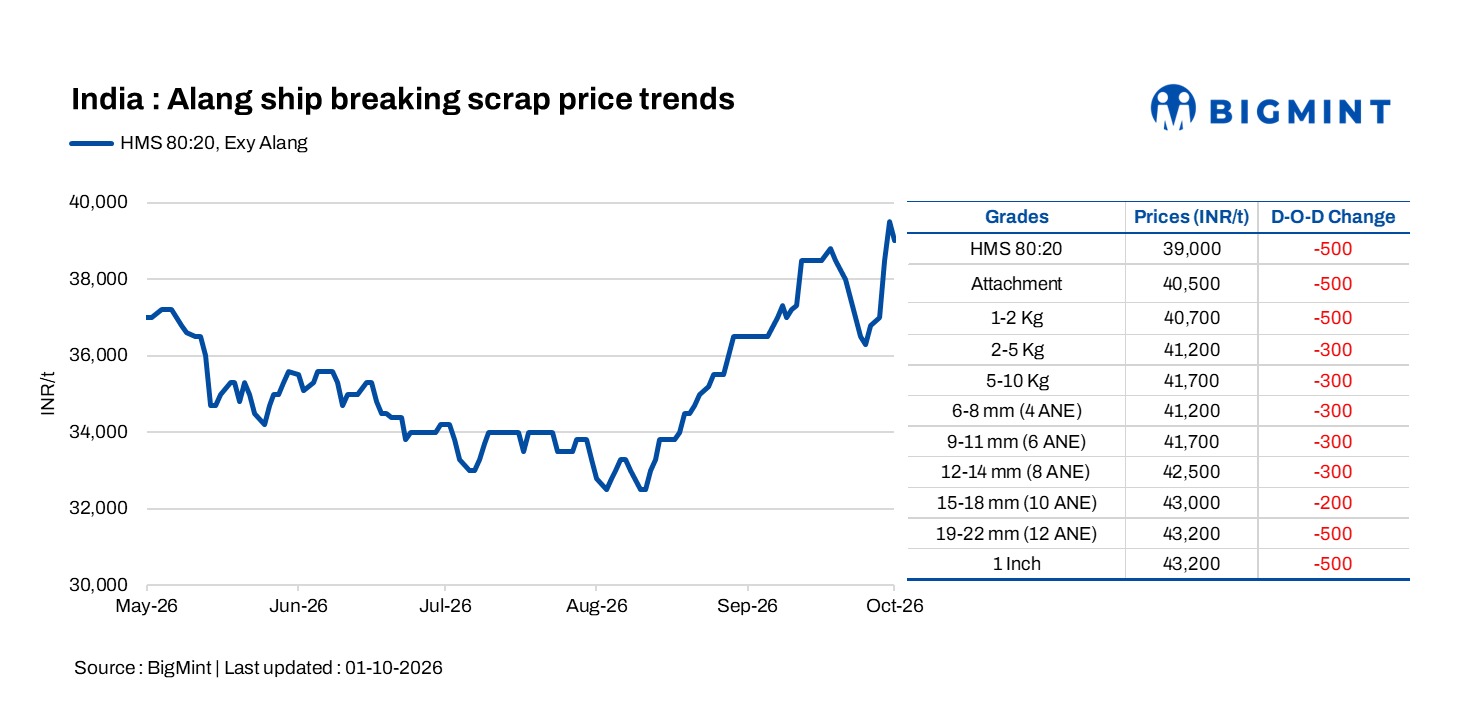
Alang’s ship-breaking melting scrap prices for HMS 80:20 decreased by INR 500/t d-o-d to INR 39,000/t ($406/t) ex-yard on 1 October. The decline reflected softer sentiment in key consuming markets, particularly as billet prices weakened in Gujarat and Mandi. Buyers remained cautious on fresh procurement, while lower replacement costs limited the scope for suppliers to hold higher offers. Market activity remained need-based, with participants closely tracking movements in finished and semi-finished steel prices before committing to purchases.
Gujarat market update

In Gujarat, Bhavnagar billet prices decreased by INR 700/t d-o-d to INR 47,500/t DAP on 30 September, while Ahmedabad rebar prices rose by INR 200/t to INR 53,200/t ex-works. The mixed price movement resulted in a cautious market tone. While firmer rebar prices provided some support to finished steel sentiment, the sharper decline in billet prices weakened replacement-cost expectations for scrap. Buyers remained selective and were reluctant to chase higher scrap offers amid uncertainty over downstream demand.
Mandi market update
In Mandi Gobindgarh, billet prices decreased by INR 300/t d-o-d to INR 48,200/t DAP, while HMS melting scrap prices decreased by INR 400/t to INR 39,300/t DAP. Rebar prices also decreased by INR 300/t d-o-d to INR 53,200/t ex-works. The broad-based decline kept market sentiment subdued, with mills maintaining a cautious procurement approach and focusing on immediate requirements. Softer finished and semi-finished steel prices reduced the incentive to replenish scrap inventories aggressively.
Outlook
The near-term outlook for Alang scrap remains cautious as softer billet prices in Gujarat and Mandi weigh on replacement-cost sentiment. Although Ahmedabad rebar prices moved higher, the mixed trend across steel markets is limiting confidence among buyers and keeping procurement selective. Further direction is likely to depend on downstream steel demand and the extent to which mills are willing to replenish scrap inventories.

Leave a Reply