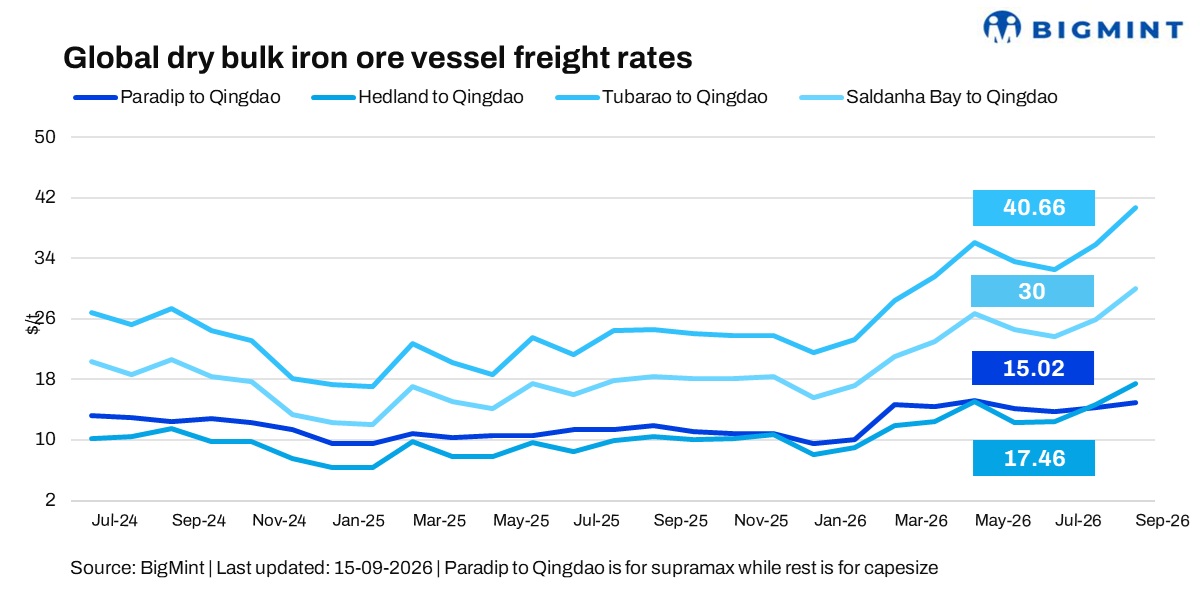
- Quieter Pacific fixing, limited miner activity weigh on sentiment
- Atlantic rates supported by Brazilian demand despite softer fixing
Dry bulk iron ore freight rates softened across key routes in the week ended 15 September, led by weaker Pacific activity. Limited fresh fixing, delayed vessel loading, and cautious market participation weighed on sentiment, while the Atlantic remained comparatively supported by Brazilian cargo demand and prompt tonnage constraints.
Pacific activity loses momentum
The Hedland-Qingdao route faced quieter fixing and limited miner participation, with market participants adopting a wait-and-see approach on fresh business.
A shipbroker said, “Vessels have not been loading for around 15 days, and a few cargoes have been cancelled.” The delays and cancellations have reduced immediate cargo activity and kept vessel employment uncertain, limiting owners’ ability to push the market.
Route-wise sentiment

Atlantic remains better supported
The Tubarao-Qingdao route also saw softer fixing activity, although Brazilian cargo demand and relatively tight prompt tonnage continue to provide support. Saldanha Bay-Qingdao was comparatively stable, with steady China-bound requirements supporting sentiment, while improving ballast availability limited owners’ leverage.
Fuel costs squeeze vessel economics
High bunker costs are adding pressure to voyage economics, particularly where vessels face prolonged waiting times or cancelled cargoes. Delayed loading, cargo cancellations and elevated fuel costs are therefore becoming important constraints on fresh fixing.
A shipbroker said, “Fuel prices are unrealistic at current levels, making it difficult for vessels to load economically at prevailing freight rates.”
Paradip remains subdued
Paradip-Qingdao continues to face limited cargo enquiries and readily available tonnage, while loading delays are adding uncertainty to vessel deployment. The combination of weak cargo urgency and higher operating costs is keeping the route under pressure.
Outlook
The near-term market will hinge on fresh Pacific miner fixing, Atlantic cargo activity and the availability of prompt tonnage. A pickup in Pacific requirements could absorb open vessels and restore some bargaining power to owners, while continued cancellations and delayed loading would keep the market under pressure.
In the Atlantic, Brazilian cargo demand remains an important support, but a build-up in ballast tonnage could limit further firming. Elevated bunker costs are likely to remain a key consideration for owners, particularly on voyages where waiting times are extended. Overall, the market is likely to remain cautious and highly dependent on fresh cargo fixing in the coming sessions.
Leave a Reply