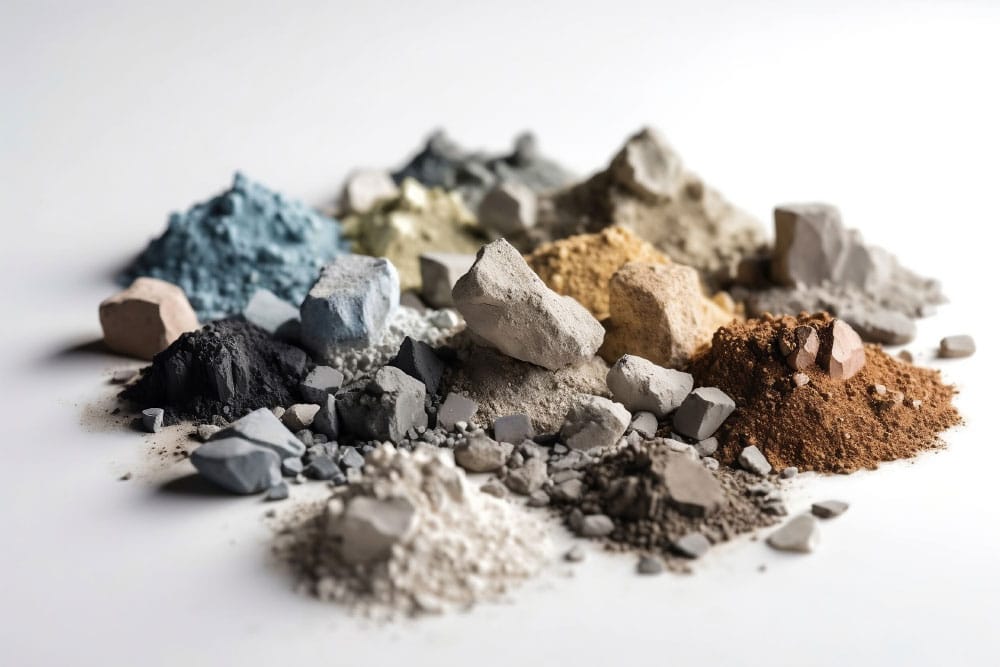
- Policy reflects govt focus on cultivating secondary sources of critical minerals
- GIS-based database to be created to inventory all mine dumps, tailing ponds
The Indian Ministry of Mines has announced a policy for retrieving critical minerals from tailings, slag, and other mine and processing waste.
In her budget speech last year, Finance Minister Nirmala Sitharaman had mentioned the need for a policy for “recovery of critical minerals from tailings”.
Tailings or fine gangue materials generated during processing and refining of ROM are associated with copper, lead, zinc, gold, bauxite, rock phosphate, graphite, chromite, uranium, iron ore, and coal washeries. With the evolution of mining and processing technologies and depletion of high-grade ores, cut-off grades have been revised downwards over the years. Once considered uneconomic, dumps and tailings now offer renewed promise.
However, overburden, tailings, red mud, and mine dumps have been found to contain companion metals (that occur alongside a primary metal) that are now recognised as “critical”. They are important secondary sources as the country works in mission mode to secure its critical mineral supply chain.
Recognising that the source tailings and slags will now be under the administrative control of other ministries, including Coal, the Atomic Energy Department, and Petroleum and not that of the Ministry of Mines alone, the policy proposes a coordinated approach.
It provides standard guidelines from the Indian Bureau of Mines 4 (IBM), Central Mine Planning and Design Institute (CMPDI), and Atomic Minerals Directorate of Exploration and Research (AMD) to analyse dumps, tailings, waste dumps, overburden, sub-grade dump and tailing ponds of all existing mines and locate secondary sources for likely availability of various critical and strategic elements.
The ministry has shared the contours of the policy governing discovery and recovery of critical minerals through the value chain. This covers initial exploration, overburden, existing mines and processing operations, tailings:
Exploration
Exploration agencies have shifted focus from bulk minerals to critical minerals. The policy will identify critical minerals occurring as companion metals at the stage of exploration itself.
1. All exploration agencies must follow GSI’s “SOP of Mineral Exploration” for standardised sampling, analysis, and data reporting.
2. NMEDT-funded projects must also follow these GSI guidelines.
3. All agencies must analyse available core data to identify critical minerals. CMPDI and GSI have developed guidelines to identify trace elements (Ge, Li) and REEs in coal/lignite to prevent loss to tailings.
4. States must follow GSI’s SOP to assess critical minerals associated with minor minerals and in mine dumps.
5. Systematic identification of trace elements (Ge, Li) and REEs during coal exploration is essential to prevent mineral loss to tailings. CMPDI and GSI have developed guidelines for detecting critical minerals in coal and lignite host rocks.
6. Critical minerals associated with minor minerals must be assessed, including their presence in mine dumps. States will follow GSI’s SOP for critical mineral assessment during minor mineral exploration and from mine dumps.
7. Critical minerals occur in similar geological settings as atomic minerals. The Atomic Minerals Directorate (AMD) has developed guidelines for analysing associated elements during exploration of atomic minerals and in existing operational mines.
8. The Ministry of Petroleum and Natural Gas will frame guidelines to detect critical minerals during exploration and share data with Ministry of Mines for further exploration. Basin-wide exploration beyond oilfield brines can augment critical mineral resources.
Detecting presence of companion minerals in operating mines/dumps/tailing ponds
Standard operating procedures (SOPs) have been developed by multiple agencies for sampling and analysing critical minerals from mines, tailings, and dumps: IBM for mines and tailings, CMPDI for coal-bearing areas, GSI for minor mineral dumps, and AMD for atomic mineral operations.
A coordinated, centralised GIS-based database will be created to inventory all mine dumps and tailing ponds, including abandoned sites, by cataloguing their location, nature (dry/wet), operational status, commodity type, quantity, and quality. This database, maintained by agencies under the Ministry of Mines, Ministry of Coal, and Department of Atomic Energy, will be made publicly accessible where feasible and shared with exploration agencies like GSI, MECL, and private firms to enable systematic identification of critical minerals both within and beyond mining lease areas.
IBM will create a comprehensive GIS-linked record of every tailing dam, waste dump, beneficiation slime pond, and red-mud stack pond in the country, complete with grade, tonnage, chemistry, and hazard ratings.
Enabling law to produce companion minerals
Under the MMDR Act, mining leases are issued for specific minerals. Previously, associated minerals could be included in auctioned mines upon payment of auction premium but were prohibited in non-auctioned leases. This led to high premiums for auctioned mines and locking of deposits due to sub-optimal mining or non-reporting. The MMDR Act was amended in August 2025 to simplify inclusion of companion minerals in all mining leases.
For critical and strategic minerals (Part D of First Schedule) or Seventh Schedule minerals, miners will only pay applicable royalty with no additional payment or auction premium required.
Environmental clearance
No additional environmental clearance (EC) will be required for extraction within the mining lease area, in the interest of mineral development.
Research and development
A portion of NCMM funds will be reserved to develop technologies for extracting critical minerals from tailings.

Leave a Reply