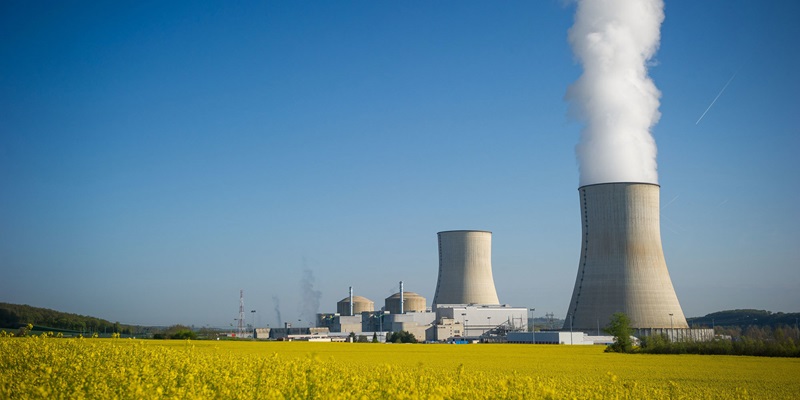
- PM Modi says private sector will be central to next phase of nuclear development
- Government targets 100 GW nuclear capacity by 2047, backed by new funding push
India opens door to wider participation
Prime Minister Narendra Modi said on Thursday that India is moving toward opening up its nuclear power sector, signalling a stronger role for private companies in small modular reactors (SMRs), advanced reactor technologies, and nuclear innovation. He underlined that private participation is essential to scale nuclear capacity to 100 GW by 2047, a key step in reducing reliance on coal.
Current installed nuclear capacity stands at 8.78 GW, with plans to reach 22.38 GW by 2031-32. The central government has allocated ₹20,000 crore under the Nuclear Energy Mission to develop at least five indigenously designed and operational SMRs by 2033.
Policy framework set in Budget 2025-26
The Union Budget for 2025-26 first set out the need for “indigenous nuclear technology and public-private collaborations” as part of the Nuclear Energy Mission. It identified three focus areas: establishing 220 MW ‘Bharat Small Reactors’ for industry-linked captive power, R&D partnerships for Bharat Small Modular Reactors, and support for emerging nuclear technologies.
The Department of Atomic Energy (DAE) has also outlined plans for new reactor types, including high-temperature gas-cooled reactors for hydrogen co-generation and molten-salt reactors aimed at leveraging India’s thorium reserves.
Debate over private access to atomic minerals
Atomic minerals such as uranium ore, monazite and thorium remain classified under Part B of the First Schedule of the MMDR Act, restricting mining to DAE-run PSUs. Reports earlier this year suggested the government might allow private firms to mine or import uranium and expand private access to thorium via the Offshore Areas Atomic Minerals Operating Rights Rules, 2025. The government dismissed these claims as “misleading and factually incorrect,” according to official statements on DD News.
Uranium resources see major augmentation
The DAE’s Uranium Corporation of India continues to operate India’s uranium mines in Jharkhand – including the Jaduguda deposit – and at Tummalapalle in Andhra Pradesh. A significant new discovery near Jaduguda is expected to extend the life of the ageing mine by more than 50 years.
By end-2024, the DAE reported an addition of 15,598 tonnes of uranium oxide resources across Andhra Pradesh, Jharkhand and Rajasthan, taking India’s total uranium oxide resource base to 4,25,570 tonnes.
Outlook
India’s power demand is rising at one of the fastest rates globally, driven by industrial expansion, electrification of transport, a growing services economy and surging residential consumption. Conventional thermal power is seeing a renewed build-out as states scramble to ensure baseload availability, while renewable energy deployment continues to accelerate, supported by competitive tariffs and aggressive national targets.
Within this mix, nuclear power is being positioned as the long-term, zero-carbon pillar that can stabilise a grid increasingly dominated by variable renewables. Its role is expected to expand steadily through indigenous reactor designs and potential private-sector participation, with policymakers viewing nuclear as essential to meeting demand growth without deepening coal dependence.
Leave a Reply