- Renewed tensions in Middle East lift crude oil but aluminium remains under pressure
- Growing production outside Gulf, record-high Chinese exports weigh on aluminium prices
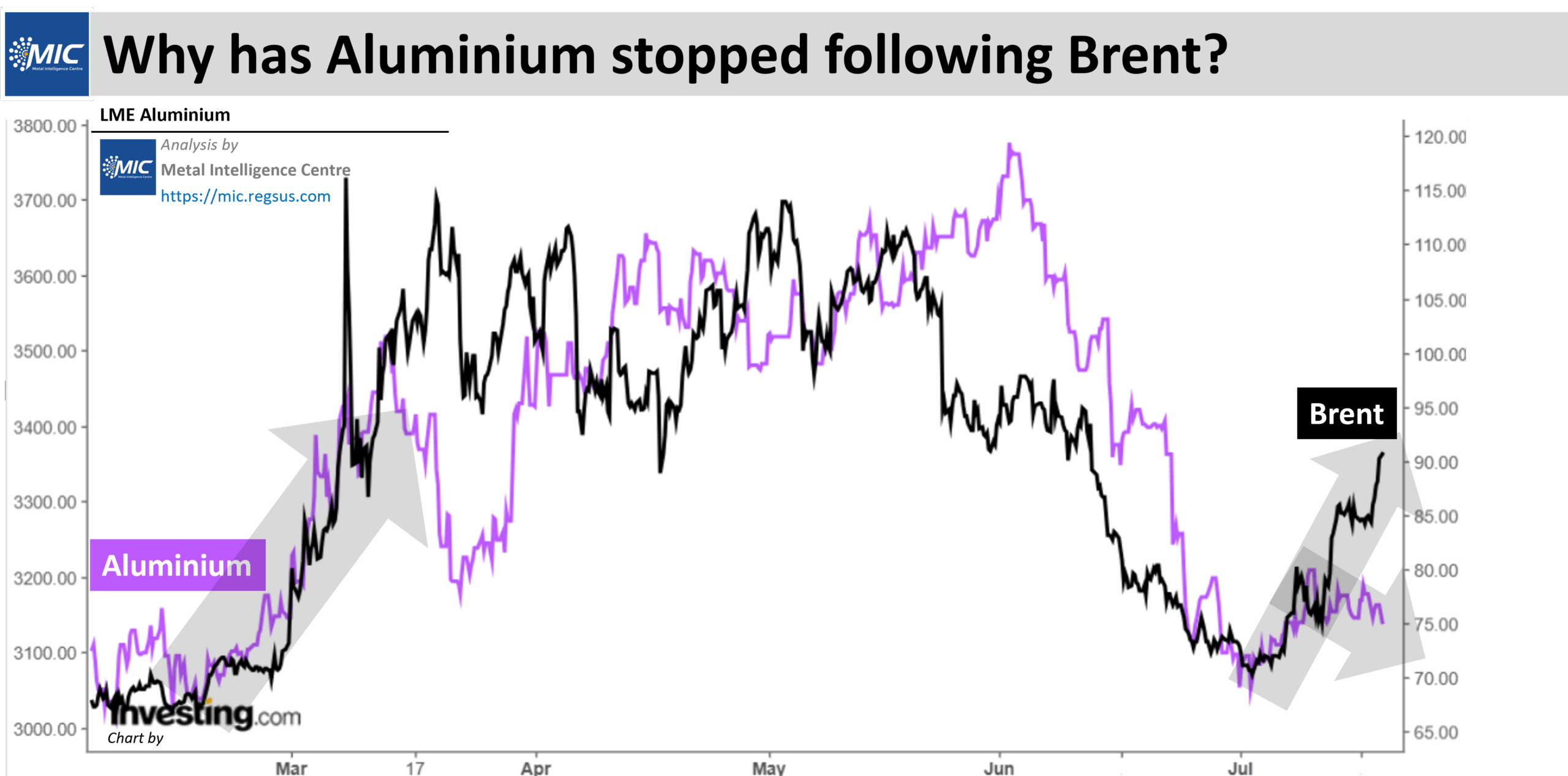
Metal Intelligence centre: For much of 2026, London Metal Exchange (LME) aluminium and crude oil moved in tandem as geopolitical tensions in the Middle East fuelled fears of supply disruptions. Every escalation in the region pushed both commodities higher, with markets pricing in the risk of supply interruptions. However, the latest developments have broken that relationship. While oil prices have resumed their upward trend on renewed concerns over Gulf energy exports, aluminium has continued to weaken, signalling a clear shift in the factors driving the market.
The divergence reflects changing expectations around global supply.
During the initial phase of the Middle East conflict, crude oil rallied sharply as traders feared disruptions to shipments through the Strait of Hormuz, a strategic chokepoint that handles nearly one-fifth of global oil trade. Although physical supplies remained largely uninterrupted, concerns over potential shipping disruptions, higher freight costs, and broader geopolitical uncertainty added a substantial risk premium to oil prices.
Aluminium experienced a similar rally. The Gulf Cooperation Council (GCC) accounts for nearly 19% of global primary aluminium production, making the region an important supplier to international markets. Concerns intensified after reports suggested that major smelters, including Emirates Global Aluminium’s (EGA) Al Taweelah smelter (1.5 million tonnes per year) and Aluminium Bahrain’s (Alba) 1.6 million tonnes per year facility, could face operational risks if the conflict escalated.
At the same time, the Strait of Hormuz plays a critical role in the aluminium supply chain by facilitating alumina imports into the Gulf and aluminium exports to global consumers. The possibility of disruptions to these trade flows strengthened the geopolitical risk premium, pushing aluminium prices sharply higher alongside crude oil.
Following the announcement of a ceasefire, fears of immediate supply disruptions eased, causing both oil and aluminium prices to retreat as the geopolitical premium faded.
However, the latest escalation has produced a markedly different market response.
Oil has once again attracted strong buying interest as markets remain highly sensitive to any threat to Gulf energy exports. Aluminium, in contrast, has failed to recover because the global supply outlook has improved significantly.
Unlike during the earlier phase of the conflict, aluminium production facilities have remained largely unaffected this time. More importantly, growing supply from outside the Gulf has reduced concerns over potential shortages. China exported a record 711,000 tonnes of aluminium in June 2026, substantially increasing global metal availability. Meanwhile, Indonesia continues to expand its aluminium smelting capacity, while previously idled smelters in the United States and Europe have resumed operations, adding further supply to the market.
These developments have largely eroded the geopolitical risk premium that supported aluminium prices earlier this year. Oil, however, remains vulnerable because global spare production capacity is limited and the Strait of Hormuz continues to be a critical route for crude exports. Even the possibility of disruption is enough to lift oil prices.
Aluminium faces a different reality. Rising production, increasing exports, and expanding smelting capacity have shifted market attention away from geopolitical risks and towards a growing global surplus. Improved metal availability is now outweighing concerns surrounding the Middle East.
As a result, the correlation between oil and aluminium has weakened. While crude oil continues to respond primarily to geopolitical developments, aluminium is increasingly being driven by supply fundamentals. Unless geopolitical tensions begin to directly disrupt aluminium production or global trade flows, abundant supply is likely to keep aluminium prices under pressure, even if oil continues to trade higher.
Note: This article has been published as part of a content partnership between Metal Intelligence Centre and BigMint.
Leave a Reply