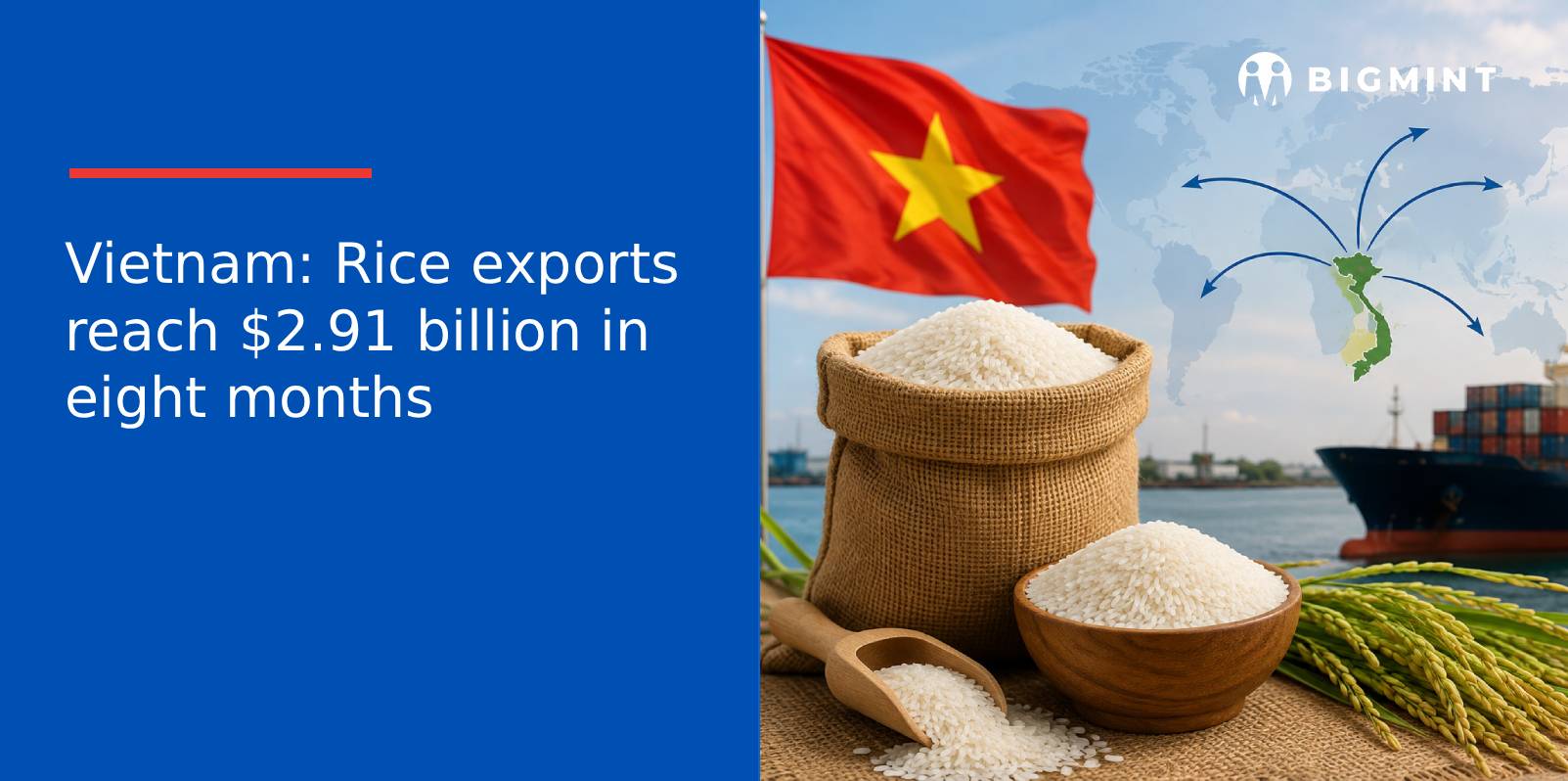
- Vietnam exported an estimated 03 million tonnes of rice worth nearly $2.91 billion during January–August 2026
- Export volume fell 5%, while export value declined 7% year-on-year
Vietnam’s rice exports declined in both volume and value during the first eight months of 2026. The country exported an estimated 6.03 million tonnes of rice worth nearly $2.91 billion during January–August, with export volume down 5% and value falling 10.7% year-on-year.
Lower prices weigh on export value
The decline in export value was mainly due to weaker export prices during the first part of the year. Vietnam’s average rice export price for January–August stood at $481.5/tonne, down 5.9% year-on-year. As prices fell faster than shipment volumes, export earnings came under pressure. The full-year rice export value is forecast at around $3.94 billion, approximately 4% below the $4.10 billion recorded in 2025. However, prices have started to recover. The average export price reached $511/tonne in July, up 5.8% year-on-year and marking the first annual increase in 2026. Continued price improvement could support export turnover during the remaining months.
Demand and competition shape export volumes
Weaker buying from some markets and stronger competition have also weighed on export volumes. Indonesia has no plans to import rice in 2026 as domestic production and reserves remain high, while some African markets have reduced purchases of Vietnamese rice because it is more expensive than mainstream rice from India and Pakistan. At the same time, Thailand is strengthening its presence in China and Cambodia is increasing fragrant rice shipments, adding competitive pressure on Vietnamese exporters.
Major markets offer year-end support
The final months is more positive Philippines, Vietnam’s largest rice export market, plans to continue rice imports in 2026 and is expected to import around 5.6 million tonnes in the 2026–27 crop year. Philippine rice imports rose about 27% year-on-year in the first seven months. China is also seeing higher rice imports, particularly broken rice used as animal feed, creating opportunities for Vietnamese rice.
Outlook
Vietnam’s rice export outlook is more positive for the year-end, supported by recovering prices and stronger demand from the Philippines and China. Rising global trade and a tighter supply-demand balance could further support prices and export earnings. However, potential Philippine safeguard duties, strong competition from India and Pakistan, high input costs and El Niño-related weather risks remain key challenges for exporters.
Leave a Reply