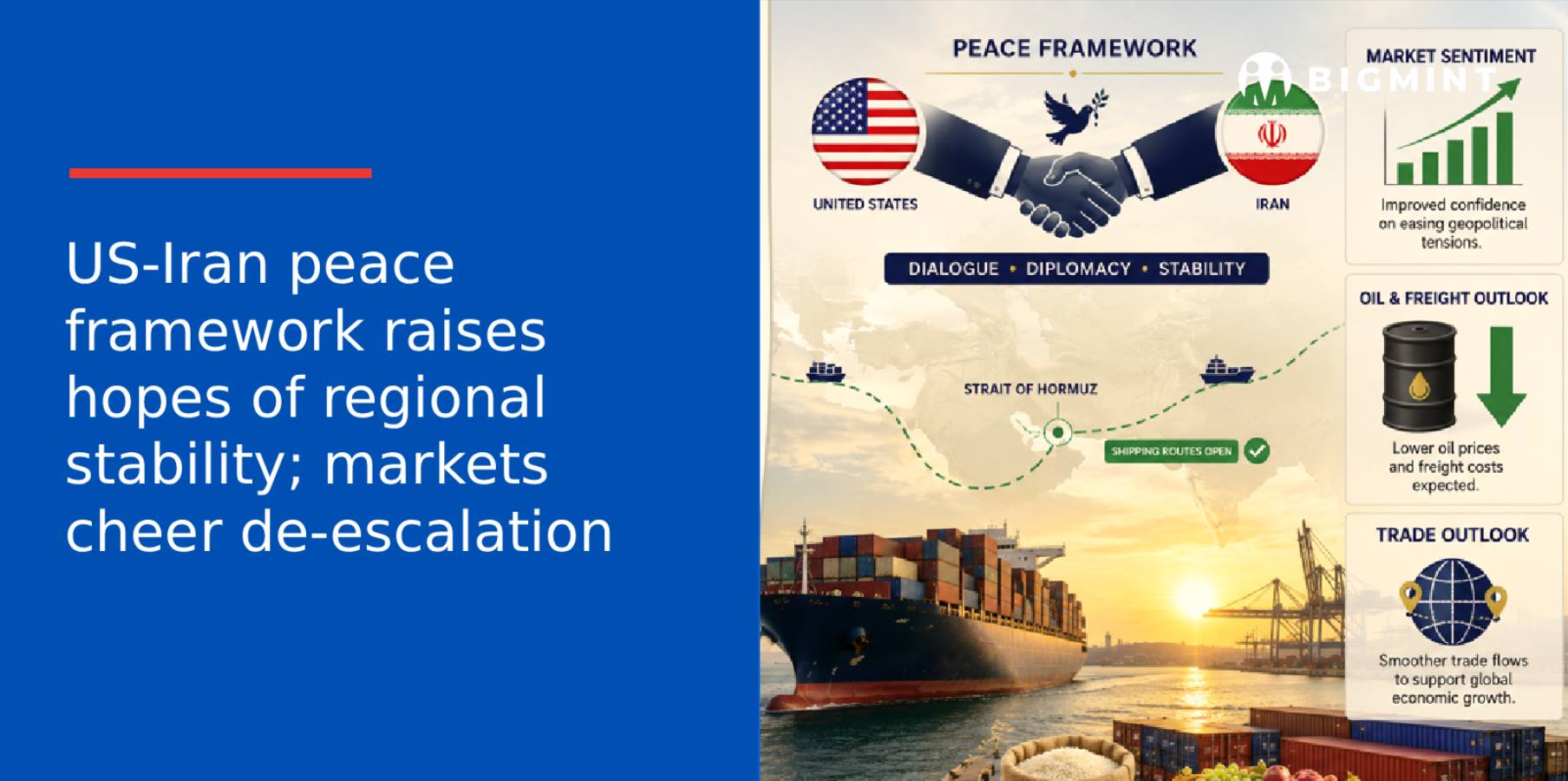
- US-Iran ceasefire has improved global market sentiment
- Reopening of Strait of Hormuz expected to ease logistics, support agricultural trade
The United States and Iran have reportedly entered a new phase of diplomatic engagement, with a peace framework aimed at ending active hostilities and restoring regional stability. The development has generated positive sentiment across global financial and commodity markets, as investors anticipate lower geopolitical risks and smoother trade flows across the Middle East.
According to the proposed framework, the Memorandum of Understanding (MOU) has already been completed through electronic signing, marking the first formal step toward a broader peace agreement. A physical signing ceremony is expected to follow, further reinforcing the commitment of both sides to pursue diplomatic solutions.
Electronic agreement completed
The preliminary MOU has reportedly been signed electronically by representatives of both sides, laying the foundation for a comprehensive peace process.
Formal signing expected
The next stage involves an official signing ceremony, expected to take place under international mediation. The event is anticipated to provide greater clarity on the implementation of the agreement and the future roadmap for bilateral relations.
Ceasefire comes into effect
Military operations across major fronts have reportedly ceased, signaling the end of the active conflict phase. The reduction in hostilities is expected to improve regional security and restore confidence among businesses and investors.
Strait of Hormuz reopens for commercial shipping
One of the most significant outcomes of the de-escalation is the reopening of the Strait of Hormuz for commercial vessels. The restoration of normal maritime traffic is expected to ease global supply chain concerns, reduce freight costs, and improve the movement of energy and agricultural commodities.
60-Day negotiation window
The peace framework provides for a 60-day negotiation period during which both sides are expected to discuss key issues, including the nuclear programme, sanctions relief, and the release of frozen assets. The outcome of these discussions will determine the long-term sustainability of the agreement.
Israel maintains independent position
Israel is reportedly not a direct party to the current framework and is expected to continue pursuing its own security objectives in the region. As a result, market participants are likely to monitor regional developments closely despite the positive diplomatic progress.
Global markets respond positively
The easing of geopolitical tensions has improved investor sentiment across asset classes. Crude oil prices have softened on expectations of uninterrupted supplies, while global equity markets have witnessed renewed buying interest. Lower shipping insurance premiums and improved maritime logistics are also expected to reduce transportation costs for international trade.
Implications for agricultural trade
The normalisation of shipping routes through the Gulf could provide significant relief to agricultural exporters. Reduced freight costs and smoother logistics are expected to improve the competitiveness of rice, fruits, vegetables, spices, and other food products exported to West Asian markets.
For India, which relies heavily on Gulf nations for agricultural exports, improved connectivity through the Strait of Hormuz could support stronger trade flows and faster delivery schedules in the coming months.
Market outlook
While the current framework represents a major step toward de-escalation, the durability of regional peace will depend on the successful completion of the proposed 60-day negotiations. Nevertheless, the immediate easing of tensions has strengthened market confidence, lowered logistical risks, and created a more favorable outlook for global trade and commodity markets.
Leave a Reply