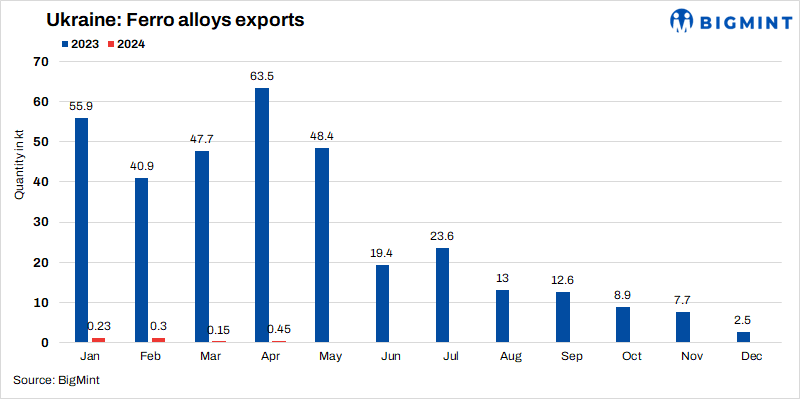
In January-April 2024, Ukrainian ferro alloys exports plummeted to record lows, marking a 99.5% decrease to 1.14 thousand tonnes (t) compared to 208.02 thousand t in the same period in 2023. This drastic decline was reflected in both export volumes and revenue, with export revenue shrinking by 98% to $180.1 million compared to the previous year.
However, there was a significant fluctuation m-o-m, with April that showed a notable increase in shipments to 0.45 thousand t compared to previous month (209% m-o-m surge) but, this uptick doesn’t negate the stark contrast in export volumes and revenue when compared to the previous year.
The majority of these exports in April were directed to Poland, with smaller percentages going to Uzbekistan and Moldova.
This scenario reflected a challenging period for Ukraine’s ferro alloys industry, likely influenced by various economic factors and market dynamics:
Chronic halt in production: The context provided sheds light on the underlying reasons behind the decline in Ukraine’s ferroalloy industry, painting a picture of various challenges that have contributed to the shutdown of production since November 2023.
Factors such as the industry’s proximity to conflict zones, declining prices for ferro alloys, high production costs, and difficulties in personnel retention due to mobilisation issues have all played a role.
Tough environment: The challenging environment resulted in a significant decrease in ferro alloy production in 2023 compared to the previous year, as noted by the Executive Director of the Ukrainian Ferro alloy Association UkrFA, Sergiy Kudryavtsev.
Outlook
Ukrainian ferro alloy companies lacked in clear plans to resume production in the near term, the future remains uncertain. While some optimistic forecasts exist, companies like Pokrovsk Mining and ZZF have yet to make decisions regarding the restart of operations. So, the outlook for the industry in 2024 hinges on factors such as security from shelling, logistical challenges, and the availability of electricity.