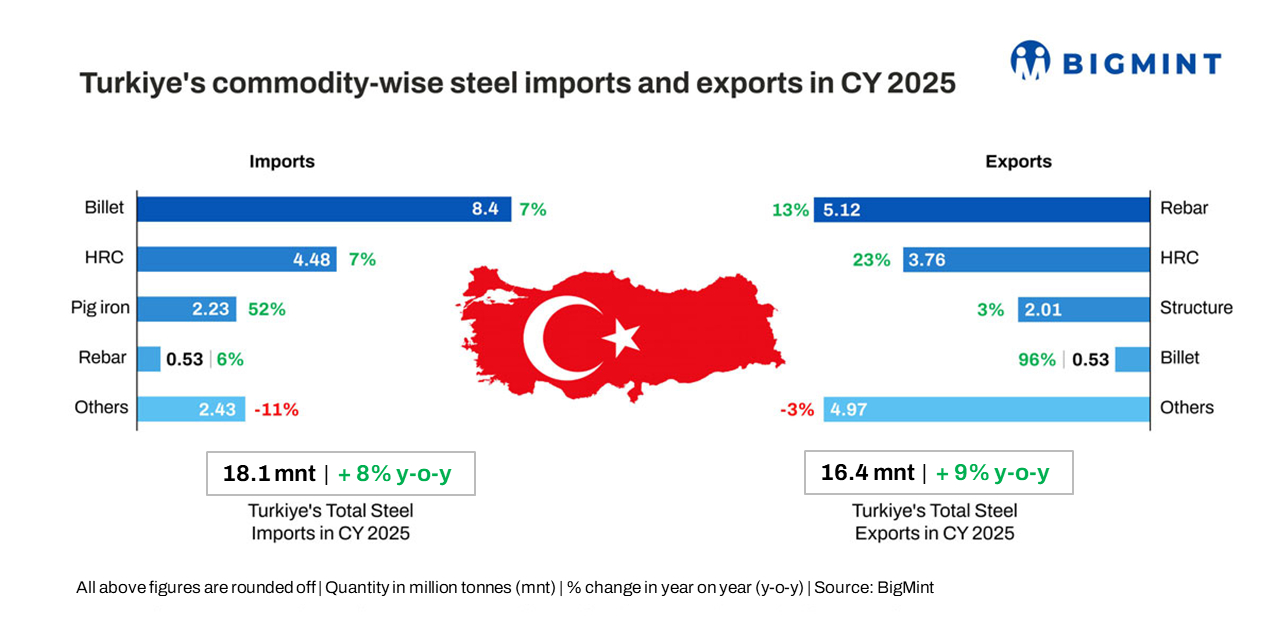
- 35-40% of Turkiye’s steel exports are directed to the EU
- Protectionism, competitive production hubs threaten Turkish exports
SteelOrbis: Ugur Dalbeler, vice-chairman and candidate to be the new chairman of the Turkish Steel Exporters’ Association (CIB) has issued a striking warning concerning the EU’s new quota regulation. Recalling that 35-40% of Turkiye’s steel exports are directed to the EU, he stated that, if quotas are reduced by 50% as of July and the reference years are set as the 2022-24 average, Turkiye’s exports to the EU could decline by 60-65%.
He noted that such a scenario would mean a loss of approximately $3 billion, stressing that negotiations with Europe are essential.
Dalbeler stated that negotiations regarding the EU’s new quota regulation, the updating of the Customs Union and related agreements, the establishment of strong legal defence mechanisms against anti-dumping and safeguard measures gaining ground in eastern Europe, Africa and alternative markets, and solutions aimed at reducing costs are among the key priorities in the roadmap for the CIB’s new term.
Most critical issue: Protectionism
Dalbeler noted that rising protectionist measures, particularly in Western markets, are challenging the sector. Noting that the geography of Turkiye’s exports has changed significantly over the past 20 years, and that some regions where Turkiye was once strong have now turned into competitive production hubs, he stated that exports that were once heavily directed to Southeast Asia and the Far East in the 1990s have been replaced by strong competitors, while North African countries have become more self-sufficient through new investments and have turned toward protectionist practices.
Despite this, he emphasised that Turkiye maintains important advantages, sustaining a strong supplier position in Western markets thanks to its fast delivery capability and certification compliance. EU quota alert.
Outlook
Competition will intensify after 2026. Europe is supporting its steel industry with billions of euros in grants for decarbonisation and new investments, while in the US the steel sector has been restructured following tariff measures and has reached high profitability levels.
On the other hand, Dalbeler stated that, due to rising costs, the Turkish steel industry will face a more challenging export environment after 2026.
This article is published in accordance with an article sharing agreement between Steel Orbis and BigMint.
Leave a Reply