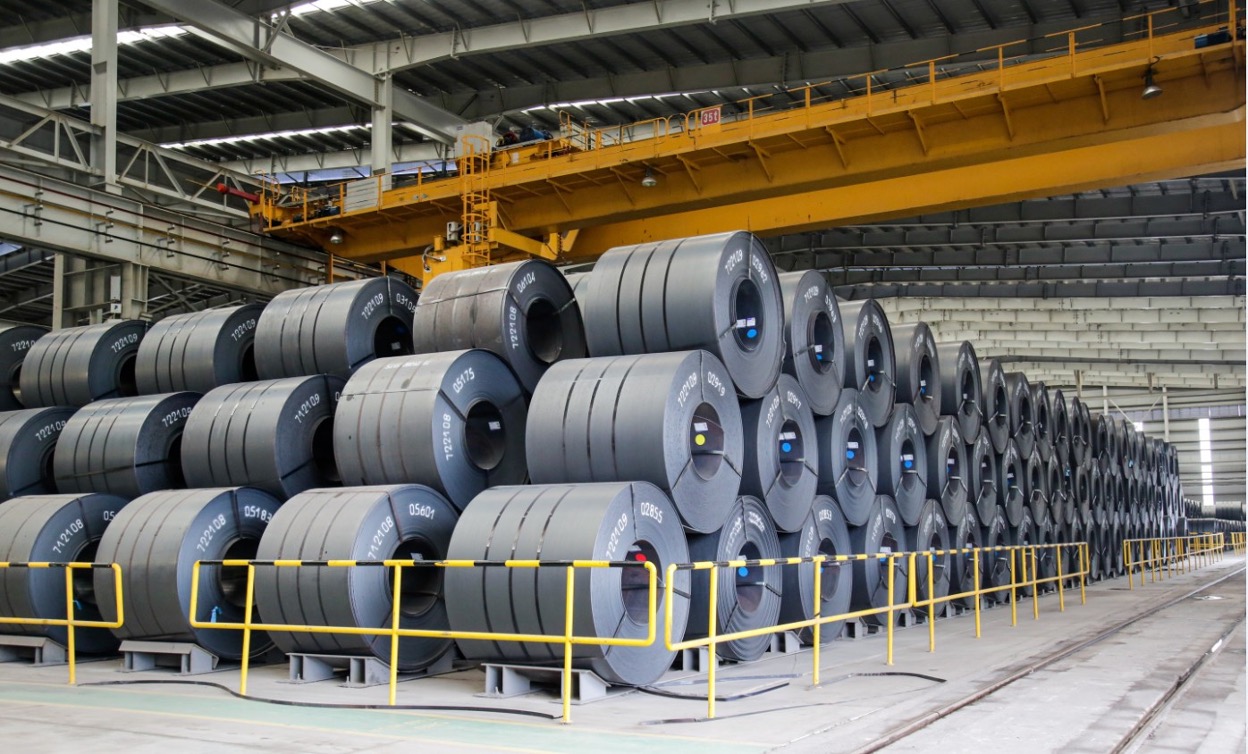
- Turkey’s steel exports rose 22% y-o-y in Nov’25
- Rising imports pressure Turkey’s steel sector
SteelOrbis: According to the Turkish Steel Producers’ Association (TCUD), Turkey’s steel sector experienced mixed trends in 2025, with production, exports, and imports all showing significant movements amid global market pressures.
Crude Steel Production: In November 2025, Turkey’s crude steel production increased by 9.9% y-o-y to 3.31 million tonnes (mnt), reinforcing its position as the world’s eighth-largest steel producer. For the January–November period, crude steel production increased by 2% y-o-y to 34.6 mnt.
Billet output reached 2.08 mnt in November 2025, up by 9.4% y-o-y and slab production stood at 1.22 mmt, up by 11.1% y-o-y. For the January-November period, Turkey produced 21.97 mnt of billet, up by 5.1% y-o-y, while slab production declined by 3.1% to 12.61 mnt y-o-y.
Steel Consumption: Turkey’s finished steel consumption in November rose marginally by 0.5% y-o-y to 3.65 mnt. However, overall consumption for January–November period fell by 8.8% y-o-y to 35.85 mnt, reflecting weaker domestic demand.
Exports Performance: Turkey’s steel exports grew robustly in 2025. In November, exports rose by 22.2% y-o-y to 1.17 mnt, with the value of these exports increasing 9.8% y-o-y to $774.78 million. For January-November period, total exports reached 13.71 mnt, up by 13.3% y-o-y, with the total value of these exports rising by 4.5% y-o-y to $9.26 billion.
By product category, flat and long steel exports for the January-November period reached 5.93 mnt and 7.24 mnt, respectively, each up by 11.7% y-o-y, while semi-finished product exports totalled 5,41,363 mnt.
Import Trends: Turkey’s steel imports showed mixed trends. In November, imports fell by 3.5% y-o-y to 1.75 mnt, with the value of these imports dropping 5.2% to $1.14 billion y-o-y. However, for January–November period, imports increased by 11.8% y-o-y to 17.39 mnt, with total value of these imports totalling 12.06 billion, up by 0.9% y-o-y.
Flat product imports over the January-November 2025, increased by 12.6% y-o-y to 8.34 mnt, long product imports reached 1.36 mnt, up by 11.7% y-o-y and semi-finished product imports reached 7.69 mmt. Consequently, Turkey’s export-to-import ratio improved to 76.83% in January–November 2025, from 74.17% in the same period in 2024.
Drivers of Import Growth: Turkish Steel Producers’ Association noted that the import growth recorded in January-November was largely driven by China and Russia. Chinese steel exports to Turkey rose 19.4% y-o-y to 4 mnt, as China continues to divert excess production abroad. Russian exports increased 44% to 4.1 mnt, driven by declining domestic consumption and sanctions imposed following the invasion of Ukraine, limiting access to other markets. China’s steel exports are expected to reach 120 mnt by the end of 2025, with domestic demand projected to decline 2% in 2025 and 1% in 2026, keeping export pressure high.
In addition, new EU safeguard measures planned for the second half of 2026 could negatively impact Turkey’s steel exports. The EU’s Carbon Border Adjustment Mechanism (CBAM), effective January 1, 2026 and initially covering steel, aluminium, cement, fertilizers, and electricity, is expected to expand to derivative products. Turkish Steel Producers’ Association emphasized that proactive measures are essential to protect the Turkish steel sector against global pressures and protectionist policies that could restrict free trade.
Outlook
Turkey’s steel sector shows resilience, with production rising steadily despite weaker domestic demand. Exports are expected to remain a key growth driver, although rising competition from China and Russia, along with upcoming EU safeguards and CBAM rules, could weigh on trade. Imports are likely to remain volatile, making proactive measures and trade protection policies crucial for sustaining competitiveness in 2026.
Note: This article has been written in accordance with a content exchange agreement between SteelOrbis and BigMint.
Leave a Reply