- New tariffs threaten $87 billion Indian exports
- US-India trade talks hit major roadblock
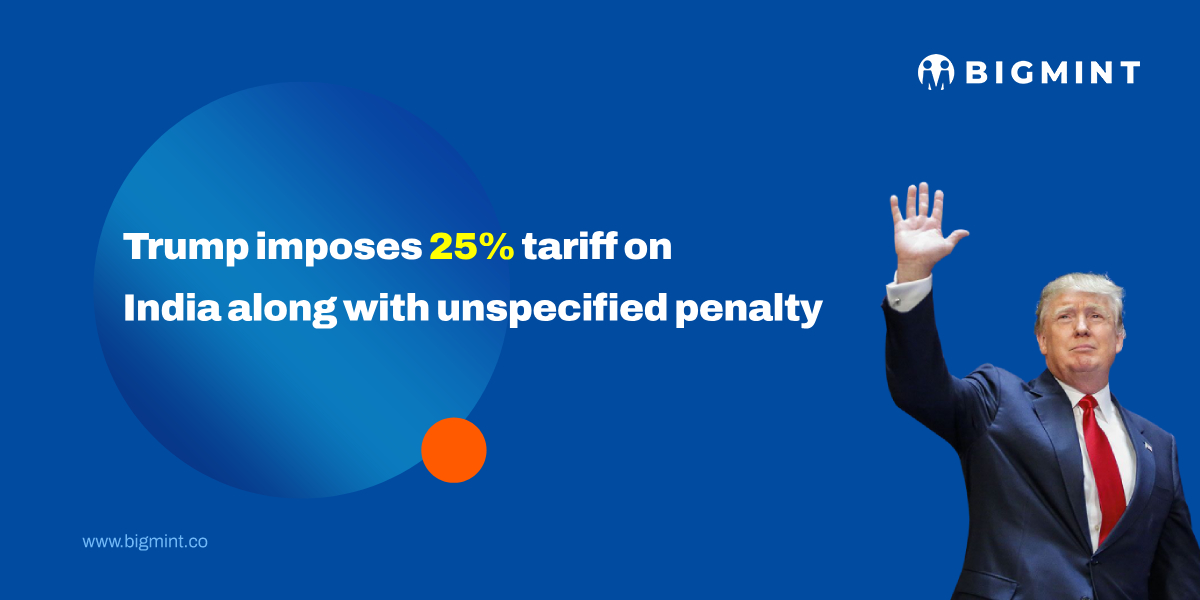
In a dramatic move that could derail months of trade negotiations, US President Donald Trump announced a 25% tariff on all goods imported from India, citing high Indian tariffs and non-monetary trade barriers. The announcement came just days before the August 1 deadline for a potential bilateral trade agreement between the two nations.
Trump made the declaration on his platform, Truth Social, stating, “While India is our friend, we have, over the years, done relatively little business with them because their tariffs are far too high, among the highest in the world.” He accused India of maintaining “strenuous and obnoxious” trade restrictions and criticized its reliance on Russian military equipment and energy.
In addition to the 25% levy, Trump hinted at an unspecified penalty on India, also effective 1 August without providing details.
The sudden escalation has cast a shadow over the prospects of a limited trade deal that negotiators had been pursuing for months. Central sticking points included US demands for greater access to India’s agriculture and dairy markets, which Indian officials resisted, citing the need to protect domestic farmers.
India’s Commerce Ministry has yet to respond officially to the announcement.
Trade impact and geopolitical ripple
The new tariff policy threatens to hit key Indian exports to the US, worth an estimated $87 billion in 2024, including garments, pharmaceuticals, petrochemicals, gems, and jewelry. The US currently runs a $45.7 billion trade deficit with India.
The decision also undermines recent bilateral commitments, including an ambitious goal set by Prime Minister Narendra Modi and Trump to expand trade to $500 billion by 2030, up from $191 billion this year.
India is now among several countries targeted by Trump’s “Liberation Day” trade doctrine, which seeks greater reciprocity in US trade relationships. The White House has repeatedly raised concerns about India’s average applied tariffs, especially on agricultural goods, which can reach up to 50%.
In response, India may consider retaliatory tariffs, particularly on US exports of manufactured goods and energy products like liquefied natural gas and crude oil.
Market disruption already underway
Uncertainty over tariff levels is already shaking up trade flows. US buyers are delaying new orders from India, unsure what final rates will apply. Indian exporters rushed shipments earlier this year, but orders for the key October-March season are now on hold.
At the same time, Indian exporters face indirect pressure from China, as US tariffs push Chinese goods into Europe at steep discounts–undercutting Indian products in their second-largest market.
Sectors like pharmaceuticals, auto parts, electronics, and gold jewelry are particularly vulnerable. A blanket 25% US tariff would make Indian goods less competitive than exports from countries like Japan, the EU, Indonesia, and the Philippines.
Strategic ties under strain
The tariff hike comes at a time when India and the U.S. have been strengthening strategic and defense cooperation, largely as a counterweight to China’s influence in the Indo-Pacific. However, the trade rift threatens to strain this alignment.
While Indian officials have described the US as a “key strategic partner,” they’ve also stressed the importance of preserving policy flexibility in sectors like agriculture, data governance, and state subsidies.
With the August 1 deadline looming, the path forward for U.S.-India trade ties appears increasingly uncertain–and potentially confrontational.
Leave a Reply