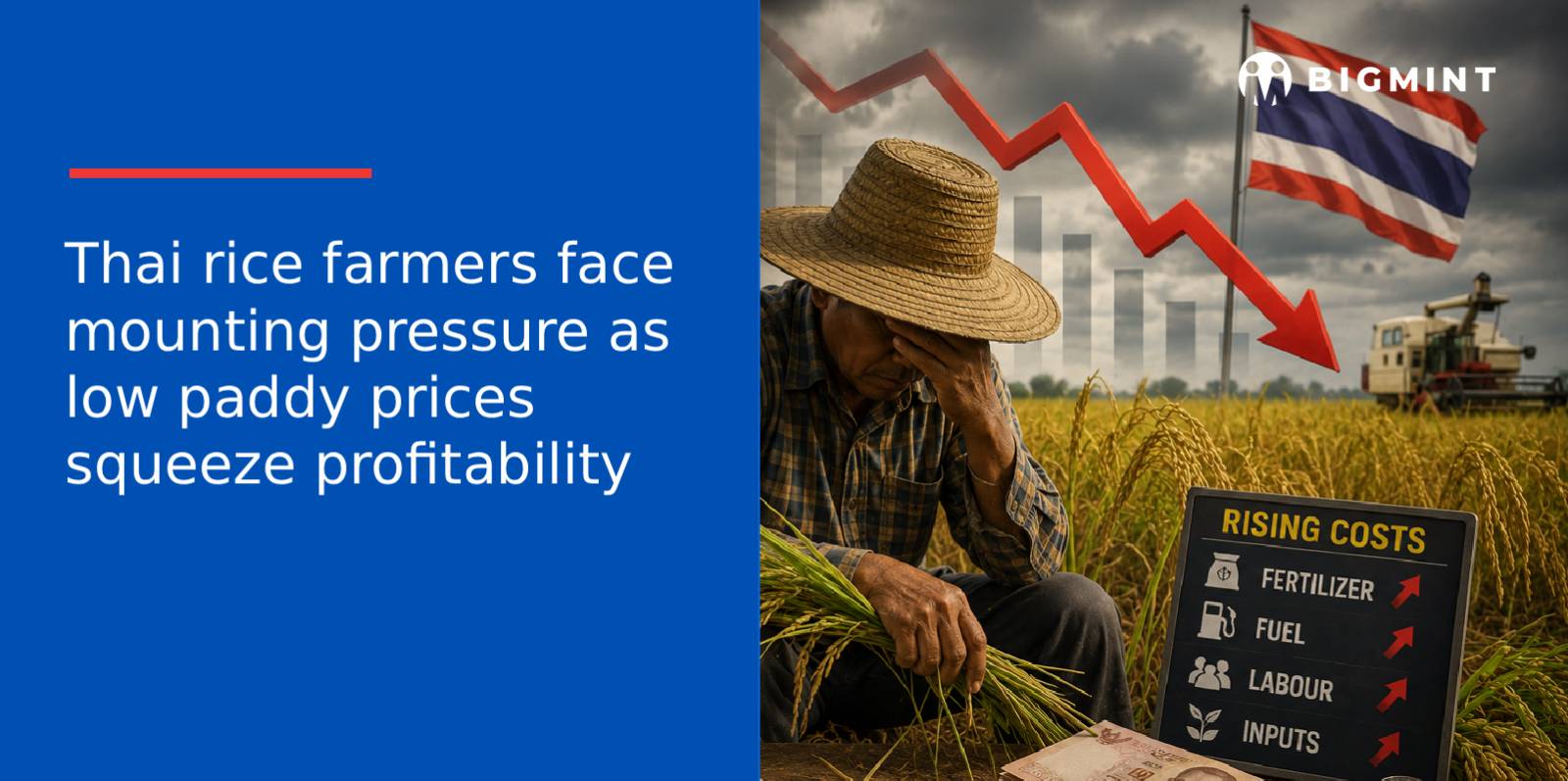
- Low paddy prices pressure Thai farmers.
- High costs and weather risks weigh on planting
Thailand’s rice sector is facing growing pressure as falling paddy prices, elevated production costs and weather-related uncertainties reduce farm profitability ahead of the new planting season. Reports indicate that some farmers have delayed planting or left fields idle after assessing that expected returns may not cover cultivation costs.
Lower paddy prices erode farmer margins
Farmers across Thailand’s major rice-growing regions have come under pressure from lower paddy prices, even as production costs remain elevated. Higher expenditure on diesel, fertilisers, irrigation, harvesting and transportation has significantly increased cultivation costs, reducing margins for producers.
At the same time, ample global rice supplies and intense competition from lower-priced exporters have weighed on Thai rice prices, limiting the ability of farmers to recover rising input costs through higher market prices.
Planting decisions affected by rising costs
The challenging economic environment has prompted some farmers to reduce planted area, postpone sowing or cut fertiliser application in an effort to lower production costs. Others are reportedly seeking additional sources of income or relying on credit to finance cultivation, highlighting the financial stress facing rural households.
Industry participants indicate that prolonged low prices could influence acreage decisions if market conditions fail to improve during the current production cycle.
Weather concerns add uncertainty
Weather remains another key source of uncertainty for Thailand’s rice sector. Forecasts associated with the developing El Niño pattern have raised concerns over below-normal rainfall and drought risks during the second half of 2026, which could affect water availability and crop yields in key producing regions.
The combination of lower prices and weather uncertainty has increased caution among farmers as they plan for the upcoming crop.
Government support measures continue
The Thai government has introduced support measures aimed at stabilising paddy prices and easing financial pressure on farmers. Assistance includes subsidies for registered farmers, programmes to encourage delayed paddy sales and initiatives to improve storage capacity and strengthen rice marketing.
Authorities are also continuing efforts to expand export opportunities through commercial sales and government-to-government (G2G) agreements to support demand for Thai rice.
Outlook
Thailand’s rice market is expected to remain closely tied to developments in export demand, production costs and weather conditions. While government support measures may provide some relief to farmers, the pace of recovery will largely depend on improvements in paddy prices, input cost trends and the impact of El Niño on the 2026/27 crop. Continued competition from lower-priced exporting countries is also expected to remain a key factor influencing Thailand’s rice market.
Leave a Reply